



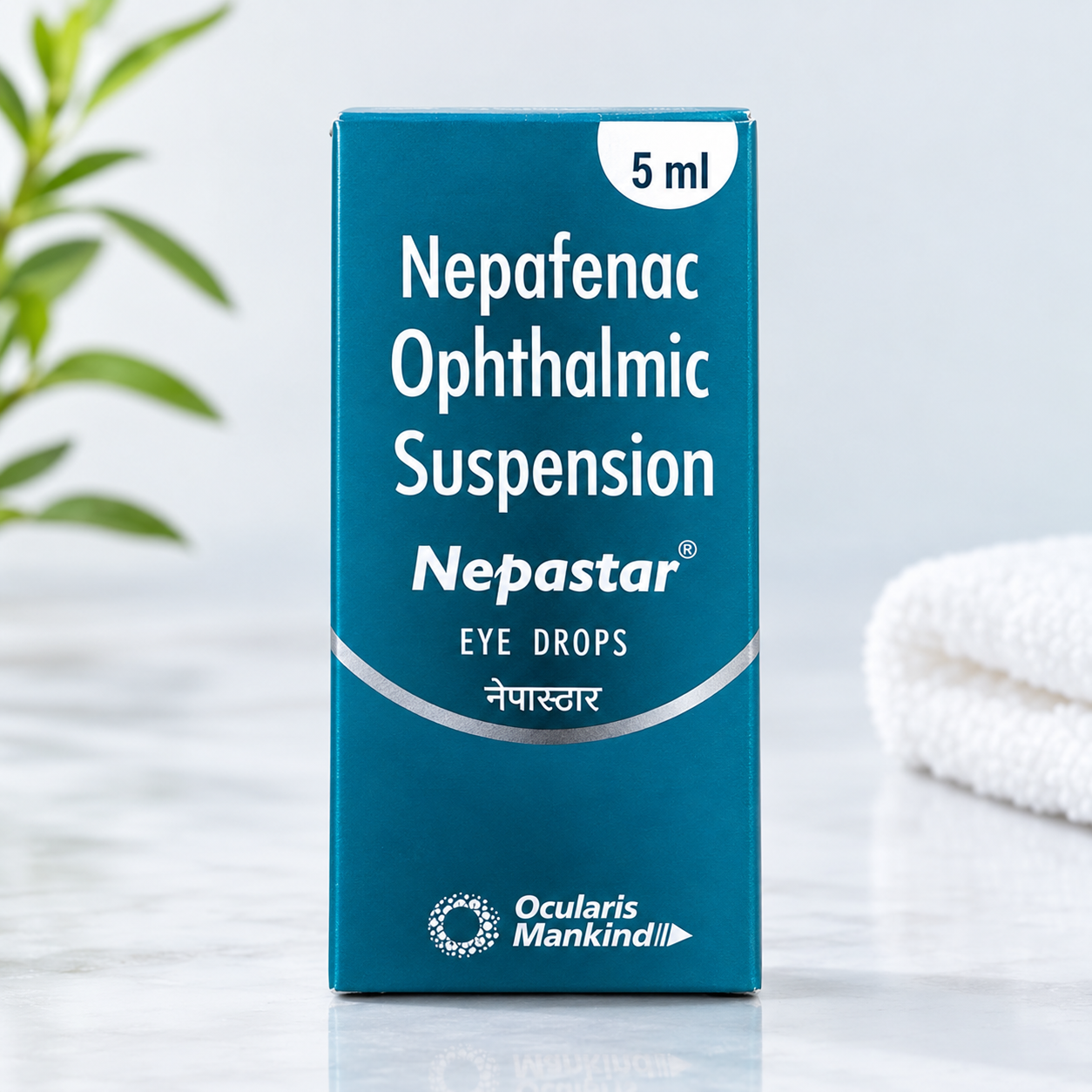
Nepastar Eye Drops 5ML is a prescription ophthalmic suspension containing Nepafenac 0.1% w/v. It belongs to the non-steroidal anti-inflammatory drug (NSAID) category of ophthalmic medicines and is used under the supervision of an ophthalmologist to help manage eye pain and inflammation associated with cataract surgery.
After cataract surgery, the eye may experience temporary inflammation, discomfort, redness or pain as part of the postoperative healing process. Nepafenac ophthalmic preparations are designed to help reduce the inflammatory response in the eye when prescribed by an eye-care professional. Nepastar should be used strictly according to the dosage, frequency and duration recommended by the treating doctor.
Patients looking for Nepafenac eye drops, Nepafenac 0.1% ophthalmic suspension or Nepastar Drop 5ML should review the product composition, instructions and precautions before use. This medicine is not intended for unsupervised treatment of general eye redness, irritation or unexplained eye pain.
What is Nepastar Eye Drops 5ML?
Nepastar is an ophthalmic suspension containing Nepafenac 0.1% w/v. Nepafenac is a non-steroidal anti-inflammatory ophthalmic medicine that helps reduce the formation of inflammatory substances involved in pain and swelling.
The medicine is generally prescribed in the postoperative eye-care setting, particularly for managing pain and inflammation associated with cataract surgery. It should only be instilled into the eye and must not be swallowed or applied to the skin.
The product is marketed by Mankind Pharma Ltd and is supplied in a 5ML ophthalmic bottle. The suspension should be handled carefully and used according to the instructions provided by the ophthalmologist or pharmacist.
Nepastar Eye Drops Composition
Each formulation of Nepastar Eye Drops contains:
| Ingredient | Strength | Purpose |
|---|---|---|
| Nepafenac | 0.1% w/v | Active ophthalmic non-steroidal anti-inflammatory ingredient |
Nepafenac 0.1% ophthalmic suspension is the active pharmaceutical ingredient responsible for the anti-inflammatory action of Nepastar. Always check the physical product label and package insert for the complete formulation and excipient information.
Nepastar Eye Drops Uses
Nepastar Eye Drops are prescribed for the management of eye pain and inflammation associated with cataract surgery. Cataract surgery can temporarily trigger inflammatory changes in the eye. The ophthalmologist may prescribe an NSAID eye drop to help control this postoperative response.
- Management of pain associated with cataract surgery
- Reduction of postoperative ocular inflammation
- Supportive treatment during prescribed cataract surgery recovery
- Management of inflammatory symptoms as directed by an ophthalmologist
Nepastar is not a general-purpose eye drop for every type of redness, dryness, allergy or infection. The cause of eye symptoms should be evaluated before using any prescription ophthalmic medicine.
For general information about ophthalmic Nepafenac, patients may refer to the
Nepafenac ophthalmic medicine information
published by MedlinePlus.
How Does Nepastar Work?
Nepafenac is an ophthalmic non-steroidal anti-inflammatory prodrug. After administration into the eye, it is converted into an active form that helps inhibit cyclooxygenase-related inflammatory pathways.
These pathways are involved in the production of prostaglandins, which contribute to pain, swelling and inflammation. By reducing the production of inflammatory mediators, Nepafenac helps decrease the inflammatory response associated with the prescribed postoperative eye condition.
The medicine does not function as an antibiotic and does not treat bacterial, viral or fungal eye infections. It is specifically intended for anti-inflammatory treatment when prescribed by an eye specialist.
Nepastar Eye Drops Benefits
The potential clinical benefits of Nepastar are related to its prescribed anti-inflammatory action in the eye.
- Helps reduce inflammation following cataract surgery
- May help relieve postoperative eye discomfort associated with inflammation
- Supports prescribed postoperative ophthalmic care
- Provides localized ophthalmic NSAID therapy
- May help reduce inflammatory symptoms during the recovery period
- Can be used as part of a doctor-directed cataract surgery treatment plan
Benefits vary depending on the patient’s condition, surgical procedure, healing response and other medicines prescribed by the ophthalmologist. Nepastar should not be considered a substitute for follow-up examinations or other postoperative medicines.
How to Use Nepastar Eye Drops
Use Nepastar exactly as prescribed by your ophthalmologist. The dosage and treatment duration may vary depending on the surgical procedure, eye condition and individual medical requirements.
- Wash your hands thoroughly before using the eye drops.
- Shake the ophthalmic suspension well if instructed on the product label.
- Remove the cap carefully without touching the dropper tip.
- Tilt your head back and gently pull down the lower eyelid.
- Instil the prescribed number of drops into the affected eye.
- Close the eye gently after administration.
- Avoid squeezing or rubbing the eye immediately after application.
- Replace the cap tightly after use.
Do not touch the dropper tip against the eye, eyelashes, fingers or any other surface, as this may contaminate the medicine.
Nepastar Dosage and Administration
The dosage of Nepastar must be determined by the treating ophthalmologist. Nepafenac ophthalmic suspension is commonly prescribed around the cataract surgery period, but the exact schedule may differ according to the doctor’s instructions and the patient’s recovery.
Do not increase the number of drops, use the medicine more frequently or continue it for longer than prescribed. Prolonged or inappropriate use of topical ophthalmic NSAIDs may increase the risk of eye-related complications.
For reference, official Nepafenac ophthalmic prescribing information describes a commonly used postoperative regimen involving administration before and after cataract surgery. However, patients must follow their own prescription rather than copying a general schedule.
Refer to the
official Nepafenac ophthalmic prescribing information
for detailed professional safety and administration information.
Missed Dose
If you miss a scheduled dose of Nepastar, use it when you remember unless it is almost time for the next scheduled dose. If the next dose is near, skip the missed dose and continue with the regular schedule.
Do not use extra drops to compensate for a missed dose. If you frequently forget doses, ask your ophthalmologist or pharmacist for guidance.
Overdose or Accidental Excess Use
Using more eye drops than prescribed may increase the risk of irritation or adverse ocular effects. If several extra drops are accidentally instilled, follow the product instructions and contact your doctor or pharmacist if discomfort, persistent redness, pain or vision changes occur.
If the medicine is accidentally swallowed, seek medical advice promptly, especially in children.
Nepastar Side Effects
Like other ophthalmic medicines, Nepastar may cause side effects in some patients. Not everyone experiences them, and many effects may be temporary. Contact your ophthalmologist if symptoms are persistent, severe or worsening.
Possible Common or Mild Effects
- Temporary eye discomfort
- Eye irritation
- Foreign body sensation
- Temporary blurred vision after instillation
- Eye itching
- Sticky sensation in the eye
- Temporary redness or watering
Serious Eye-Related Reactions
Seek urgent medical attention if you experience severe eye pain, sudden reduction in vision, marked redness, corneal discomfort, light sensitivity, persistent swelling or symptoms that worsen after starting treatment.
Topical ophthalmic NSAIDs have been associated with delayed healing, keratitis and serious corneal complications in susceptible patients, particularly when used improperly or for longer than recommended.
Nepastar Warnings and Precautions
Before using Nepastar, inform your ophthalmologist if you have a history of eye disease, corneal problems, previous eye surgery complications or allergy to NSAIDs.
- Use only under medical supervision.
- Do not use if you are allergic to Nepafenac or other NSAIDs.
- Inform your doctor if you have a history of corneal disease.
- Tell your doctor if you have dry eye syndrome or ocular surface disease.
- Use cautiously if you have diabetes or delayed wound healing.
- Inform your doctor about bleeding disorders or medicines that increase bleeding risk.
- Do not extend treatment beyond the prescribed duration.
- Avoid touching the dropper tip to the eye or skin.
- Do not share the eye-drop bottle with another person.
Patients with complicated ocular surgery, corneal epithelial defects, diabetes, ocular surface disease or repeated eye surgeries may require closer monitoring while using topical ophthalmic NSAIDs.
Contact Lens Information
Do not wear contact lenses while using Nepastar unless your ophthalmologist specifically advises otherwise. Contact lenses may interfere with postoperative eye care and may increase the risk of irritation or contamination.
Ask your eye specialist when it is safe to resume contact lens use after surgery or during treatment.
Nepastar Drug Interactions
Tell your doctor about all prescription medicines, over-the-counter medicines, supplements and other eye drops you are using.
Particular attention may be required if Nepastar is used with:
- Other ophthalmic NSAIDs
- Topical corticosteroid eye drops
- Medicines that increase bleeding risk
- Other postoperative eye drops
- Multiple ophthalmic preparations used at the same time
If more than one eye drop has been prescribed, maintain an appropriate gap between medicines as advised by your ophthalmologist. Do not mix medicines in the same bottle.
Using Nepastar with Other Eye Drops
If your doctor has prescribed antibiotics, corticosteroids, lubricants or other ophthalmic medicines along with Nepastar, use them according to the recommended sequence and timing.
When multiple topical eye medicines are prescribed, they are generally separated by several minutes to reduce washout and improve administration. Follow the exact instructions provided by your treating eye specialist.
For related ophthalmic products, you can explore the
24x7Pharma eye-care medicine collection
and consult your doctor before combining products.
Pregnancy and Breastfeeding
If you are pregnant, planning pregnancy or breastfeeding, inform your doctor before using Nepastar. The ophthalmologist will assess whether the expected benefits justify the potential risks based on your clinical condition.
Do not start or discontinue prescription eye drops during pregnancy or breastfeeding without professional advice.
Use in Children
Nepastar should not be used in children unless specifically prescribed by a qualified ophthalmologist. The safety and suitability of ophthalmic NSAID therapy depend on the child’s age, diagnosis and medical circumstances.
Use in Elderly Patients
Older adults may be prescribed Nepastar after cataract surgery, but they should follow the exact postoperative treatment plan. Inform the doctor about existing eye conditions, other medicines and previous reactions to ophthalmic treatments.
Storage Instructions
- Store Nepastar according to the instructions printed on the product packaging.
- Keep the bottle tightly closed when not in use.
- Protect it from excessive heat and direct sunlight.
- Keep out of reach of children.
- Do not use the product after the expiry date.
- Do not use the bottle if the seal is damaged or the product appears contaminated.
- Discard the bottle according to the product’s recommended in-use period after opening.
Because Nepastar is an ophthalmic suspension, follow the label instructions regarding shaking and handling before each use.
Why Buy Nepastar Eye Drops 5ML from 24x7Pharma?
At 24x7Pharma, customers can explore prescription medicines and ophthalmic products with clearly presented product information, composition details and packaging information.
- Product information displayed clearly
- Manufacturer and composition details
- Convenient online medicine browsing
- Prescription medicine awareness
- Secure and professional online pharmacy experience
- Access to a broad range of healthcare products
Before purchasing or using Nepastar, ensure that the medicine has been prescribed for your condition and that the product details match your doctor’s recommendation.
Frequently Asked Questions
What is Nepastar Eye Drops used for?
Nepastar Eye Drops containing Nepafenac 0.1% are prescribed to help manage pain and inflammation associated with cataract surgery.
What is the composition of Nepastar?
Nepastar contains Nepafenac 0.1% w/v in an ophthalmic suspension formulation.
Is Nepastar an antibiotic eye drop?
No. Nepastar is a non-steroidal anti-inflammatory eye medicine. It is not an antibiotic and does not treat bacterial eye infections.
Can Nepastar be used for ordinary eye redness?
Nepastar should not be used for unexplained eye redness without an ophthalmologist’s advice. Eye redness may have several causes and requires appropriate diagnosis.
Can Nepastar be used after cataract surgery?
Yes, it is prescribed for the management of pain and inflammation associated with cataract surgery. Use it only according to the surgeon’s instructions.
Can I use Nepastar with other eye drops?
It may be prescribed with other eye medicines, but the timing and sequence should be confirmed with your ophthalmologist.
Does Nepastar cause blurred vision?
Temporary blurred vision or eye discomfort may occur after applying eye drops. If blurred vision persists or becomes severe, contact your eye doctor.
Can I wear contact lenses while using Nepastar?
Contact lens use should generally be avoided during treatment unless specifically approved by your ophthalmologist.
How should Nepastar be stored?
Store it according to the package instructions, keep the bottle tightly closed and protect it from excessive heat and contamination.
Can I use Nepastar without a prescription?
Nepastar is a prescription ophthalmic medicine and should be used only under the guidance of a qualified eye-care professional.
What should I do if I miss a dose?
Use the missed dose when remembered unless it is close to the next scheduled dose. Do not double the dose.
Can Nepastar be used for eye infection?
No. Nepastar is an anti-inflammatory eye medicine and is not a replacement for antibiotic, antiviral or antifungal treatment.
Is Nepastar safe during pregnancy?
Inform your doctor if you are pregnant or breastfeeding. Use should be based on a professional assessment of benefits and risks.
What if Nepastar causes severe eye pain?
Stop using the medicine and contact your ophthalmologist promptly if severe pain, vision changes, corneal discomfort or worsening symptoms occur.
What is the pack size of Nepastar?
Nepastar is available in a 5ML ophthalmic suspension pack.
Who manufactures Nepastar?
Nepastar is marketed by Mankind Pharma Ltd.
Medical Disclaimer
This product information is provided for educational and informational purposes only. Nepastar Eye Drops are prescription medicine and should be used only according to the advice of a qualified ophthalmologist. The information on this page does not replace medical consultation, diagnosis or individualized treatment instructions.
Do not self-medicate, change the dosage or extend the treatment duration without consulting your doctor. Always read the product label and package insert before use.