





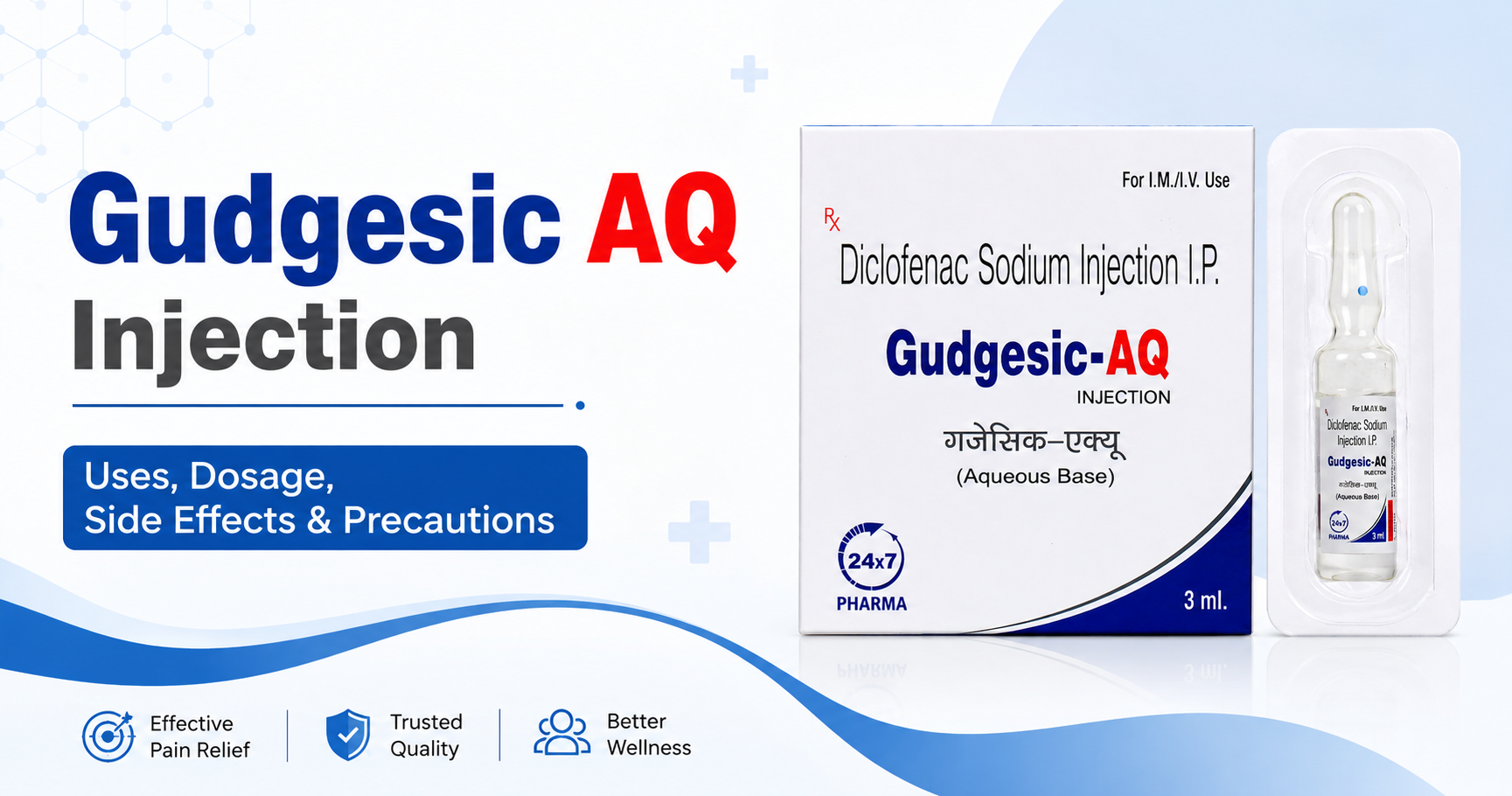
When pain becomes severe enough that oral pain medicines are not suitable or rapid relief is required, a healthcare professional may consider an injectable pain medicine. Gudgesic AQ Injection is one such prescription medicine containing Diclofenac Sodium 75 mg/ml. It belongs to a group of medicines called non-steroidal anti-inflammatory drugs (NSAIDs), which help reduce pain and inflammation.
This guide explains Gudgesic AQ Injection uses, composition, how it works, dosage, side effects, precautions, drug interactions and important safety information. It is intended to help patients understand the medicine and should not replace advice from a doctor or other qualified healthcare professional.
Quick Overview
| Medicine | Gudgesic AQ Injection |
|---|---|
| Active Ingredient | Diclofenac Sodium |
| Strength | 75 mg/ml |
| Drug Class | Non-Steroidal Anti-Inflammatory Drug (NSAID) |
| Primary Action | Pain relief and reduction of inflammation |
| Common Uses | Moderate to severe pain and inflammatory conditions |
| Route | Injection, administered by a healthcare professional |
| Prescription | Prescription medicine |
| Manufacturer/Brand | Mankind Pharma Ltd |
What Is Gudgesic AQ Injection?
Gudgesic AQ Injection is a prescription pain-relieving injection containing Diclofenac Sodium 75 mg/ml. Diclofenac is an NSAID that reduces the production of certain substances involved in pain and inflammation.
The medicine may be used when a patient has moderate to severe acute pain and a healthcare professional considers an injectable NSAID appropriate. Because injectable medicines require correct administration and monitoring, Gudgesic AQ Injection should only be given by a doctor, nurse or another appropriately trained healthcare professional.
Gudgesic AQ Injection Composition
The active ingredient in Gudgesic AQ Injection is Diclofenac Sodium 75 mg/ml.
Diclofenac belongs to the NSAID class. These medicines work primarily by reducing the formation of prostaglandins, chemical messengers involved in pain, inflammation and swelling.
Gudgesic AQ Injection Uses
The main Gudgesic AQ Injection uses are related to short-term relief of moderate to severe pain and inflammation. Depending on the patient’s condition, a doctor may consider diclofenac injection for conditions such as:
- Acute musculoskeletal pain
- Post-operative pain
- Pain associated with injuries
- Osteoarthritis-related pain
- Rheumatoid arthritis-related pain
- Acute back pain
- Renal colic or kidney stone pain
- Other painful inflammatory conditions where injectable treatment is considered appropriate
Gudgesic AQ Injection is not a medicine that should be selected solely based on the severity of pain. The underlying cause of pain matters. A doctor may choose a different treatment when an NSAID is unsuitable because of kidney disease, gastrointestinal problems, cardiovascular disease, allergies, pregnancy or interactions with other medicines.
How Does Gudgesic AQ Injection Work?
Gudgesic AQ Injection works through its active ingredient, diclofenac sodium. Diclofenac inhibits cyclooxygenase (COX) enzymes that participate in the production of prostaglandins.
This mechanism is why diclofenac is used in several painful inflammatory conditions, including arthritis and acute musculoskeletal pain. MedlinePlus describes diclofenac as an NSAID that works by reducing the body’s production of substances involved in pain and inflammation.
Read more about diclofenac from MedlinePlus.
Benefits of Gudgesic AQ Injection
The potential benefits of Gudgesic AQ Injection are mainly associated with its ability to reduce pain and inflammation when prescribed appropriately.
- Helps relieve moderate to severe pain: Diclofenac can provide pain relief in selected acute painful conditions.
- Reduces inflammation: It can reduce inflammatory symptoms such as swelling and tenderness.
- Useful when oral medicines are unsuitable: A healthcare professional may consider an injectable option when oral administration is not appropriate.
- Used for acute musculoskeletal pain: It may be prescribed for certain painful injuries and musculoskeletal conditions.
- May help with arthritis-related pain: Diclofenac can reduce pain and inflammatory symptoms associated with arthritis.
- Can be used for post-operative pain: Injectable diclofenac may be considered for short-term pain management following surgery when clinically appropriate.
Dosage
The Gudgesic AQ Injection dosage should be determined by a qualified healthcare professional. The appropriate dose and duration can vary according to the patient’s condition, age, medical history, kidney and liver function, other medicines and response to treatment.
Patients should not calculate or change the injectable dose themselves. The injection should be administered only by an appropriately trained healthcare professional.
Do not receive additional doses simply because pain has not completely disappeared. Persistent or worsening pain may require further evaluation rather than repeated self-directed dosing.
Why the Dose Should Be Individualized
Diclofenac is associated with important gastrointestinal, cardiovascular and renal risks, particularly in susceptible patients or when used inappropriately. Healthcare professionals therefore aim to use the lowest effective exposure for the shortest appropriate period.
How Is Gudgesic AQ Injection Administered?
Gudgesic AQ Injection should be administered by a qualified healthcare professional in an appropriate medical setting.
- Do not self-inject the medicine.
- Do not ask an untrained person to administer it.
- Follow the prescribed dose and schedule.
- Tell the healthcare professional about all medicines you currently use.
- Inform the healthcare professional about allergies and previous reactions to NSAIDs.
The exact administration technique and route should follow the product-specific prescribing information and the healthcare professional’s instructions.
Side Effects
Like other NSAIDs, Gudgesic AQ Injection may cause side effects. Some reactions may be mild, while others require urgent medical attention.
Common or Less Serious Side Effects
- Nausea
- Vomiting
- Indigestion
- Stomach discomfort
- Headache
- Dizziness
- Injection-site pain or irritation
Not everyone experiences these effects, and the severity can vary between patients.
Serious Side Effects
Seek urgent medical attention if you develop symptoms such as:
- Difficulty breathing or severe allergic reaction
- Swelling of the face, lips, tongue or throat
- Severe or persistent stomach pain
- Vomiting blood
- Black or tarry stools
- Chest pain or sudden shortness of breath
- Unusual weakness or symptoms suggesting a stroke
- Yellowing of the skin or eyes
- Marked swelling or reduced urine output
NSAIDs including diclofenac can cause serious gastrointestinal bleeding and cardiovascular events in some patients. MedlinePlus specifically warns about the risk of heart attack or stroke and serious ulcers, bleeding or perforation of the digestive tract.
View the MedlinePlus diclofenac safety information.
Warnings and Precautions
Before receiving Gudgesic AQ Injection, tell your doctor if you have any significant medical conditions. Particular caution may be needed in patients with:
- Previous stomach ulcer or gastrointestinal bleeding
- Kidney disease
- Liver disease
- Heart disease or heart failure
- High blood pressure
- Previous stroke or cardiovascular disease
- Asthma triggered by aspirin or other NSAIDs
- Known allergy to diclofenac or other NSAIDs
- Bleeding disorders
NSAIDs can increase the risk of gastrointestinal bleeding and cardiovascular complications. The risk may be higher in people with certain medical conditions, older adults, or those using higher doses or longer treatment courses.
Tell your healthcare provider about all prescription medicines, over-the-counter medicines, vitamins and supplements you use before receiving diclofenac.
Drug Interactions
Diclofenac can interact with medicines that affect bleeding, blood pressure, kidney function or other physiological pathways. Important medicines to discuss with your healthcare provider include:
- Warfarin and other anticoagulants
- Aspirin
- Ibuprofen, naproxen and other NSAIDs
- Corticosteroids
- Diuretics
- ACE inhibitors and certain other blood pressure medicines
- Lithium
- Methotrexate
- Certain medicines affecting kidney function
Combining diclofenac with another NSAID without medical advice may increase the risk of adverse effects without necessarily providing additional benefit. Your doctor or pharmacist should review your medication list before treatment.
Who Should Avoid Gudgesic AQ Injection?
Gudgesic AQ Injection may not be appropriate for everyone. It should not be used without medical assessment if you have a known allergy to diclofenac, aspirin or other NSAIDs, or if you have previously experienced serious allergic reactions after using these medicines.
Patients with active gastrointestinal bleeding, significant kidney or liver problems, serious cardiovascular disease or other relevant conditions may require an alternative treatment or additional monitoring.
The decision should always be based on an individual medical assessment rather than the pain level alone.
Gudgesic AQ Injection vs Oral Painkillers
One common question is whether an injectable diclofenac product is automatically stronger or better than an oral painkiller. The answer is not that simple.
The choice between an injection and an oral medicine depends on the patient’s condition, ability to take oral medicines, urgency of treatment, medical history and the clinician’s judgment.
An injection also requires professional administration and does not remove the systemic risks associated with diclofenac. The route of administration should therefore be selected for a clinical reason rather than convenience alone.
Can Gudgesic AQ Injection Be Used After Surgery?
Diclofenac injection may be used for short-term post-operative pain management when a healthcare professional considers an NSAID appropriate.
The prescribing clinician will consider factors such as the type of surgery, bleeding risk, kidney function, gastrointestinal history and other pain medicines being used. It should not be assumed that diclofenac is suitable after every surgical procedure.
Storage
Store the medicine according to the instructions printed on the product packaging and supplied by the manufacturer or pharmacist.
- Keep the injection away from direct sunlight.
- Do not freeze unless the product information specifically permits it.
- Keep medicines out of reach of children.
- Do not use the product after its expiry date.
- Do not use an injection if the packaging or ampoule appears damaged.
Frequently Asked Questions
1. What is Gudgesic AQ Injection used for?
Gudgesic AQ Injection contains Diclofenac Sodium 75 mg/ml and is used under medical supervision for short-term treatment of moderate to severe pain and inflammation. It may be prescribed for conditions such as acute musculoskeletal pain, post-operative pain, arthritis-related pain and renal colic.
2. What is the composition of Gudgesic AQ Injection?
The active ingredient is Diclofenac Sodium 75 mg/ml. It belongs to the NSAID class of medicines.
3. Is Gudgesic AQ Injection a painkiller?
Yes. Diclofenac is an NSAID that provides pain-relieving and anti-inflammatory effects. It is generally used for pain where inflammation is also an important component.
4. Can I take Gudgesic AQ Injection at home?
No. Injectable diclofenac should be administered by a qualified healthcare professional. Self-injection is not recommended.
5. What are the common Gudgesic AQ Injection side effects?
Possible side effects include nausea, vomiting, indigestion, stomach discomfort, headache, dizziness and injection-site irritation. Serious reactions such as gastrointestinal bleeding, severe allergy or cardiovascular symptoms require immediate medical attention.
When Should You Seek Medical Help?
Do not rely on repeated pain injections when the cause of pain is unclear or symptoms are getting worse. Seek medical evaluation for severe or unexplained pain, persistent vomiting, black stools, vomiting blood, chest pain, difficulty breathing, fainting, severe allergic symptoms or markedly reduced urine output.
Some serious conditions can initially appear as ordinary pain, so treating the symptom repeatedly without identifying the cause may delay appropriate care.
Key Takeaway
Gudgesic AQ Injection contains Diclofenac Sodium 75 mg/ml, an NSAID used for short-term management of moderate to severe pain and inflammation.
For product information and availability, you can review the Gudgesic AQ Injection product page on 24x7Pharma.
Related Medicines & Pain Management Resources
Patients looking for information about pain treatment can also explore the Pain Management Medicines section and Pain Relief Medicines category on 24x7Pharma.
For prescription medicines, visit the Prescription Medicines section.
Medical Disclaimer
This article is provided for general educational and informational purposes only. It does not replace a doctor’s diagnosis, prescription or individualized medical advice. Always discuss your medical history, allergies and current medicines with your doctor before receiving diclofenac injection.