





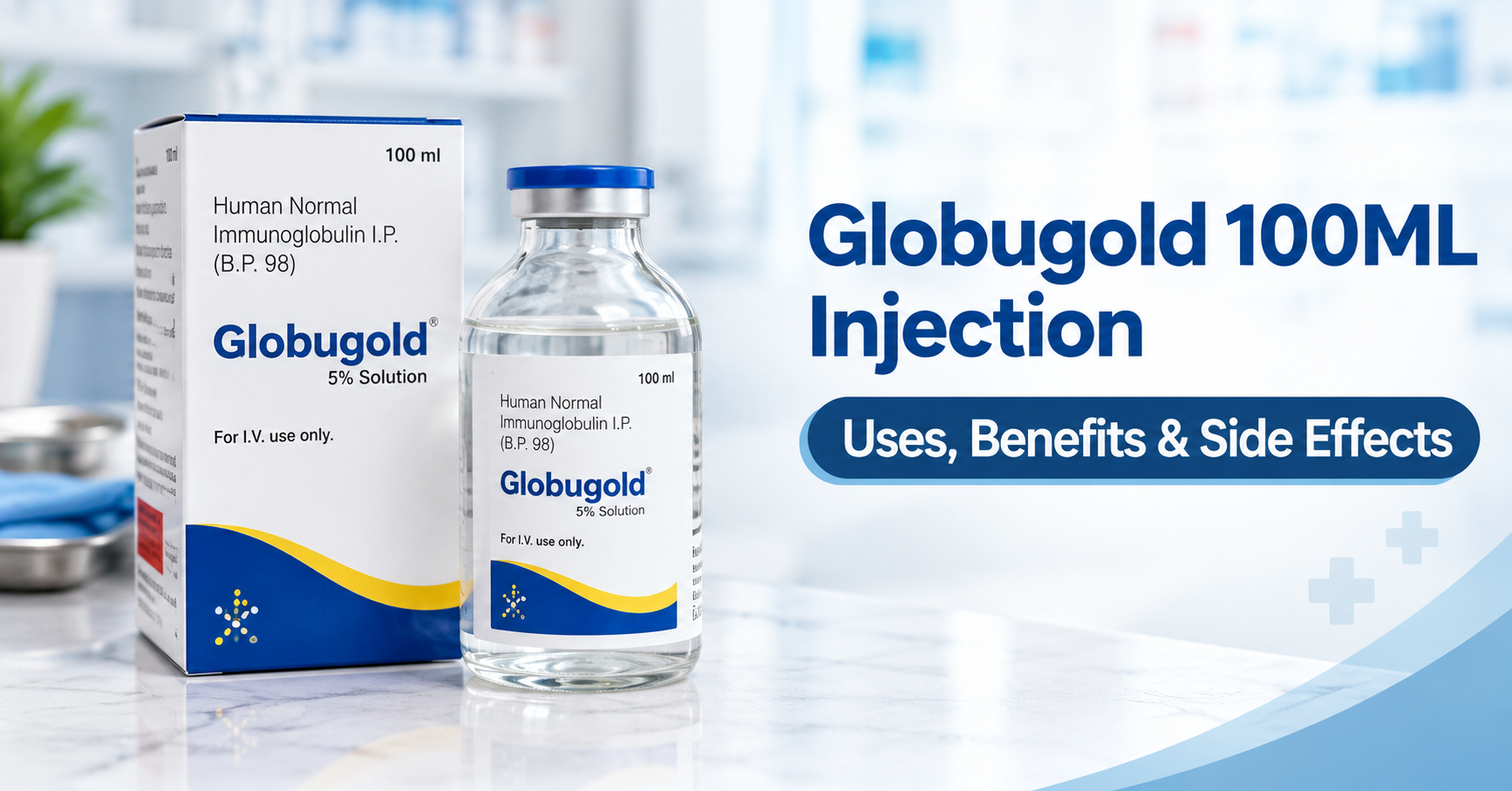
Globugold 100ML Injection contains Human Normal Immunoglobulin 5% w/v. Each 100 mL vial provides 5 g of immunoglobulin for intravenous administration. It is a prescription medicine that requires specialist assessment and administration by a trained healthcare professional.
This guide explains Globugold Injection uses, potential treatment benefits, how IVIG works, possible side effects, precautions and important questions to discuss with your doctor.
1. What Is Globugold 100ML Injection?
Globugold 100ML Injection is a human normal immunoglobulin preparation belonging to the intravenous immunoglobulin (IVIG) class. It contains antibodies derived from human plasma. These antibodies help the immune system recognise and respond to certain infectious agents.
Doctors may prescribe appropriate IVIG products for selected antibody deficiencies. Specialists also use certain immunoglobulin preparations for specific immune-mediated conditions.
However, different IVIG products have different approved indications. Your doctor must confirm whether Globugold is suitable for your particular diagnosis.
Globugold composition
| Product detail | Information |
|---|---|
| Active ingredient | Human Normal Immunoglobulin |
| Concentration | 5% w/v |
| Strength | 50 mg/mL |
| Total content | 5 g per 100 mL |
| Administration | Intravenous infusion |
| Marketer | Mankind Pharma |
| Prescription | Required |
The complete excipient and stabiliser information should be checked against the original Globugold package insert.
2. Understanding IVIG Therapy
Immunoglobulins are proteins produced by the immune system. They help the body recognise and respond to infectious agents. Immunoglobulin G, commonly called IgG, is the predominant antibody class in most IVIG preparations.
Some patients cannot produce enough functional antibodies. Others have immune-mediated disorders in which abnormal immune activity contributes to tissue damage.
IVIG treatment may address these problems through two different mechanisms: antibody replacement and immune modulation.
Antibody replacement therapy
Patients with certain immune deficiencies may receive IVIG to increase circulating antibodies. This can help reduce the frequency or severity of infections in appropriately selected patients.
Immunomodulatory treatment
At different treatment doses, immunoglobulin may influence immune-cell activity, antibody interactions and inflammatory signalling. Specialists use these effects in selected immune-mediated disorders.
For detailed prescribing and safety information about the IVIG class, consult the FDA’s intravenous immunoglobulin prescribing information. This reference concerns another IVIG brand and does not replace Globugold’s own prescribing information.
3. Globugold 100ML Injection Uses
Globugold Injection uses depend on the patient’s diagnosis and the product’s approved prescribing information. The following are clinical situations in which specialists may consider appropriate IVIG preparations.
Primary immunodeficiency
Primary immunodeficiency includes inherited conditions in which the immune system does not function normally. Some patients cannot produce sufficient antibodies and experience recurrent or unusually severe infections.
IVIG replacement therapy can supply IgG antibodies when a specialist determines that antibody replacement is appropriate.
Selected secondary immunodeficiencies
Certain illnesses and medical treatments can reduce antibody production. In selected cases, specialists may recommend immunoglobulin replacement after assessing infection history, immunoglobulin levels and the underlying cause.
Immune thrombocytopenia
Immune thrombocytopenia (ITP) is a condition in which the immune system contributes to platelet destruction. Certain IVIG preparations can temporarily increase platelet counts when a rapid response is medically necessary.
The treating haematologist must confirm whether the prescribed immunoglobulin product is indicated for the patient’s condition.
Selected neurological and autoimmune conditions
Specialists sometimes use IVIG for particular neurological, autoimmune or inflammatory disorders. However, clinical evidence, approved indications and treatment protocols differ between diseases and individual products.
Patients should not assume that Globugold is approved for every condition treated with another IVIG formulation.
4. Globugold Injection Benefits
The potential benefits of Globugold depend on the reason for treatment, the patient’s clinical condition and the prescribing specialist’s treatment plan.
Provides immunoglobulin antibodies
In suitable patients with antibody deficiency, IVIG can increase circulating immunoglobulin levels and help compensate for inadequate antibody production.
Supports protection against certain infections
For appropriately selected patients with primary antibody deficiencies, regular replacement therapy may reduce the frequency and severity of some infections.
Modulates abnormal immune responses
In certain immune-mediated conditions, IVIG can influence inflammatory pathways and antibody-related immune activity. The expected clinical benefit varies by diagnosis.
Allows individualised specialist treatment
Doctors can adjust the treatment regimen according to the patient’s diagnosis, body weight, laboratory results, clinical response and safety requirements.
IVIG is not a general immunity booster and should not be used without a recognised medical indication.
5. How Does Globugold 100ML Injection Work?
Globugold delivers human immunoglobulin antibodies directly into the bloodstream through an intravenous infusion.
In patients with antibody deficiencies, these antibodies increase circulating immunoglobulin levels and help compensate for inadequate natural antibody production.
In selected immune-mediated disorders, IVIG may influence several components of the immune system. These include interactions involving immune cells, antibodies and inflammatory signalling pathways.
The precise therapeutic mechanism depends on the underlying disease. The expected response also varies between patients.
6. Globugold Injection Dosage and Administration
The treating specialist determines the Globugold dose according to the patient’s diagnosis, body weight, treatment response and relevant medical history.
A 100 mL vial contains 5 g of immunoglobulin. However, vial size alone does not determine the appropriate dose. Different conditions require different treatment regimens.
How is Globugold administered?
A trained healthcare professional administers Globugold through an intravenous infusion. Before treatment, the medical team reviews the prescription, product information and relevant patient risk factors.
During administration, healthcare professionals monitor the patient for infusion reactions and other complications. They may adjust or stop the infusion if an adverse reaction occurs.
Patients should never attempt to inject or infuse Globugold themselves without an established, specialist-supervised treatment programme.
7. Globugold Injection Side Effects
Like other IVIG preparations, Globugold may cause adverse reactions. Some develop during infusion, while others can occur after treatment.
Possible IVIG side effects
- Headache
- Fever or chills
- Nausea
- Fatigue
- Muscle or back pain
- Dizziness
- Infusion-related discomfort
The frequency and severity of these reactions vary between immunoglobulin products and treatment regimens.
Serious adverse reactions
IVIG therapy can occasionally cause severe allergic reactions, blood clots, kidney injury, aseptic meningitis, haemolysis and certain respiratory complications.
Seek immediate medical attention if you experience chest pain, difficulty breathing, sudden weakness, a severe headache, markedly reduced urine output or signs of a serious allergic reaction.
8. Important Precautions Before IVIG Treatment
Before receiving Globugold, tell your doctor about your complete medical history, including previous reactions to immunoglobulin products.
Particular attention is necessary if you have:
- Known IgA deficiency or anti-IgA antibodies.
- Existing kidney disease.
- Diabetes.
- A history of blood clots.
- Cardiovascular disease.
- Dehydration.
- Recent surgery or prolonged immobility.
- A history of severe allergic reactions.
IVIG products can increase the risk of thrombosis and kidney complications in susceptible patients. Your medical team may recommend additional monitoring and take precautions appropriate to your individual risk.
9. Globugold and Kidney Function
Kidney safety is an important consideration during IVIG treatment. Patients with existing kidney problems, diabetes, dehydration or other risk factors may need closer monitoring.
Your doctor may check kidney function before treatment and periodically during therapy. These assessments may include serum creatinine, blood urea nitrogen and urine output.
The prescribing specialist must review the exact Globugold formulation and its safety information when planning treatment.
10. Globugold and Blood Clot Risk
IVIG treatment can increase the risk of thrombosis in some patients. Risk factors may include advanced age, cardiovascular disease, previous blood clots and prolonged immobility.
Tell your doctor about your medical history and all medicines you take before starting treatment.
Healthcare professionals may use additional precautions, including appropriate hydration, careful infusion-rate selection and clinical monitoring.
11. Globugold During Pregnancy and Breastfeeding
Patients who are pregnant, planning pregnancy or breastfeeding should inform their treating specialist before receiving immunoglobulin therapy.
The doctor will consider the underlying medical condition, the need for treatment, the available product-specific safety information and potential benefits and risks.
Do not start, stop or change prescribed immunoglobulin therapy without consulting your treating specialist.
12. Globugold in Children and Older Adults
Appropriate IVIG products may be used in children with selected immune disorders. However, approved indications, age ranges and treatment regimens vary by product.
A paediatric specialist must confirm whether Globugold is suitable for a particular child.
Older adults may have additional risk factors for kidney problems, fluid overload and blood clots. Their treating specialists should assess these risks and determine the necessary monitoring.
13. Globugold Drug Interactions and Vaccines
Tell your doctor about every prescription medicine, over-the-counter medicine and supplement you take.
Immunoglobulin therapy can affect the immune response to certain live vaccines, including measles and varicella vaccines. Your doctor may recommend specific intervals between IVIG treatment and vaccination.
Medicines that affect kidney function may also influence treatment planning and monitoring.
Always follow the vaccination and medicine-interaction advice provided by your treating specialist.
14. Globugold Storage and Handling
Globugold must be stored and handled according to its original package insert. Do not assume that another IVIG brand has identical storage requirements.
Healthcare professionals should inspect the vial before administration and follow the manufacturer’s instructions for preparation, single-dose use and disposal.
Patients and caregivers should confirm any transport or storage requirements with the dispensing pharmacy.
15. Buy Globugold 100ML Injection Online
If your specialist has prescribed Globugold, you can review the Globugold 100ML Injection product listing at 24x7Pharma for product information and ordering details.
Check the composition, vial size, prescription requirements and availability before ordering. The medicine requires appropriate transport, storage and professional intravenous administration.
Always follow your treating specialist’s prescription and treatment instructions.
Frequently Asked Questions
1. What is Globugold 100ML Injection?
It is a prescription human normal immunoglobulin 5% preparation intended for intravenous infusion under medical supervision.
2. What is the composition of Globugold?
It contains Human Normal Immunoglobulin 5% w/v, equivalent to 50 mg/mL.
3. How much immunoglobulin does one vial contain?
Each 100 mL vial contains 5 g of human immunoglobulin.
4. What is Globugold used for?
Doctors may prescribe it for selected immune deficiencies and immune-mediated conditions according to the product’s approved indications.
5. Can Globugold treat primary immunodeficiency?
IVIG replacement therapy can help patients with certain primary antibody deficiencies. The treating specialist must confirm the appropriate product and regimen.
6. Is Globugold an immunity booster?
No. IVIG is a prescription medical treatment for specific conditions, not a general wellness supplement or routine immunity booster.
7. Can I administer Globugold at home?
It requires professional intravenous administration and appropriate medical supervision. Any home-infusion arrangement must be established by the treating specialist.
8. What are the common side effects of IVIG?
Possible reactions include headache, fever, chills, nausea, fatigue and infusion-related discomfort.
9. Can IVIG affect kidney function?
Yes. Kidney injury can occur in susceptible patients. Doctors assess risk factors and monitor vulnerable patients.
10. Does Globugold increase blood clot risk?
IVIG products can increase thrombosis risk. Tell your doctor if you have a history of blood clots or cardiovascular disease.
11. Can pregnant patients receive Globugold?
The treating specialist should assess the potential benefits and risks before recommending treatment during pregnancy.
12. Can children receive Globugold?
A paediatric specialist must confirm the product’s approved age range, indication and appropriate treatment regimen.
13. Does IVIG interact with vaccines?
Immunoglobulin therapy can affect the response to certain live vaccines. Ask your doctor about the appropriate vaccination schedule.
14. What happens if I miss an infusion?
Contact your treating specialist to rearrange the appointment. Do not change the treatment schedule yourself.
15. Where can I buy Globugold 100ML Injection?
Review the Globugold product page on 24x7Pharma for current availability and prescription-related ordering information.
Conclusion
Globugold 100ML Injection is a prescription IVIG preparation containing Human Normal Immunoglobulin 5%. It may be used under specialist guidance for selected immune-related conditions when supported by the product’s prescribing information.
Appropriate patient selection, professional administration and careful monitoring are essential because IVIG therapy can cause serious adverse reactions in susceptible individuals.
Medical References
- FDA — Intravenous Immunoglobulin Prescribing Information and Safety Warnings
- DailyMed — Human Intravenous Immunoglobulin Clinical Information
Medical Disclaimer: This article provides general educational information and does not replace the original Globugold package insert or advice from a qualified healthcare professional. The cited regulatory documents concern other IVIG preparations and are provided as general class references. A specialist must confirm Globugold’s approved indications, dosage, contraindications and administration instructions before treatment.