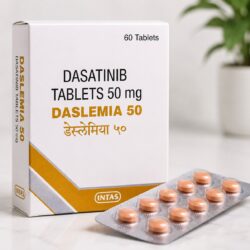




Daslemia 50mg Tablet contains Dasatinib 50mg, a targeted anticancer medicine belonging to the tyrosine kinase inhibitor class. It is prescribed by specialist oncologists for selected Philadelphia chromosome-positive blood cancers, particularly certain cases of chronic myeloid leukemia (CML) and acute lymphoblastic leukemia (ALL). The medicine works by blocking abnormal protein signals that encourage the growth and survival of specific leukemia cells.
Daslemia 50mg is not a general-purpose medicine and should not be used without a confirmed diagnosis and a prescription from a qualified healthcare professional. The correct dose, treatment duration and monitoring schedule depend on the type of leukemia, disease phase, previous treatment, treatment response, blood counts and the patient’s overall medical condition.
Dasatinib treatment requires careful supervision because it can affect blood-cell production, bleeding tendency, fluid balance, lung function and cardiovascular health. Patients receiving this medicine should attend all scheduled appointments and laboratory investigations recommended by their treating oncologist.
This page provides detailed information about Daslemia 50mg Tablet uses, composition, mechanism of action, dosage precautions, side effects, drug interactions, storage and frequently asked questions. It is intended for educational purposes and does not replace personalised medical advice.
Buy Daslemia 50mg Tablet Online
If you are looking to buy Daslemia 50mg Tablet online, it is important to verify the exact medicine name, strength, manufacturer and pack size before placing an order.
Before ordering, check that the product name on the prescription matches Daslemia 50mg Tablet and that the medicine has not been substituted with another strength without your doctor’s approval. Patients should also confirm the pack quantity, expiry date and packaging condition when receiving the product.
At 24x7Pharma, customers can explore prescription medicines and specialised healthcare products, subject to availability and applicable prescription requirements. If you are unsure whether this medicine is suitable for your treatment, consult your oncologist or pharmacist before purchasing.
Do not buy Daslemia for self-treatment of fatigue, anaemia, unexplained weight loss, abnormal blood counts or suspected cancer without proper medical evaluation. Dasatinib is intended for specific diagnosed conditions and requires ongoing clinical monitoring.
What is Daslemia 50mg Tablet?
Daslemia 50mg Tablet is an oral prescription medicine containing Dasatinib 50mg. It belongs to a group of targeted cancer medicines called tyrosine kinase inhibitors (TKIs). These medicines work by blocking specific enzymes or proteins that transmit signals responsible for abnormal cell growth.
Dasatinib is primarily associated with the treatment of Philadelphia chromosome-positive leukemia. In these conditions, an abnormal genetic change can result in the production of a protein called BCR-ABL. This protein continuously sends signals that promote the multiplication and survival of abnormal blood cells.
By inhibiting BCR-ABL and other relevant kinases, Dasatinib interferes with these abnormal signals. This helps reduce the growth of susceptible leukemia cells and supports disease control in patients who respond to treatment.
Daslemia is not suitable for every type of blood cancer. Its use depends on the patient’s diagnosis, molecular characteristics, disease phase and previous treatment history. Daslemia 50mg Tablet Composition
Each Daslemia 50mg Tablet contains:
| Component | Details |
|---|---|
| Active Ingredient | Dasatinib |
| Strength | 50mg |
| Dosage Form | Tablet |
| Therapeutic Class | Targeted anticancer medicine |
| Drug Class | Tyrosine kinase inhibitor |
The active ingredient responsible for the therapeutic action is Dasatinib. Inactive ingredients, colouring agents, coating materials and excipients may vary according to the manufacturer and formulation. Patients with known allergies should review the complete product information before use.
Active Ingredient: Dasatinib 50mg
It inhibits abnormal tyrosine kinase activity, including BCR-ABL, which plays a central role in the development and progression of certain leukemia cells.
Unlike conventional medicines that mainly relieve symptoms, Dasatinib acts on disease-associated cellular signalling pathways. Its purpose is to control the abnormal growth of malignant blood cells rather than provide immediate relief from pain, fever or tiredness.
The clinical benefit of Dasatinib is assessed using blood tests, molecular response testing, disease-specific investigations and the patient’s overall clinical response. Patients should not judge whether the medicine is working only by changes in symptoms.
Therapeutic Class of Daslemia 50mg Tablet
Daslemia belongs to the therapeutic category of targeted anticancer medicines. More specifically, it is classified as a tyrosine kinase inhibitor.
Tyrosine kinases are enzymes involved in cellular communication, growth, division and survival. In certain cancers, these enzymes become abnormally active because of genetic changes. Inhibiting these pathways can help slow or control the multiplication of abnormal cells.
Dasatinib has activity against several kinase targets, including BCR-ABL and other kinases associated with leukemia-cell signalling. Its broad kinase-inhibition profile contributes to its therapeutic activity but also explains why careful safety monitoring is necessary.
Daslemia 50mg Tablet Uses
Daslemia 50mg Tablet is used only for specific blood cancer indications determined by a specialist. Its primary clinical applications are associated with Philadelphia chromosome-positive leukemia.
1. Philadelphia Chromosome-Positive Chronic Myeloid Leukemia
Dasatinib is used in selected patients with Philadelphia chromosome-positive chronic myeloid leukemia (Ph+ CML). CML is a cancer of the blood-forming tissues in which the bone marrow produces excessive numbers of abnormal myeloid cells.
The Philadelphia chromosome is associated with the BCR-ABL genetic abnormality. This abnormality produces a continuously active tyrosine kinase protein that drives uncontrolled cell growth.
Dasatinib inhibits this abnormal kinase activity and helps reduce the proliferation of susceptible leukemia cells. It may be used in different phases of CML depending on the patient’s diagnosis, previous treatment and response to therapy.
The medicine may be prescribed for newly diagnosed disease or in selected patients who have developed resistance or intolerance to previous tyrosine kinase inhibitor treatment.
2. Philadelphia Chromosome-Positive Acute Lymphoblastic Leukemia
Dasatinib may be prescribed for selected patients with Philadelphia chromosome-positive acute lymphoblastic leukemia (Ph+ ALL). ALL is an aggressive blood cancer involving abnormal lymphoid precursor cells.
In Ph+ ALL, Dasatinib may form part of a combination treatment plan that can include chemotherapy, corticosteroids or other specialist-directed medicines. The exact treatment protocol depends on the patient’s age, disease characteristics, response and overall clinical condition.
3. CML with Resistance to Previous Treatment
Some patients with CML may not achieve an adequate response to a previous tyrosine kinase inhibitor. Resistance may occur because of disease-related molecular changes or other treatment-related factors.
In selected cases, Dasatinib may be considered as an alternative targeted treatment. The decision is made after reviewing previous medicines, molecular findings, blood counts and disease response.
4. CML with Intolerance to Previous Therapy
Some patients may experience adverse effects with an earlier targeted treatment that make continued use difficult. In carefully selected circumstances, Dasatinib may be prescribed as an alternative option.
However, switching treatment should never be done independently. The oncologist must evaluate the cause and severity of previous side effects before selecting another medicine.
5. Selected Advanced-Phase Leukemia Settings
Depending on the approved indication and specialist assessment, Dasatinib may be used in certain advanced or resistant phases of Philadelphia chromosome-positive leukemia. These treatment decisions require a comprehensive oncology plan and close monitoring.
How Does Daslemia 50mg Tablet Work?
Daslemia works through its active ingredient Dasatinib, which blocks abnormal tyrosine kinase signalling involved in the growth and survival of specific leukemia cells.
In Philadelphia chromosome-positive leukemia, a genetic rearrangement produces an abnormal BCR-ABL protein. This protein remains continuously active and sends signals that encourage abnormal blood cells to multiply.
Dasatinib binds to and inhibits BCR-ABL kinase activity. It also inhibits other kinases involved in cellular signalling. By blocking these pathways, the medicine reduces the growth-promoting signals that support leukemia-cell survival.
The mechanism can be understood in the following sequence:
- A genetic abnormality produces an abnormal kinase protein.
- The abnormal protein sends continuous growth signals.
- Leukemia cells multiply and survive abnormally.
- Dasatinib inhibits the activity of relevant tyrosine kinases.
- Abnormal growth and survival signalling is reduced.
- Responsive patients may achieve improved disease control.
Dasatinib does not destroy every cancer cell immediately. Its effect is evaluated over time through blood counts, molecular testing and other disease-specific investigations. Treatment response varies between individuals.
The medicine must be taken consistently according to the oncologist’s instructions. Missing doses, changing the dose or stopping treatment without advice may affect disease control and increase treatment-related risks.
Detailed Benefits of Daslemia 50mg Tablet
Targeted Molecular Treatment
One of the main benefits of Dasatinib is its targeted mechanism. It acts on abnormal kinase pathways that are particularly important in Philadelphia chromosome-positive leukemia. This makes it different from medicines that act broadly on many rapidly dividing cells.
Helps Control Leukemia-Cell Proliferation
By inhibiting abnormal BCR-ABL signalling, Dasatinib helps reduce the signals responsible for uncontrolled leukemia-cell multiplication. This contributes to disease control in patients who respond to treatment.
Used in Ph+ CML
Dasatinib is an established targeted treatment option for selected patients with Philadelphia chromosome-positive CML. It may be used depending on disease phase and treatment history.
Useful in Selected Ph+ ALL Treatment Plans
In appropriate patients with Philadelphia chromosome-positive ALL, Dasatinib may be included in a broader treatment regimen under specialist supervision.
Option After Resistance or Intolerance
For certain patients who cannot achieve adequate disease control or tolerate previous therapy, Dasatinib may offer an alternative targeted treatment approach.
Oral Tablet Administration
Daslemia is administered orally, which may allow patients to take treatment at home according to their prescribed schedule. Oral administration does not eliminate the need for regular oncology follow-up.
Supports Long-Term Disease Management
For appropriate patients, Dasatinib may be used as part of an ongoing treatment strategy. The duration and continuation of treatment depend on disease response, tolerability and specialist recommendations.
Daslemia 50mg Tablet Dosage
The dosage of Daslemia must be determined by the treating oncologist. There is no single dose that is suitable for every patient because Dasatinib dosing varies according to the leukemia type, disease phase, treatment history and patient-specific factors.
The term 50mg refers to the strength of one tablet. It does not automatically indicate that every patient should take one tablet once daily.
The prescribed dose may be adjusted according to:
- Type of leukemia
- Phase of the disease
- Previous treatment response
- Blood-cell counts
- Severity of side effects
- Liver function
- Other medicines being used
- Overall treatment tolerance
Patients should take Daslemia exactly as prescribed. Never increase the dose, reduce the dose or change the dosing schedule without consulting the oncologist.
For reliable medicine information, patients and healthcare professionals can refer to the official Dasatinib prescribing information and relevant cancer-treatment guidance from recognised medical authorities.
How to Take Daslemia 50mg Tablet
Take Daslemia according to the instructions provided by your oncologist. The tablet should generally be swallowed whole with water.
- Swallow the tablet whole.
- Do not crush, chew or split it unless specifically instructed.
- Take it at the prescribed time each day.
- Follow the food-related instructions provided by your doctor.
- Do not take additional tablets if you think the medicine is not working quickly.
- Do not share the medicine with another person.
Try to maintain a consistent routine while taking the medicine. If you experience difficulty swallowing, vomiting after a dose or any unusual reaction, contact your oncology team for advice.
Missed Dose of Daslemia 50mg
If you miss a dose of Daslemia, do not automatically take two tablets together. The appropriate action depends on the prescribed schedule and the time elapsed since the missed dose.
Contact your oncologist or pharmacist if you are unsure what to do. Taking an extra dose can increase the risk of toxicity and should be avoided unless specifically instructed by a healthcare professional.
Daslemia 50mg Tablet Overdose
Taking more Dasatinib than prescribed may increase the risk of serious adverse effects. Possible complications include severe reduction in blood-cell counts, bleeding, fluid retention, heart-related effects and other toxicities.
If an overdose is suspected, seek urgent medical assistance. Do not wait for symptoms to appear and do not attempt to correct the overdose by skipping several future doses without medical advice.
Daslemia 50mg Tablet Side Effects
Daslemia may cause side effects because Dasatinib affects important cellular signalling pathways and can also influence normal blood-cell production and other body systems. The severity of side effects varies from patient to patient.
Common Side Effects
- Fatigue or tiredness
- Headache
- Nausea
- Vomiting
- Diarrhoea
- Abdominal discomfort
- Reduced appetite
- Muscle pain
- Joint pain
- Skin rash
- Fluid retention
- Low haemoglobin
- Low white blood cell count
- Low platelet count
Some side effects may be manageable with supportive treatment or dose adjustment. However, persistent or severe symptoms should always be reported to the treating healthcare professional.
Serious Side Effects and Safety Warnings
Low Blood Cell Counts
Dasatinib may suppress bone marrow activity and reduce the production of red blood cells, white blood cells and platelets. This may lead to anaemia, increased infection risk or bleeding tendency.
Regular complete blood counts are important during treatment. Report fever, unusual bruising, persistent weakness or signs of infection promptly.
Bleeding
Dasatinib may increase the risk of bleeding, particularly in patients with low platelet counts or those taking anticoagulant or antiplatelet medicines.
Seek medical advice for unusual bruising, prolonged bleeding, blood in urine, black stools, vomiting blood or unexplained nosebleeds.
Fluid Retention and Pleural Effusion
Dasatinib may cause fluid retention, including accumulation of fluid around the lungs. This condition is known as pleural effusion.
Contact your doctor promptly if you develop new or worsening breathlessness, chest discomfort, persistent cough or difficulty breathing while lying down.
Pulmonary Arterial Hypertension
Rare but serious pulmonary vascular complications may occur during Dasatinib treatment. Persistent breathlessness, dizziness, chest pressure or reduced exercise tolerance should be medically evaluated.
Heart Rhythm Problems
Dasatinib may affect cardiac electrical activity in susceptible patients. The risk may increase when it is combined with other medicines that prolong the QT interval or when electrolyte abnormalities are present.
Heart-Related Complications
Patients with a history of heart disease, abnormal heart rhythm, hypertension or other cardiovascular conditions should inform their oncologist before treatment.
Severe Skin Reactions
Severe rash, blistering, skin peeling, swelling of the face or difficulty breathing may indicate a serious reaction and require urgent medical attention.
Detailed safety information is available through the official FDA medicine information and Dasatinib prescribing information.
Precautions Before Using Daslemia 50mg
Before starting Daslemia, inform your doctor about your complete medical history and all medicines or supplements you are taking.
- Inform your doctor if you have heart disease.
- Tell your doctor if you have abnormal heart rhythm.
- Inform your doctor about previous lung problems.
- Tell your doctor if you have experienced pleural effusion.
- Inform your doctor if you have liver disease.
- Tell your doctor if you have a history of bleeding.
- Inform your doctor if your platelet count is low.
- Tell your doctor if you have an active infection.
- Discuss all anticoagulants and antiplatelet medicines.
- Do not start herbal products without medical approval.
- Attend all blood-test appointments.
- Do not discontinue treatment independently.
Daslemia 50mg Tablet Drug Interactions
Dasatinib can interact with several medicines that affect its absorption, metabolism or safety. Always provide your oncologist with a complete list of prescription medicines, over-the-counter products, vitamins and supplements.
CYP3A4 Inhibitors
Some medicines inhibit the CYP3A4 enzyme and may increase Dasatinib levels in the body. This can increase the risk of toxicity and may require treatment modification.
CYP3A4 Inducers
Medicines that increase CYP3A4 activity may reduce Dasatinib exposure and potentially affect treatment effectiveness.
Acid-Reducing Medicines
Antacids, H2-receptor antagonists and proton pump inhibitors may affect the absorption of Dasatinib. These medicines should not be combined casually with Daslemia without advice from the treating healthcare professional.
Blood Thinners
Anticoagulants and antiplatelet medicines may increase the risk of bleeding when used with Dasatinib. Your doctor must assess the overall risk before combining these treatments.
Medicines Affecting Heart Rhythm
Some medicines can increase the risk of QT prolongation or abnormal heart rhythm when used with Dasatinib. Inform your doctor about cardiac medicines, selected antibiotics, antifungals and other prescription treatments.
Grapefruit Products
Grapefruit and grapefruit juice may affect Dasatinib metabolism. Patients should avoid grapefruit products unless their treating doctor provides specific advice otherwise.
For detailed interaction information, consult the official Dasatinib drug label.
Daslemia 50mg Tablet and Food
Dasatinib may generally be taken with or without food according to the prescribed instructions. However, food and certain beverages can affect medicine absorption or metabolism.
Patients should avoid grapefruit and grapefruit juice unless specifically advised otherwise by their healthcare provider. Do not make major dietary changes or begin nutritional supplements without discussing them with your oncology team.
Daslemia 50mg Tablet During Pregnancy
Dasatinib may cause harm to an unborn baby. Women who can become pregnant should discuss pregnancy prevention and effective contraception with their oncologist before starting treatment.
If pregnancy occurs while taking Daslemia, contact the treating doctor immediately. Do not independently stop treatment or continue it without medical advice.
Patients planning pregnancy should discuss their treatment plan with their oncologist well in advance.
Daslemia 50mg Tablet During Breastfeeding
Breastfeeding is generally not recommended during Dasatinib treatment because of the potential risk to the infant. Patients should discuss safe alternatives with their oncologist and healthcare provider.
Do not resume breastfeeding without receiving clear medical advice after treatment.
Daslemia 50mg in Kidney Disease
Inform your doctor if you have kidney disease or reduced kidney function. The oncologist will assess your medical history, laboratory results and overall treatment requirements before deciding whether any additional precautions are necessary.
Do not assume that kidney disease automatically makes the medicine safe or unsafe. Treatment decisions must be individualised.
Daslemia 50mg in Liver Disease
Patients with liver disease should inform their doctor before using Daslemia. Liver function may require monitoring during treatment, particularly when other medicines or medical conditions may increase the risk of hepatic complications.
Never change the dose based on liver-test results without specialist advice.
Monitoring Required During Daslemia Treatment
Regular monitoring is an essential part of Dasatinib therapy. The oncologist may recommend investigations based on the patient’s diagnosis, dose and clinical condition.
- Complete blood count
- Haemoglobin level
- White blood cell count
- Platelet count
- Liver function tests
- Electrolyte monitoring
- Assessment for fluid retention
- Evaluation of breathing symptoms
- Cardiac assessment when clinically indicated
- Molecular response testing
- Cytogenetic testing where appropriate
These tests help the healthcare team evaluate treatment response, detect adverse effects early and determine whether treatment should continue at the same dose or require modification.
Daslemia 50mg Tablet Storage Instructions
- Store the medicine according to the instructions printed on the packaging.
- Keep tablets in their original container.
- Protect from excessive heat and moisture.
- Keep away from direct sunlight.
- Keep out of reach of children.
- Do not use after the expiry date.
- Do not use damaged or improperly sealed packaging.
- Do not dispose of unused oncology medicines casually.
Why Daslemia 50mg Requires Specialist Supervision
Daslemia is a potent targeted anticancer medicine and is not intended for self-medication. Its effectiveness depends on using the correct treatment protocol for the correct disease subtype.
Dasatinib can affect blood counts, bleeding risk, fluid balance, lung function and cardiovascular health. Therefore, the medicine must be used with regular clinical follow-up and laboratory monitoring.
The oncologist may modify the dose, temporarily interrupt treatment or recommend additional investigations if side effects occur or if the disease response changes.
Patients should never share Daslemia, use another person’s prescription, switch strengths independently or replace it with another Dasatinib brand without discussing the change with their doctor.
Important Lifestyle and Treatment Advice
Patients taking Daslemia should maintain regular medical follow-up and report unusual symptoms promptly. A healthy lifestyle can support general wellbeing during cancer treatment, although it does not replace anticancer therapy.
- Maintain adequate hydration according to medical advice.
- Follow the diet recommended by your healthcare team.
- Avoid self-medication with painkillers or supplements.
- Inform your doctor before receiving new medicines.
- Report fever or signs of infection promptly.
- Report unusual bleeding or bruising.
- Report breathing difficulty without delay.
- Maintain a written list of current medicines.
- Attend all scheduled oncology appointments.
- Do not stop treatment because symptoms improve.
Frequently Asked Questions
What is Daslemia 50mg Tablet?
Daslemia 50mg Tablet is a prescription anticancer medicine containing Dasatinib 50mg, a tyrosine kinase inhibitor used for selected Philadelphia chromosome-positive blood cancers.
What is the composition of Daslemia 50mg?
The active ingredient is Dasatinib 50mg.
Is Daslemia a chemotherapy medicine?
Daslemia is classified as a targeted anticancer medicine called a tyrosine kinase inhibitor. It is different from conventional cytotoxic chemotherapy but still requires specialist supervision.
Does Daslemia contain Dasatinib?
Yes. Daslemia 50mg contains Dasatinib 50mg as its active ingredient.
Can every leukemia patient take Daslemia?
No. Its use depends on the leukemia subtype, molecular characteristics, treatment history and the oncologist’s assessment.
Is 50mg the daily dose for everyone?
No. The tablet strength is 50mg, but the total daily dose varies according to the patient’s diagnosis and treatment protocol.
Can Daslemia cause bleeding?
Yes. Patients should report unusual bruising, prolonged bleeding, black stools or blood in urine promptly.
Can Daslemia cause breathing difficulty?
It may cause fluid retention or pleural effusion. New or worsening breathlessness requires prompt medical evaluation.
Can I stop Daslemia if I feel better?
No. Do not stop or change treatment without your oncologist’s instructions.
Can Daslemia interact with antacids?
Yes. Acid-reducing medicines may affect Dasatinib absorption and should be used only after medical advice.
Can Daslemia interact with blood thinners?
Yes. Blood thinners and antiplatelet medicines may increase bleeding risk.
Can Daslemia be taken during pregnancy?
Dasatinib may harm an unborn baby. Pregnancy-related use must be discussed with the treating oncologist.
Where can I buy Daslemia 50mg Tablet online?
You can explore Daslemia 50mg Tablet online at 24x7Pharma, subject to prescription requirements and product availability.
Medical Disclaimer
Daslemia 50mg Tablet is a prescription anticancer medicine. The information on this page is provided for educational purposes and is not a substitute for the advice of an oncologist, pharmacist or qualified healthcare professional. Do not self-medicate, change the dose or discontinue treatment without medical supervision.
References and Further Reading
For additional information about Dasatinib’s approved uses, safety warnings, drug interactions and prescribing considerations, consult recognised medical resources such as the DailyMed prescribing information, the U.S. Food and Drug Administration and the National Cancer Institute.