





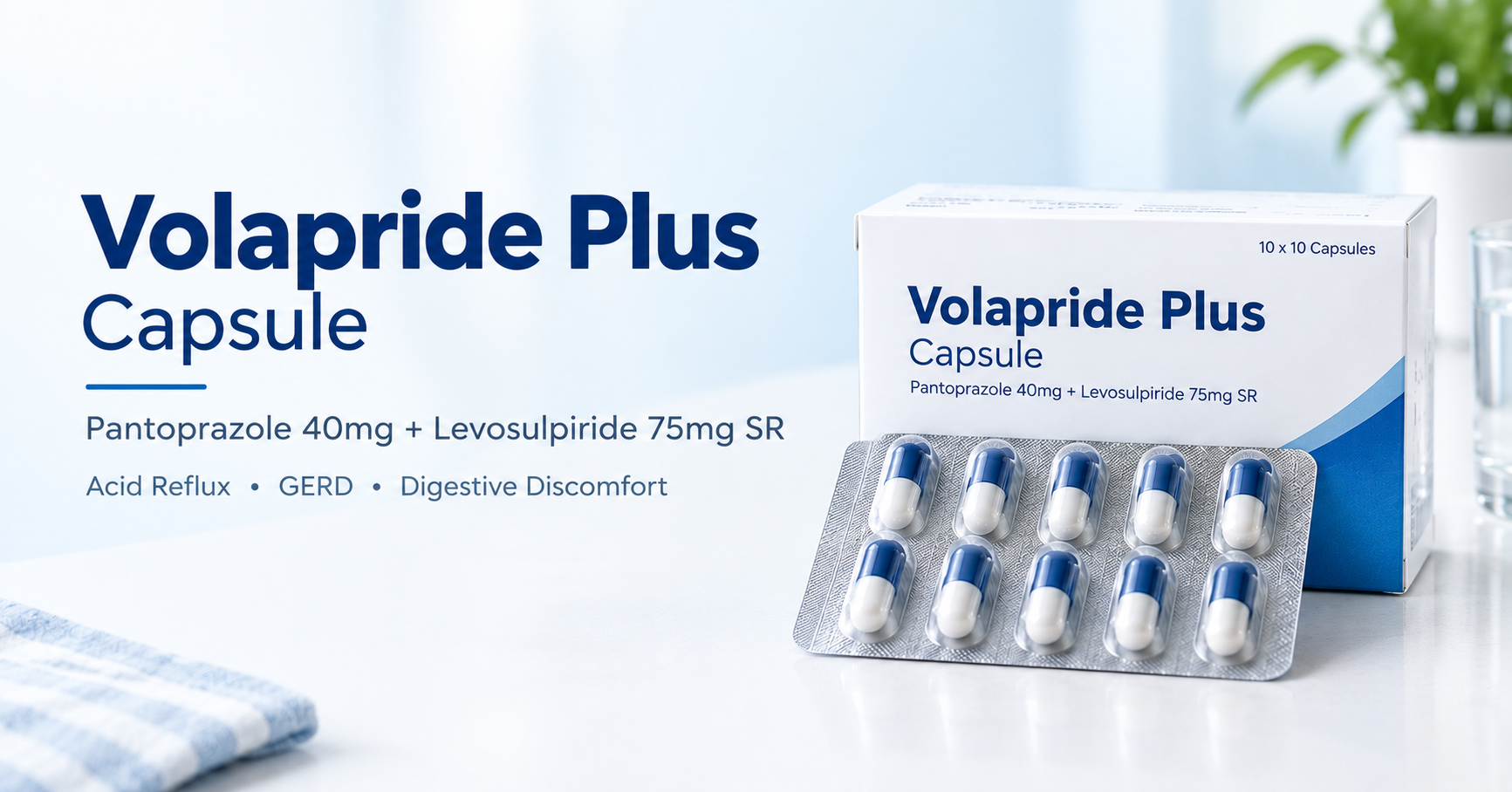
Acid reflux, persistent heartburn, indigestion and uncomfortable fullness after meals can interfere with eating, sleeping and everyday activities. Although these symptoms are common, their causes vary. Some patients have gastroesophageal reflux disease (GERD), while others experience functional dyspepsia or problems involving stomach movement.
This guide explains Volapride Plus Capsule uses, composition, potential benefits, working mechanism, dosage guidance, side effects, precautions and drug interactions. It also discusses dietary measures that may help people manage recurring digestive symptoms.
Patients who have been prescribed this combination can review the Volapride Plus Capsule composition, price and product information at 24x7Pharma.
What Is Volapride Plus Capsule?
Volapride Plus Capsule is a combination medicine containing a proton pump inhibitor and a gastrointestinal prokinetic agent. These ingredients work through different mechanisms.
Pantoprazole reduces the amount of acid produced by the stomach. This makes it useful for treating several acid-related gastrointestinal conditions, including GERD and certain peptic ulcers.
Levosulpiride acts on dopamine receptors and influences gastrointestinal movement. It may help selected patients experiencing symptoms associated with impaired upper gastrointestinal motility.
However, the combination is not necessary for everyone with acidity. Levosulpiride can cause neurological and hormonal adverse effects. A doctor should determine whether the patient requires both ingredients.
Volapride Plus Capsule Composition
The composition listed for Volapride Plus Capsule is:
- Pantoprazole 40 mg: A proton pump inhibitor that reduces gastric acid secretion.
- Levosulpiride 75 mg SR: A sustained-release prokinetic medicine that influences gastrointestinal movement.
Always verify the strength against the original medicine strip and your prescription before use.
What Does Sustained Release Mean?
Sustained-release formulations are designed to release an active ingredient over an extended period. This can help maintain medicine exposure according to the formulation’s intended dosing schedule.
Do not crush, chew or open a sustained-release capsule unless the manufacturer or your pharmacist specifically confirms that doing so is safe.
How Does Volapride Plus Capsule Work?
1. Pantoprazole Reduces Stomach Acid
The stomach produces hydrochloric acid to support digestion. However, acid can irritate the oesophagus when stomach contents repeatedly move backwards.
Pantoprazole blocks the hydrogen-potassium ATPase enzyme, also called the proton pump, in acid-producing stomach cells. This reduces gastric acid secretion.
By lowering acid levels, Pantoprazole can help relieve acid-related heartburn, reduce oesophageal irritation and support healing in selected acid-related disorders.
For further information, read the NHS guide to Pantoprazole uses, dosage and safety.
2. Levosulpiride Supports Gastrointestinal Motility
Levosulpiride is a dopamine D2 receptor antagonist with gastrointestinal prokinetic properties. It can influence the movement of food through the upper digestive tract.
In selected patients, this action may help manage symptoms associated with impaired gastric motility, such as post-meal fullness or certain dyspeptic complaints.
However, Levosulpiride also acts on dopamine pathways involved in movement and hormone regulation. Consequently, it can cause adverse effects such as tremors, muscle stiffness and increased prolactin levels.
Published research on Levosulpiride and prolactin levels describes the medicine’s potential hormonal adverse effects.
3. How Do the Two Ingredients Work Together?
Pantoprazole reduces acid production, while Levosulpiride affects gastrointestinal movement. A healthcare professional may prescribe the combination when a patient’s clinical condition warrants both actions.
However, uncomplicated reflux often responds to acid-suppressing treatment without an additional prokinetic. Treatment selection should depend on the patient’s diagnosis, medical history and response to previous therapy.
Volapride Plus Capsule Uses
The appropriate uses of Volapride Plus Capsule depend on the underlying condition and the doctor’s assessment. The following sections explain situations in which its individual pharmacological actions may be relevant.
1. Gastroesophageal Reflux Disease (GERD)
GERD occurs when stomach contents repeatedly move backwards into the oesophagus, causing troublesome symptoms or complications.
Common symptoms include persistent heartburn, acid regurgitation, a sour taste in the mouth and discomfort after meals.
Pantoprazole is an established acid-suppressing treatment for GERD. A doctor may consider additional treatment when a patient also has a clinically significant gastrointestinal motility problem.
Levosulpiride should not be added automatically to routine GERD treatment because its potential benefits must be balanced against its neurological and hormonal risks.
2. Acid Reflux and Heartburn
Acid reflux may cause a burning sensation behind the breastbone, particularly after eating or when lying down. Patients may also experience regurgitation or an unpleasant acidic taste.
Pantoprazole reduces the acidity of stomach contents, which may help control acid-related irritation.
However, frequent heartburn should be medically evaluated. Persistent symptoms may indicate GERD or another condition that requires further investigation.
3. Functional Dyspepsia
Functional dyspepsia describes recurring upper abdominal symptoms without an identifiable structural disease that fully explains them.
Symptoms may include uncomfortable fullness after meals, early satiety, upper abdominal burning or persistent epigastric discomfort.
Levosulpiride has been studied for certain dyspeptic symptoms because of its gastrointestinal prokinetic effects. Nevertheless, its suitability depends on the patient’s diagnosis, potential adverse effects and locally approved prescribing information.
4. Post-Meal Fullness and Upper Abdominal Discomfort
Some patients experience uncomfortable fullness after eating relatively small meals. This can occur for several reasons, including functional dyspepsia and delayed gastric emptying.
Levosulpiride may be considered in selected cases involving gastrointestinal motility. However, persistent early satiety, unexplained weight loss or vomiting requires medical assessment rather than self-treatment.
5. Selected Gastric Motility Disorders
Gastric motility disorders affect the movement of food through the stomach. Patients may experience nausea, bloating, prolonged fullness or vomiting.
A doctor may investigate these symptoms and consider appropriate treatment. Levosulpiride’s prokinetic properties may be relevant in selected patients, but treatment depends on the specific diagnosis and applicable prescribing guidance.
Potential Benefits of Volapride Plus Capsule
Volapride Plus Capsule offers two different pharmacological actions. Its potential benefits depend on the patient’s medical condition and whether both ingredients are appropriate.
Reduction of Gastric Acid Production
Pantoprazole inhibits acid-producing proton pumps in the stomach lining. This reduces gastric acidity and may help control acid-related symptoms.
For patients with GERD or reflux-related oesophageal inflammation, appropriate acid suppression can support symptom management and healing.
Management of Acid-Related Heartburn
Frequent heartburn can disrupt sleep and affect everyday activities. Pantoprazole may reduce symptoms when gastric acid is an important contributing factor.
Patients should also identify possible triggers, such as large evening meals or lying down immediately after eating.
Support for Upper Gastrointestinal Motility
Levosulpiride influences dopamine receptors involved in gastrointestinal movement. In selected patients, this action may help address symptoms associated with impaired upper gastrointestinal motility.
However, the medicine should not be used solely for occasional bloating without a proper medical assessment.
Management of Selected Dyspeptic Symptoms
Patients with functional dyspepsia may experience early satiety, uncomfortable fullness and upper abdominal discomfort.
Levosulpiride has been investigated for these symptoms. Its use requires an individual assessment because neurological and hormonal adverse effects may outweigh the potential benefits in some patients.
Volapride Plus Capsule Dosage and Administration
Take Volapride Plus Capsule exactly as prescribed. The correct dose and treatment duration depend on the patient’s diagnosis, age, medical history, other medicines and response to treatment.
Many Pantoprazole-containing medicines are taken before meals. However, the exact timing for this combination should follow the prescription and product-specific instructions.
- Confirm the prescribed strength before starting treatment.
- Swallow the capsule whole with water.
- Do not crush or chew the sustained-release formulation.
- Follow the prescribed meal timing.
- Do not increase the dose independently.
- Do not continue treatment beyond the recommended duration without medical advice.
What Should You Do If You Miss a Dose?
Follow the missed-dose instructions supplied with your medicine. If the next scheduled dose is approaching, ask your pharmacist whether to skip the forgotten dose.
Never take two capsules together to compensate for a missed dose.
What Happens If You Take an Overdose?
Taking more than the prescribed quantity may increase the risk of adverse effects, including neurological symptoms associated with Levosulpiride.
Seek urgent medical advice after a suspected overdose. Bring the original medicine packaging to help healthcare professionals identify the formulation.
Volapride Plus Capsule Side Effects
Like other prescription medicines, Volapride Plus Capsule can cause adverse effects. These may result from either Pantoprazole or Levosulpiride.
Possible Side Effects
- Headache
- Nausea
- Abdominal discomfort
- Diarrhoea
- Constipation
- Dizziness
- Drowsiness
- Dry mouth
Not everyone experiences these effects. Contact your healthcare professional if symptoms persist or interfere with normal activities.
Hormonal Side Effects of Levosulpiride
Levosulpiride can increase prolactin levels by blocking dopamine receptors involved in hormone regulation.
Elevated prolactin may cause menstrual irregularities, unexpected breast milk production, breast tenderness or sexual dysfunction.
Report these symptoms to your doctor, particularly if they develop after starting treatment.
Neurological Side Effects
Levosulpiride can occasionally cause extrapyramidal symptoms, including tremors, muscle stiffness, restlessness and involuntary movements.
A published clinical study of Levosulpiride-related movement disorders describes neurological adverse effects observed in affected patients.
Seek prompt medical attention if you develop unusual movements, muscle rigidity or new tremors.
Potential Effects of Long-Term Pantoprazole Treatment
Long-term proton pump inhibitor treatment may require monitoring in selected patients.
Potential concerns include low magnesium levels, vitamin B12 deficiency, certain gastrointestinal infections and an increased risk of fractures in some patients.
For more information, read the NHS Pantoprazole side effects and long-term safety guidance.
Precautions Before Taking Volapride Plus Capsule
Pregnancy and Breastfeeding
Patients who are pregnant, planning pregnancy or breastfeeding should consult their healthcare professional before using this combination.
Levosulpiride can influence prolactin levels. The suitability of treatment during pregnancy or breastfeeding requires individual assessment.
Liver and Kidney Problems
Inform your doctor if you have liver disease, kidney impairment or another significant medical condition. Your doctor may need to review the dose, treatment duration or suitability of the medicine.
Parkinson’s Disease and Movement Disorders
Because Levosulpiride blocks dopamine receptors, it may worsen certain movement disorders or interfere with medicines used to manage Parkinson’s disease.
Patients with Parkinson’s disease or a history of abnormal involuntary movements should inform their prescriber before starting treatment.
Hormonal Conditions
Patients with existing elevated prolactin levels or prolactin-sensitive conditions should discuss the potential hormonal effects of Levosulpiride with their doctor.
Driving and Operating Machinery
Levosulpiride may cause dizziness or drowsiness in some patients. Avoid driving or operating machinery if you experience these effects.
Volapride Plus Capsule Drug Interactions
Volapride Plus Capsule may interact with prescription medicines, over-the-counter treatments and supplements.
Levosulpiride may interfere with dopamine-related medicines, including certain treatments used for Parkinson’s disease. Combining it with other medicines that affect the central nervous system may also require caution.
Pantoprazole can affect the absorption or action of certain medicines, including some antifungal treatments and specific HIV medicines.
Tell your doctor about every medicine you take. Do not combine Volapride Plus Capsule with another acid-suppressing or prokinetic medicine without professional advice.
Diet and Lifestyle Tips for Managing Acid Reflux
Medication is only one part of managing recurring acid reflux. Practical lifestyle changes may also help reduce symptoms.
- Eat smaller meals rather than very large portions.
- Avoid lying down immediately after eating.
- Finish dinner several hours before bedtime.
- Identify foods and drinks that trigger your symptoms.
- Maintain a healthy body weight where appropriate.
- Avoid smoking.
- Limit alcohol if it worsens reflux.
- Discuss persistent nighttime symptoms with your doctor.
Not every patient needs to avoid the same foods. Keeping a food and symptom diary may help identify individual triggers.
When Should You Consult a Doctor?
Seek medical advice if you experience frequent heartburn, persistent indigestion, difficulty swallowing, unexplained weight loss or repeated vomiting.
Blood in vomit, black stools and severe abdominal pain require urgent medical assessment.
Severe chest pain should never automatically be assumed to be acidity. Seek emergency care when appropriate.
Volapride Plus Capsule Storage Instructions
Store the medicine according to the instructions printed on its original packaging.
- Keep the capsules in their original strip or container.
- Protect the medicine from excessive heat and moisture.
- Avoid direct sunlight.
- Keep the medicine away from children and pets.
- Do not use expired capsules.
- Do not use capsules from damaged packaging.
Buy Volapride Plus Capsule Online at 24x7Pharma
Patients who have been prescribed this medicine can visit the Volapride Plus Capsule product page to review its composition and available product information.
Before ordering, verify the exact strength, pack size, prescription requirements and current availability.
For additional prescription medicines, explore the 24x7Pharma online medicines collection.
Patients should never replace one gastrointestinal medicine with another solely because the products treat similar symptoms.
Frequently Asked Questions
1. What is Volapride Plus Capsule used for?
It may be prescribed for selected acid-related gastrointestinal conditions and associated symptoms when both Pantoprazole and Levosulpiride are clinically appropriate.
2. What is the composition of Volapride Plus Capsule?
The listed composition is Pantoprazole 40 mg and Levosulpiride 75 mg Sustained Release.
3. Can Volapride Plus Capsule help with acidity?
Its Pantoprazole component reduces gastric acid. However, not everyone with acidity requires Levosulpiride.
4. Is Volapride Plus Capsule used for GERD?
It may be prescribed in selected patients. Pantoprazole is an established treatment for GERD, while the need for Levosulpiride depends on the clinical assessment.
5. How does Volapride Plus Capsule work?
Pantoprazole reduces stomach acid production, while Levosulpiride influences gastrointestinal motility.
6. When should I take Volapride Plus Capsule?
Follow your doctor’s instructions and the product-specific prescription information.
7. Can I take Volapride Plus Capsule daily?
Take it only according to the prescribed schedule and duration. Do not continue long-term treatment without medical reassessment.
8. Can I crush or chew the capsule?
Do not crush or chew the sustained-release formulation unless your pharmacist specifically advises otherwise.
9. What are the possible side effects?
Possible effects include headache, nausea, abdominal discomfort, dizziness and changes in bowel habits. Levosulpiride may also cause hormonal or neurological adverse effects.
10. Can Volapride Plus Capsule cause drowsiness?
Yes. Levosulpiride may cause dizziness or drowsiness in some patients.
11. Can Levosulpiride increase prolactin?
Yes. It may increase prolactin levels and cause symptoms such as menstrual changes or unexpected breast milk production.
12. Is Volapride Plus Capsule an antibiotic?
No. It contains an acid-suppressing medicine and a gastrointestinal prokinetic agent.
13. Is Volapride Plus Capsule a painkiller?
No. It is not a conventional painkiller and should not be used to treat unexplained abdominal pain without medical evaluation.
14. Can I take it during pregnancy?
Consult your doctor before using this combination during pregnancy.
15. Can breastfeeding women take it?
The suitability of the combination during breastfeeding requires individual medical assessment.
16. Can I drink alcohol while taking Volapride Plus Capsule?
Alcohol may worsen reflux and certain medicine-related adverse effects. Discuss alcohol consumption with your healthcare professional.
17. Can I take other acidity medicines with it?
Ask your doctor or pharmacist before combining gastrointestinal medicines.
18. What should I do if I miss a dose?
Follow the instructions supplied with your prescription. Do not take a double dose to compensate for a forgotten capsule.
19. Is Volapride Plus Capsule suitable for long-term use?
Long-term treatment requires medical reassessment because Levosulpiride may cause neurological and hormonal adverse effects.
20. Where can I check Volapride Plus Capsule price and availability?
Visit the Volapride Plus Capsule listing at 24x7Pharma for current product information.
Conclusion
Volapride Plus Capsule contains Pantoprazole 40 mg and Levosulpiride 75 mg SR. Pantoprazole reduces gastric acid secretion, while Levosulpiride influences gastrointestinal motility. The combination may be considered for selected patients whose clinical condition requires both actions.
Because Levosulpiride can cause hormonal and neurological adverse effects, patients should follow their prescribed dose and treatment duration carefully. Persistent reflux, unexplained digestive symptoms or new adverse effects require professional medical assessment.
For product-specific information, visit the official Volapride Plus Capsule product listing.
Medical References
- NHS: Pantoprazole Medicine Information
- NHS: Pantoprazole Side Effects
- PubMed Central: Levosulpiride and Serum Prolactin Levels
- PubMed Central: Levosulpiride-Induced Neurological Adverse Effects
Medical disclaimer: This article is intended for educational purposes only. It does not replace professional medical advice, diagnosis or treatment. Volapride Plus Capsule is a prescription medicine and should only be used under the supervision of a qualified healthcare professional. Verify the actual product packaging and applicable prescribing information before use.