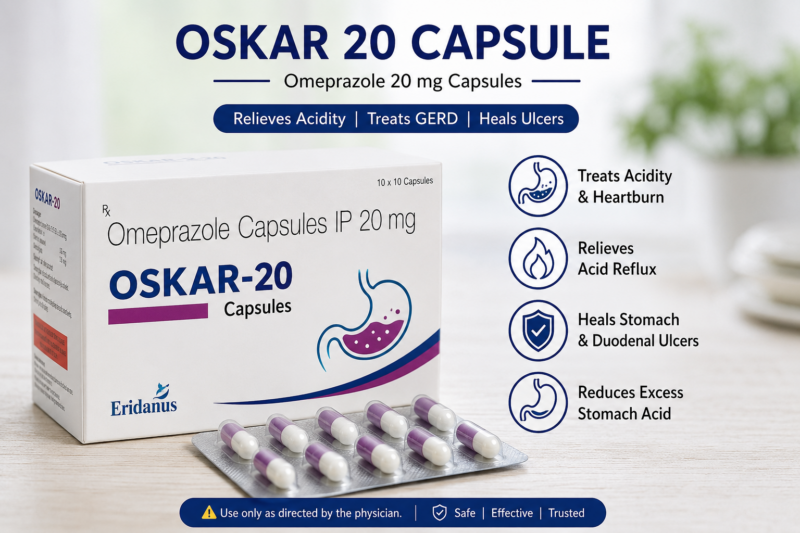




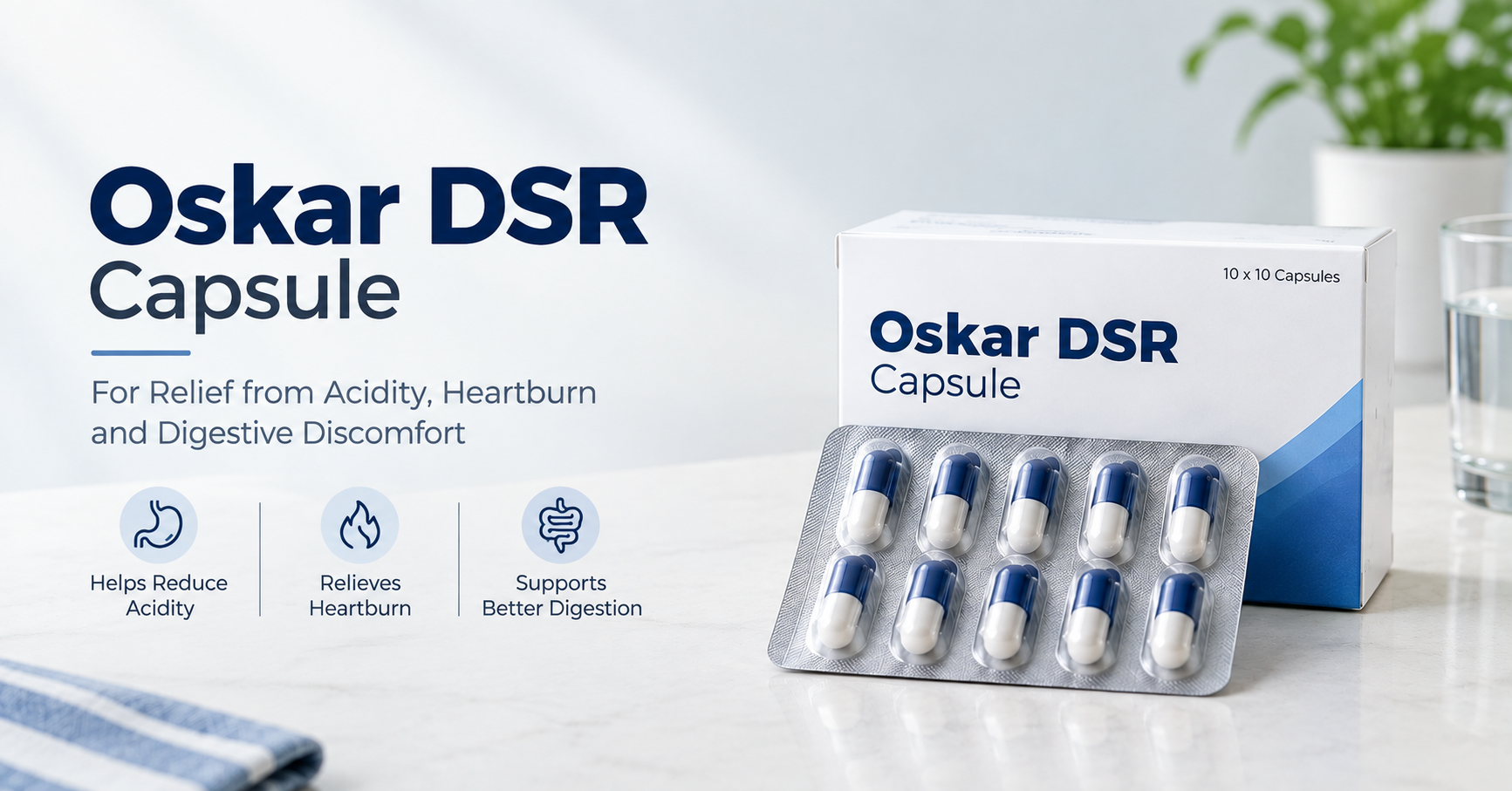
Frequent acidity, heartburn and acid reflux can affect everyday activities, eating habits and sleep. However, these symptoms do not always have the same underlying cause. Some people experience occasional reflux after large meals, while others have persistent gastroesophageal reflux disease (GERD) or another digestive condition requiring medical assessment.
This comprehensive guide explains Oskar DSR Capsule uses, potential benefits, composition, mechanism of action, dosage guidance, possible side effects, precautions and medicine interactions. It also discusses practical lifestyle measures that may help people manage recurring acid reflux.
Patients who have been prescribed this medicine can review the Oskar DSR Capsule composition and product details on 24x7Pharma before ordering.
What Is Oskar DSR Capsule?
Oskar DSR Capsule combines a proton pump inhibitor (PPI) with a medicine that has anti-nausea and gastrointestinal motility effects. Doctors may consider this type of combination when a patient has an appropriate clinical indication for both ingredients.
Omeprazole helps reduce the amount of acid released by the stomach. This action makes it useful for treating several acid-related conditions, including GERD, reflux-related inflammation and certain peptic ulcers.
Domperidone acts on dopamine receptors and affects movement in the upper digestive tract. It also helps control nausea and vomiting. Nevertheless, Domperidone is not suitable for everyone because it can increase the risk of serious heart-rhythm problems.
In the United Kingdom, regulators restrict Domperidone’s licensed indication to nausea and vomiting. Prescribing requirements can differ between countries. Consequently, patients should use Oskar DSR Capsule only for the condition and duration specified by their healthcare professional.
Oskar DSR Capsule Composition and Active Ingredients
Understanding the composition of Oskar DSR Capsule is important because each ingredient performs a different function.
Omeprazole: Proton Pump Inhibitor
Omeprazole belongs to a class of medicines called proton pump inhibitors. It reduces gastric acid secretion by blocking an enzyme system in the stomach lining responsible for the final stage of acid production.
Doctors prescribe Omeprazole for several acid-related disorders. These include GERD, certain gastric and duodenal ulcers, and selected conditions associated with excessive stomach acid.
For detailed information about the active ingredient, read the NHS guide to Omeprazole uses and side effects.
Domperidone Sustained Release: Anti-Nausea and Prokinetic Medicine
Domperidone is a dopamine receptor antagonist with anti-nausea and gastrointestinal prokinetic properties. It can influence movement in the upper digestive tract and help reduce nausea and vomiting in appropriate patients.
The term sustained release describes a formulation designed to release its active ingredient over an extended period. However, the exact release characteristics depend on the specific product.
Domperidone can affect the electrical activity of the heart. Therefore, clinicians must consider existing heart conditions, electrolyte abnormalities, interacting medicines and the intended duration of treatment.
The exact milligram strength of Oskar DSR Capsule should always be confirmed from its original packaging or prescription.
How Does Oskar DSR Capsule Work?
Oskar DSR Capsule contains two active ingredients with distinct mechanisms of action. Understanding these mechanisms helps explain why a doctor might prescribe the combination for selected gastrointestinal symptoms.
1. Omeprazole Reduces Gastric Acid Secretion
The stomach naturally produces hydrochloric acid to support digestion. However, acid can irritate the oesophagus when stomach contents repeatedly flow backwards through the lower oesophageal sphincter.
Omeprazole blocks the hydrogen-potassium ATPase enzyme, commonly known as the proton pump, in acid-producing stomach cells. This reduces gastric acid secretion.
Lower acid levels can reduce the irritation associated with reflux and support healing in certain acid-related conditions. Unlike ordinary antacids, which neutralise existing stomach acid, Omeprazole acts on acid production itself.
Its full acid-suppressing effect may take several days to develop. Therefore, it should not be treated as an instant remedy for every episode of heartburn.
2. Domperidone Influences Gastrointestinal Motility
Domperidone blocks peripheral dopamine D2 receptors. This action contributes to its anti-nausea effects and can influence movement in the upper gastrointestinal tract.
However, improved gastrointestinal movement does not automatically mean that Domperidone should be prescribed for routine acidity or reflux. Its potential benefits must be considered alongside its cardiac risks and the approved indications applicable in the patient’s country.
3. Why Are These Ingredients Sometimes Combined?
Omeprazole addresses acid production, while Domperidone provides a different pharmacological action. A clinician may consider both ingredients when the patient’s condition warrants them.
Nevertheless, many patients with uncomplicated acid reflux can be treated without Domperidone. Combining medicines unnecessarily can expose patients to additional adverse effects and interactions.
Oskar DSR Capsule Uses
The appropriate uses of Oskar DSR Capsule depend on the patient’s diagnosis, the exact product formulation and the prescribing doctor’s assessment.
1. Acid Reflux-Related Symptoms
Acid reflux occurs when stomach contents move backwards into the oesophagus. This can cause a burning sensation behind the breastbone, sour-tasting fluid in the mouth or discomfort after meals.
The Omeprazole component reduces the acidity of refluxed stomach contents. This can help manage acid-related irritation and symptoms.
However, the presence of reflux alone does not establish a need for Domperidone. A doctor should evaluate the patient’s symptoms and determine whether both ingredients are appropriate.
2. Gastroesophageal Reflux Disease (GERD)
GERD develops when reflux causes persistent, troublesome symptoms or complications. Patients may experience repeated heartburn, regurgitation, disturbed sleep or inflammation of the oesophagus.
Proton pump inhibitors such as Omeprazole are established treatments for many patients with GERD. They reduce gastric acidity and can support healing when acid exposure has damaged the oesophageal lining.
A clinician may investigate persistent symptoms despite treatment to identify alternative diagnoses, treatment adherence problems or other contributing factors.
3. Acid-Related Heartburn
Heartburn is often described as a burning feeling in the chest that becomes more noticeable after eating or while lying down.
Omeprazole can help control heartburn caused by gastric acid. However, frequent or severe symptoms should be evaluated rather than repeatedly treated without a diagnosis.
For readers interested in an Omeprazole-only medicine, the related Oskar 20 Capsule uses and dosage guide explains its acid-suppressing action.
4. Associated Nausea and Vomiting
Some gastrointestinal conditions cause nausea or vomiting alongside other digestive complaints. Domperidone may be prescribed to control these symptoms when clinically appropriate.
Patients should not assume that nausea always results from acidity. Infection, medication reactions, pregnancy, migraine and several other conditions can also cause nausea.
Medical assessment is especially important when nausea is persistent, accompanied by dehydration or associated with severe abdominal pain.
5. Selected Upper Gastrointestinal Complaints
Patients sometimes experience upper abdominal discomfort, early fullness or bloating alongside reflux. These symptoms can arise from several different disorders.
Although Domperidone has prokinetic effects, its use for these complaints is restricted in some jurisdictions because of safety concerns. A healthcare professional should establish the underlying cause and assess whether treatment with this combination is justified.
Potential Benefits of Oskar DSR Capsule
The potential benefits of Oskar DSR Capsule depend on the reason it has been prescribed. Its two ingredients should not be assumed to provide additional benefit for every patient with acidity.
Reduction in Stomach Acid Production
Omeprazole inhibits the stomach’s acid-producing proton pumps. As acid secretion decreases, patients with appropriate acid-related conditions may experience less heartburn and irritation.
For people with confirmed GERD, consistent acid suppression can be an important part of treatment. The required duration depends on symptom severity, the presence of complications and the doctor’s treatment plan.
Management of Acid-Related Oesophageal Irritation
Repeated exposure to gastric acid can irritate the oesophageal lining. In some patients, this leads to erosive oesophagitis, a condition characterised by inflammation and visible damage.
Omeprazole can help create a less acidic environment, supporting healing when prescribed for suitable patients.
Control of Associated Nausea
Domperidone may help relieve nausea and vomiting in patients for whom it is appropriate. Its benefits must be weighed against the possibility of adverse cardiac effects.
Patients should not use the medicine for prolonged periods simply because nausea improves. Follow the prescribed treatment duration and seek reassessment if symptoms return.
A Combination of Two Different Pharmacological Actions
The combination provides acid suppression and anti-nausea or prokinetic activity in one formulation. This may be convenient when both ingredients are necessary.
However, convenience alone does not justify combination therapy. The clinician must establish that the patient needs both medicines and can use them safely.
Oskar DSR Capsule Dosage and How to Take It
Take Oskar DSR Capsule exactly as prescribed. The appropriate dose depends on the exact strength, medical indication, other medicines and individual health factors.
Many Omeprazole-containing formulations are taken before meals. However, patients should follow the timing instructions provided with their specific Oskar DSR product.
- Check the prescribed strength before starting treatment.
- Swallow the capsule whole with water unless your pharmacist advises otherwise.
- Do not crush or chew the sustained-release formulation.
- Take the medicine according to the prescribed schedule.
- Do not increase the dose if symptoms persist.
- Do not extend treatment without medical advice.
Because Domperidone has dose-related and duration-related safety concerns, follow-up may be necessary if symptoms continue.
What Should You Do If You Miss a Dose?
Follow the instructions in your prescription leaflet. Generally, take a forgotten dose when remembered unless the next scheduled dose is approaching. Skip the missed dose if appropriate and resume the normal schedule.
Never take a double dose to compensate for a missed capsule. Ask your pharmacist if you are unsure.
What Happens If You Take Too Much?
Taking more than the prescribed amount can increase the risk of adverse effects. Excessive Domperidone exposure is particularly concerning because of its potential effects on heart rhythm.
Seek urgent medical advice after a suspected overdose. Bring the medicine packaging so healthcare professionals can identify the exact ingredients and strength.
Oskar DSR Capsule Side Effects
Like all medicines, Oskar DSR Capsule may cause adverse effects. The type and severity of symptoms vary between patients.
Common or Possible Side Effects
- Headache
- Abdominal discomfort
- Nausea
- Diarrhoea
- Constipation
- Dry mouth
- Flatulence
- Dizziness
These effects do not occur in everyone. Speak to a healthcare professional if symptoms persist, worsen or interfere with normal activities.
Serious Cardiac Side Effects
Domperidone has been associated with QT interval prolongation, serious ventricular arrhythmias and, rarely, sudden cardiac death.
The risk can be greater in older patients, people with existing heart disease and those taking certain interacting medicines.
Seek immediate medical attention if you experience fainting, palpitations, a fast or irregular heartbeat, or unexplained severe dizziness.
Read the official Domperidone cardiac safety guidance for detailed regulatory information.
Other Serious Reactions
Stop taking the medicine and seek emergency care if you develop symptoms of a severe allergic reaction, such as swelling of the tongue or throat, breathing difficulty or collapse.
Long-term proton pump inhibitor treatment can also require monitoring for complications such as low magnesium levels or vitamin B12 deficiency in selected patients.
Important Precautions Before Taking Oskar DSR Capsule
Heart Disease and Abnormal Heart Rhythms
Tell your doctor if you have heart failure, an irregular heartbeat, congenital long QT syndrome or another significant cardiac condition.
Domperidone may be contraindicated in these circumstances. Certain medicines that prolong the QT interval can further increase the risk.
Liver Disease
Both active ingredients require consideration in patients with liver disease. Severe hepatic impairment is a recognised contraindication to Domperidone under UK guidance.
Patients with existing liver problems should have their treatment reviewed before taking this combination.
Kidney Problems
Inform your healthcare professional about chronic kidney disease or significant renal impairment. Dose frequency and treatment suitability may require assessment, particularly when Domperidone is used repeatedly.
Pregnancy
Pregnant patients should not start this combination without professional advice. Although Omeprazole may be suitable during pregnancy in certain circumstances, the combination requires an individual assessment.
Breastfeeding
Tell your doctor if you are breastfeeding. Do not use Domperidone to increase milk production without specialist medical supervision.
Older Adults
Older patients may have several medical conditions and take multiple medicines. These factors can increase the possibility of interactions and Domperidone-related cardiac adverse effects.
Children and Adolescents
Do not give Oskar DSR Capsule to a child without specialist medical advice. The suitability of each ingredient and the formulation must be assessed according to age, weight and clinical indication.
Oskar DSR Capsule Drug Interactions
Drug interactions are an important consideration because Oskar DSR Capsule contains two active ingredients.
Domperidone should not be combined with certain medicines that prolong the QT interval or strongly inhibit the CYP3A4 enzyme. Such combinations can increase its concentration or cardiac risks.
Potentially important interacting medicines include certain macrolide antibiotics, azole antifungals, antiarrhythmic medicines and some other prescription treatments.
Omeprazole can also interact with medicines such as Clopidogrel, Warfarin, Digoxin and certain HIV treatments.
For additional information, consult the Omeprazole medicine and interaction guide and the NHS Domperidone drug interaction guidance.
Provide your doctor with a complete list of prescription medicines, over-the-counter treatments, supplements and herbal products before starting treatment.
Oskar DSR Capsule vs Oskar 20 Capsule
Although their names are similar, Oskar DSR Capsule and Oskar 20 Capsule have different compositions.
| Feature | Oskar DSR Capsule | Oskar 20 Capsule |
|---|---|---|
| Active ingredients | Omeprazole and Domperidone SR | Omeprazole 20 mg |
| Medicine type | Combination formulation | Proton pump inhibitor |
| Main pharmacological actions | Acid suppression and Domperidone’s additional effects | Acid suppression |
| Important consideration | Additional Domperidone-related cardiac risks | Omeprazole-specific precautions and interactions |
Patients should not switch between these products without consulting their prescriber. A combination medicine is not automatically more effective or suitable than a single-ingredient treatment.
For more information, read our detailed Oskar 20 Capsule guide.
Diet and Lifestyle Tips for Managing Acid Reflux
Alongside prescribed treatment, several practical changes may help patients manage recurring reflux symptoms.
Eat Smaller, Regular Meals
Large meals can increase stomach distension and make reflux more noticeable. Smaller portions may help patients who experience symptoms after eating.
Avoid Lying Down Immediately After Eating
Remaining upright after meals may reduce reflux episodes. Try to finish your evening meal several hours before going to bed.
Identify Individual Food Triggers
Some people notice symptoms after fatty foods, spicy dishes, coffee, chocolate or acidic drinks. However, triggers vary between individuals.
A food and symptom diary can help identify patterns without unnecessarily excluding entire food groups.
Maintain a Healthy Body Weight
For patients who are overweight, medically appropriate weight management may improve reflux symptoms by reducing pressure on the stomach.
Consider Nighttime Reflux Measures
Patients who experience reflux during sleep may benefit from raising the head of their bed or adjusting their sleeping position after discussing persistent symptoms with a clinician.
Avoid Smoking and Limit Alcohol
Smoking and alcohol may worsen reflux in some individuals. Reducing these exposures can support broader digestive and general health.
When Should You Seek Medical Attention?
Occasional heartburn is common, but recurring symptoms should not automatically be treated with repeated courses of medicine.
Consult a healthcare professional if you experience persistent reflux, difficulty swallowing, unexplained weight loss, recurrent vomiting or symptoms that do not improve with prescribed treatment.
Vomiting blood, black stools or severe abdominal pain require urgent assessment. Severe chest pain, particularly when accompanied by sweating, breathlessness or pain spreading to the arm or jaw, requires emergency medical attention.
Oskar DSR Capsule Storage Instructions
Store Oskar DSR Capsule according to the instructions printed on its original packaging.
- Keep capsules in their original strip or container.
- Protect the medicine from excessive heat and moisture.
- Avoid direct sunlight.
- Keep the medicine away from children and pets.
- Check the expiry date before use.
- Do not use damaged or visibly altered capsules.
Ask a pharmacist how to dispose of unused or expired medicines safely.
Buy Oskar DSR Capsule Online at 24x7Pharma
Patients who have been prescribed this medicine can visit Oskar DSR Capsule online at 24x7Pharma to review the product listing.
Before placing an order, verify the medicine name, active ingredients, exact strength, pack size, current price, availability and prescription requirements.
If you are comparing acid-suppressing medicines, the Oskar 20 Capsule information guide explains how an Omeprazole-only formulation differs from a combination containing Domperidone.
Always purchase prescription medicines from an appropriately licensed pharmacy and follow the directions provided by your healthcare professional.
Frequently Asked Questions
1. What is Oskar DSR Capsule used for?
Oskar DSR Capsule may be prescribed for selected patients with acid-related gastrointestinal conditions and associated symptoms. Its suitability depends on whether both Omeprazole and Domperidone are clinically appropriate.
2. What is the composition of Oskar DSR Capsule?
It contains Omeprazole and Domperidone Sustained Release. Check the original packaging for the exact strength of each ingredient.
3. Is Oskar DSR Capsule used for acidity?
Its Omeprazole component reduces stomach acid. However, not every patient with acidity needs a medicine containing Domperidone.
4. Can Oskar DSR Capsule help with GERD?
Omeprazole is used to manage GERD. The addition of Domperidone requires a separate assessment of clinical need, safety and applicable prescribing guidance.
5. How does Oskar DSR Capsule work?
Omeprazole inhibits gastric acid production, while Domperidone has anti-nausea and gastrointestinal prokinetic effects.
6. When should I take Oskar DSR Capsule?
Follow your prescription and the instructions supplied with the specific product. Do not change the timing or frequency independently.
7. Can I take Oskar DSR Capsule daily?
Take it only for the prescribed duration. Domperidone should generally be used for the shortest appropriate period, and prolonged treatment requires medical reassessment.
8. Can I take it after meals?
Follow the timing instructions provided by your prescriber. Many formulations containing these ingredients are taken before meals, but product-specific instructions take priority.
9. What are the possible side effects?
Possible effects include headache, dry mouth, abdominal discomfort, nausea, diarrhoea and constipation. Serious cardiac adverse effects are also possible because of Domperidone.
10. Can Oskar DSR Capsule cause an irregular heartbeat?
Yes. Domperidone has been associated with abnormal heart rhythms in susceptible patients. Seek urgent medical attention for fainting, palpitations or an irregular heartbeat.
11. Is Oskar DSR Capsule safe during pregnancy?
The suitability of this combination during pregnancy requires individual medical assessment. Do not start treatment without professional advice.
12. Can breastfeeding women take Oskar DSR Capsule?
Breastfeeding patients should consult their healthcare professional before using the combination.
13. Is Oskar DSR Capsule an antibiotic?
No. Omeprazole is a proton pump inhibitor, while Domperidone has anti-nausea and gastrointestinal prokinetic effects.
14. Is Oskar DSR Capsule a painkiller?
No. It is not a conventional painkiller. Its ingredients act on gastric acid production and gastrointestinal function.
15. Can I drink alcohol while taking Oskar DSR Capsule?
Avoid alcohol during treatment unless your healthcare professional advises otherwise. Alcohol may worsen reflux and certain medicine-related adverse effects.
16. Can I take antacids with Oskar DSR Capsule?
Ask your doctor or pharmacist before combining gastrointestinal medicines. The appropriate combination and timing depend on the products involved.
17. Can I stop taking the capsule when my symptoms improve?
Follow your prescribed treatment plan. Ask your doctor whether the medicine should be stopped, continued or changed rather than adjusting treatment independently.
18. What should I do if I forget a dose?
Follow the product’s missed-dose instructions. Do not take a double dose to compensate for a forgotten capsule.
19. What is the difference between Oskar DSR and Oskar 20?
Oskar DSR contains Omeprazole and Domperidone SR, while Oskar 20 contains Omeprazole 20 mg. They should not be considered interchangeable.
20. Where can I check Oskar DSR Capsule price and availability?
Visit the Oskar DSR Capsule product listing on 24x7Pharma for product information and current availability.
Conclusion
Oskar DSR Capsule combines Omeprazole and Domperidone Sustained Release. Omeprazole reduces gastric acid production, while Domperidone has anti-nausea and gastrointestinal motility effects. The combination may be prescribed for selected patients, but it is not necessary or appropriate for every person experiencing acidity or reflux.
Because Domperidone can cause serious cardiac adverse effects and interact with other medicines, patients should follow their prescriber’s instructions carefully. Persistent digestive symptoms should be assessed to identify the underlying cause and determine the most appropriate treatment.
To review the medicine, visit the Oskar DSR Capsule product page at 24x7Pharma.
Medical References
- NHS: Omeprazole Uses, Dosage and Safety
- NHS: Domperidone Medicine Information
- MHRA: Domperidone Cardiac Safety Guidance
- MHRA: July 2026 Domperidone Safety Update
Medical disclaimer: This article provides general educational information and does not replace professional medical advice, diagnosis or treatment. Always consult a qualified healthcare professional before starting, stopping or changing prescription medicines. Product indications and prescribing requirements may differ between countries.