



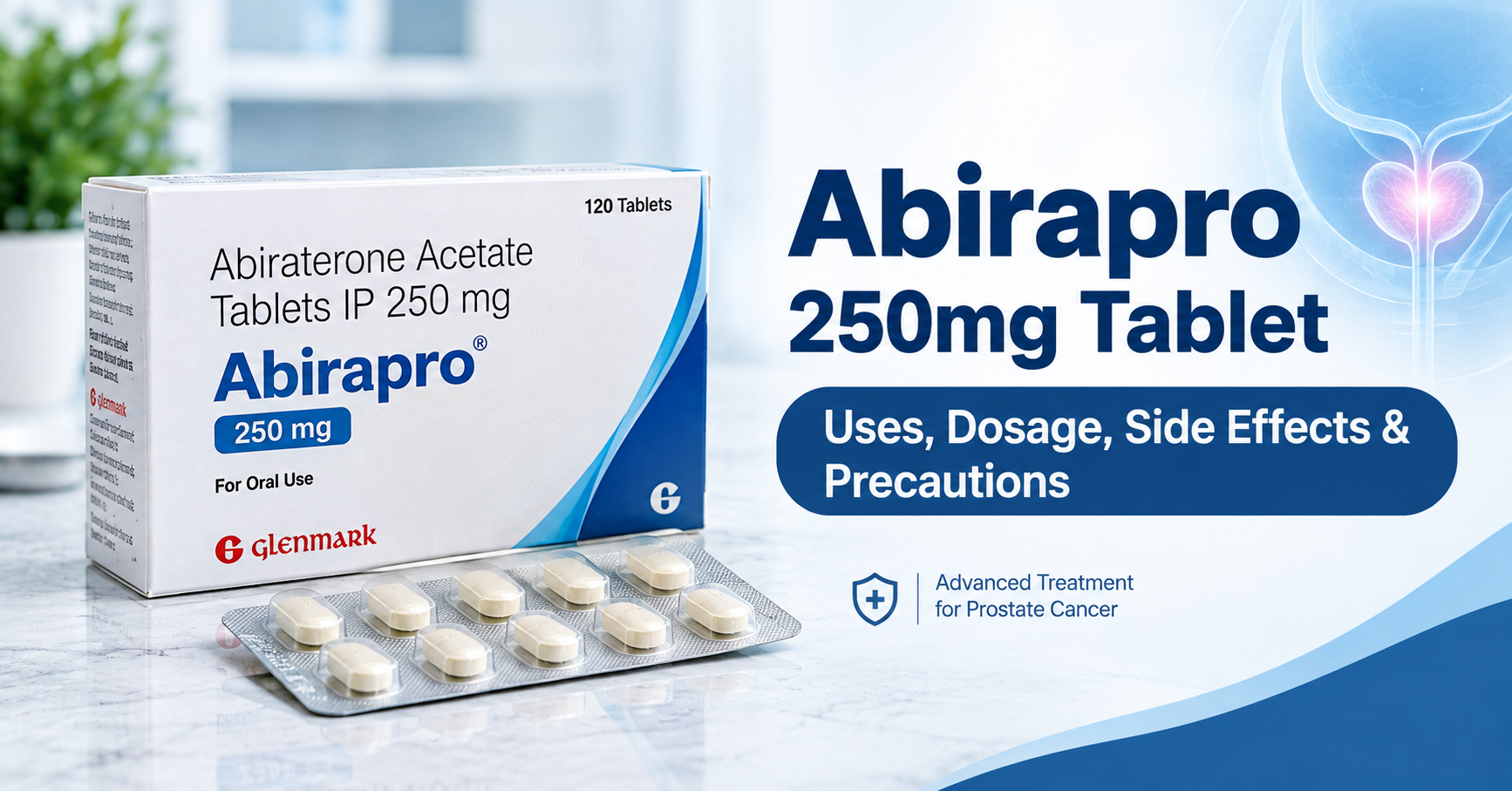
Understanding how a prescribed cancer medicine works is an important part of treatment. Patients and caregivers may have questions about dosage, food restrictions, possible side effects and the blood tests required during therapy. This guide explains the role of Abirapro 250mg, its important safety considerations and what to discuss with an oncology specialist.
For product-specific information, visit our Abirapro 250mg Tablet product page.
What Is Abirapro 250mg Tablet?
Abirapro 250mg Tablet contains 250mg of abiraterone acetate. It belongs to a group of medicines known as androgen biosynthesis inhibitors. These medicines reduce the production of hormones that can support the growth of certain prostate cancers.
Abiraterone is commonly prescribed with a corticosteroid, such as prednisone or prednisolone. Patients may also need to continue androgen deprivation therapy, depending on their treatment history and clinical circumstances.
Abirapro is not suitable for every patient with prostate cancer. An oncologist evaluates the stage of the disease, previous treatment, liver function, cardiovascular health and other clinical factors before prescribing it.
Abirapro 250mg Composition and Product Information
| Product detail | Information |
|---|---|
| Brand name | Abirapro |
| Active ingredient | Abiraterone acetate |
| Strength | 250mg per tablet |
| Dosage form | Oral tablet |
| Marketer | Glenmark Pharmaceuticals Ltd. |
| Medicine class | Androgen biosynthesis inhibitor |
| Prescription | Required |
Abirapro 250mg Tablet Uses
The main clinical role of abiraterone acetate is the treatment of certain forms of advanced prostate cancer. The appropriate regimen depends on whether the cancer remains sensitive to hormone suppression, whether it has spread and which treatments the patient has already received.
1. Metastatic Castration-Resistant Prostate Cancer
Metastatic castration-resistant prostate cancer, or mCRPC, is prostate cancer that has spread to other parts of the body and continues to progress despite treatment that reduces testosterone to castrate levels.
Although conventional androgen deprivation therapy lowers testosterone, the body and tumour tissues may continue to produce androgens through other pathways. Abiraterone inhibits an enzyme involved in this additional hormone production.
For suitable patients, an oncologist may prescribe abiraterone with prednisone as part of a comprehensive treatment plan. The choice of treatment also depends on symptoms, previous therapies and the patient’s overall health.
2. Metastatic Castration-Sensitive Prostate Cancer
Metastatic castration-sensitive prostate cancer refers to disease that has spread beyond the prostate but still responds to treatment that reduces androgen activity.
Abiraterone may be included in treatment for appropriate patients with metastatic castration-sensitive disease, including certain high-risk cases. Doctors generally combine it with corticosteroid treatment and ongoing androgen deprivation therapy when indicated.
Patients should not assume that all metastatic prostate cancers require the same treatment. The oncology team determines the appropriate combination using the patient’s diagnosis and applicable treatment guidelines.
How Does Abirapro 250mg Tablet Work?
Prostate cancer cells often depend on androgen signalling to grow. Testosterone and related hormones can activate androgen receptors and encourage cancer-cell growth.
Abirapro contains abiraterone acetate, which the body converts into abiraterone. The active substance blocks an enzyme called CYP17A1. This enzyme plays an important role in androgen production in the testes, adrenal glands and prostate tumour tissue.
By inhibiting CYP17A1, abiraterone reduces androgen production and helps limit the hormonal signals that support prostate cancer growth.
However, this action also changes the balance of other hormones. Patients may develop high blood pressure, low potassium or fluid retention. Doctors therefore prescribe appropriate corticosteroid treatment and arrange regular monitoring.
For detailed clinical information, consult the abiraterone acetate prescribing information.
Potential Benefits of Abiraterone Treatment
Reduces Androgen Production
Abiraterone targets an important pathway involved in androgen synthesis. This provides an additional way to suppress hormonal signalling in selected patients with advanced prostate cancer.
Supports Combination Treatment
Abiraterone can form part of a treatment plan that includes corticosteroids and androgen deprivation therapy. Clinical studies have demonstrated benefits in specified metastatic prostate cancer populations. Individual outcomes vary according to disease characteristics and other factors.
Provides an Oral Treatment Option
Abirapro is available as an oral tablet. However, oral administration does not remove the need for specialist supervision. Patients must follow the prescribed schedule, food restrictions and monitoring appointments.
Allows Treatment Response Monitoring
Oncology teams can assess treatment response through clinical examinations, prostate-specific antigen measurements and imaging when appropriate. They also monitor adverse effects to determine whether treatment adjustments are necessary.
Important: Abirapro is not a guaranteed cure for prostate cancer. Treatment benefits and risks must be assessed individually by a qualified oncology specialist.