



Prostate cancer treatment depends on several factors, including the stage of the disease, previous treatment, overall health and whether the cancer responds to hormonal therapy. For patients who need testosterone suppression, leuprolide acetate may form an important part of a specialist-directed treatment plan.
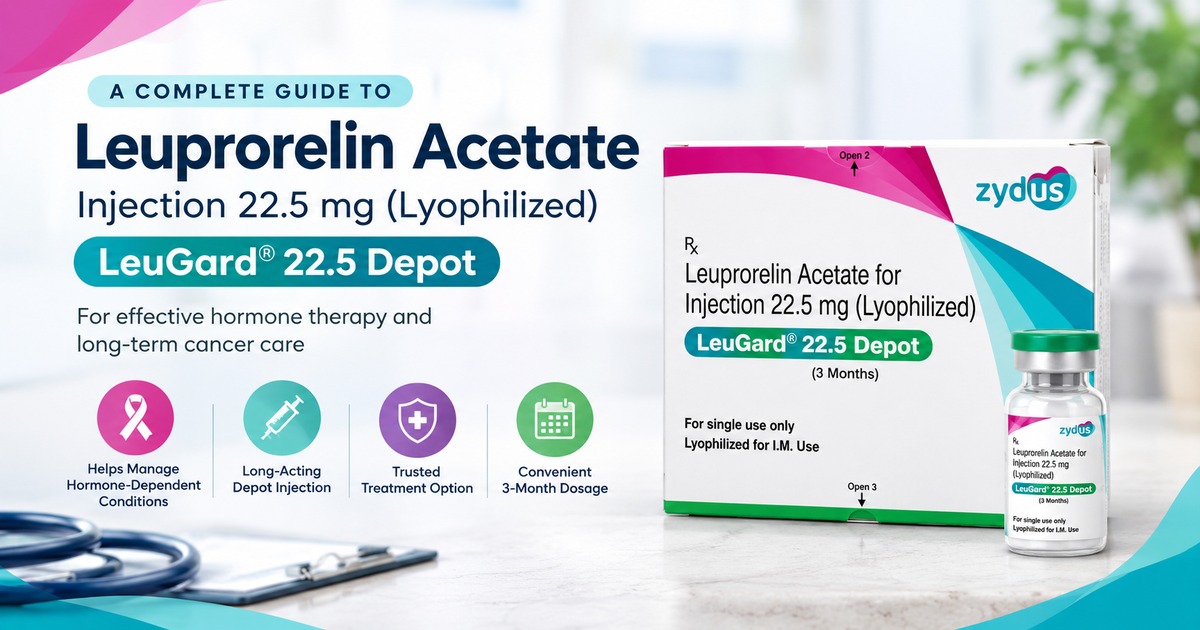
This guide explains the uses of Leugard 22.5mg Injection, how the medicine works, its treatment schedule, possible side effects and the precautions patients should understand before starting therapy.
Patients looking for product-specific information can visit the Leugard 22.5mg Injection product page on 24x7Pharma.
What Is Leugard 22.5mg Injection?
Leugard 22.5mg Injection is a prescription depot formulation of leuprolide acetate, a medicine belonging to the gonadotropin-releasing hormone (GnRH) agonist class. It acts on the hormonal signalling system that controls the production of reproductive hormones.
In men receiving continuous GnRH agonist therapy, testosterone levels initially rise and subsequently fall. Sustained testosterone suppression is useful in the treatment of prostate cancers that depend on androgen hormones for growth.
Unlike an immediate-release medicine, a depot injection delivers its active ingredient over an extended period. The 22.5mg formulation is intended for an approximately three-month treatment schedule, subject to the manufacturer’s instructions and the treating specialist’s prescription.
Leugard 22.5mg Injection Composition
| Product information | Details |
|---|---|
| Brand | Leugard 22.5mg Injection |
| Active ingredient | Leuprolide acetate |
| Strength | 22.5mg |
| Medicine class | GnRH agonist |
| Formulation | Long-acting depot injection |
| Brand / manufacturer | Zydus |
| Administration | By a qualified healthcare professional |
| Prescription status | Prescription medicine |
Different leuprolide products may have different preparation methods and administration routes. Healthcare professionals must follow the instructions supplied with the specific Leugard pack.
Leugard 22.5mg Injection Uses
The principal role of the 22.5mg leuprolide depot formulation in oncology is hormonal treatment for suitable patients with prostate cancer. Its use and place in therapy depend on the patient’s diagnosis and the oncologist’s treatment plan.
1. Hormonal treatment for prostate cancer
Some prostate cancer cells rely on testosterone and related androgen hormones to support their growth. By reducing testosterone production, leuprolide helps limit the hormonal stimulation of these cancer cells.
Doctors commonly use androgen deprivation therapy for advanced prostate cancer. They may also prescribe it alongside other treatments in selected clinical situations.
2. Androgen deprivation therapy
Androgen deprivation therapy aims to lower androgen activity in the body. Leuprolide achieves this through its effects on the pituitary gland, which controls hormonal signals to the testes.
The treating specialist determines whether hormonal therapy is appropriate and whether additional medicines are needed.
3. Long-term testosterone suppression
The three-month depot formulation provides an option for patients who require sustained hormonal suppression. However, regular follow-up remains essential, even when injections are scheduled several weeks apart.
For further clinical information, consult the National Cancer Institute’s prostate cancer resources.
How Does Leugard 22.5mg Injection Work?
Leugard contains leuprolide acetate, a synthetic GnRH agonist. GnRH is a hormone produced by the hypothalamus that stimulates the pituitary gland to release luteinizing hormone (LH) and follicle-stimulating hormone (FSH).
In men, LH stimulates the testes to produce testosterone. When a patient first receives leuprolide, testosterone levels may temporarily increase. This early response is known as a testosterone flare.
With continuous exposure to leuprolide, the pituitary gland becomes less responsive to GnRH stimulation. Consequently, LH production decreases, and testosterone levels fall.
This process reduces the hormonal stimulation of androgen-sensitive prostate cancer cells. Leuprolide is hormonal therapy, not conventional cytotoxic chemotherapy.
Benefits of Leugard 22.5mg Injection
For appropriately selected patients, leuprolide depot treatment can offer several clinical and practical benefits.
- Sustained hormonal suppression: Helps maintain reduced testosterone levels throughout the prescribed treatment period.
- Three-month formulation: Provides an extended dosing interval rather than requiring frequent short-acting injections.
- Established treatment approach: Leuprolide is used in androgen deprivation therapy for prostate cancer.
- Combination treatment: May be included alongside other cancer treatments when the oncologist considers this appropriate.
- Structured follow-up: Scheduled injections allow the healthcare team to coordinate hormonal monitoring and treatment reviews.
The benefits of treatment depend on the patient’s disease characteristics and response. Leugard does not guarantee that cancer will stop progressing, and patients may require additional treatment.
Leugard 22.5mg Injection Dosage and Administration
The 22.5mg leuprolide depot formulation generally follows a 12-week injection schedule. However, the exact administration instructions must come from the prescribing specialist and the specific product’s package insert.
A qualified healthcare professional must prepare and administer the medicine. Patients should not attempt to reconstitute or inject the product themselves.
What happens if an injection is missed?
Contact the treating clinic as soon as possible if an injection appointment is missed. The healthcare team will advise when to receive the next dose and whether additional monitoring is required.
Do not arrange an extra injection or change the treatment interval without medical approval.
Leugard Injection Side Effects
Like other GnRH agonists, leuprolide can cause side effects related to hormonal changes. Some symptoms are temporary, while others may require monitoring throughout treatment.
Common side effects
- Hot flashes and increased sweating
- Fatigue or reduced energy
- Decreased sexual desire
- Erectile or other sexual difficulties
- Injection-site discomfort
- Headache
- Muscle or joint discomfort
- Changes in mood or sleep
Discuss persistent or troublesome symptoms with the treating doctor. Supportive care may help patients manage certain treatment-related effects.
Important long-term risks
Prolonged androgen deprivation can affect bone mineral density, body composition and metabolic health. Some patients may experience increased blood glucose or changes in cardiovascular risk factors.
The specialist may recommend bone-health assessment, glucose monitoring, cardiovascular evaluation or other investigations according to the patient’s medical history.
Serious symptoms requiring urgent attention
Seek urgent medical care for chest pain, severe allergic symptoms, fainting, a new irregular heartbeat or sudden neurological symptoms.
New severe back pain, leg weakness, numbness or difficulty passing urine can indicate serious complications in patients with prostate cancer. These symptoms require prompt medical assessment.
Important Warnings and Precautions
Initial testosterone flare
During the first weeks of GnRH agonist treatment, testosterone may temporarily increase before falling. In some patients with advanced prostate cancer, this can worsen bone pain or urinary symptoms.
The oncologist may prescribe additional treatment to reduce flare-related risks in patients who need it.
Bone health
Long-term testosterone suppression can contribute to bone loss. Patients with osteoporosis, previous fractures or other risk factors should discuss their bone health with their specialist.
Diabetes and cardiovascular conditions
Tell the healthcare team about diabetes, heart disease, previous stroke, abnormal heart rhythms and other significant medical conditions before starting treatment.
Some patients require additional monitoring of blood glucose, blood pressure, cholesterol or heart rhythm.
Other medicines
Provide the oncologist with an up-to-date list of all prescription medicines, over-the-counter products and supplements. Certain medicines may require additional consideration, particularly those that affect heart rhythm.
Monitoring During Leugard Treatment
Regular monitoring helps the oncologist evaluate treatment response and identify complications. The appropriate investigations depend on the patient’s diagnosis and overall treatment plan.
- Prostate-specific antigen (PSA) testing
- Testosterone level assessment
- Review of symptoms and treatment response
- Blood glucose or HbA1c when indicated
- Cardiovascular risk assessment
- Bone mineral density assessment when appropriate
- Review of treatment-related side effects
Patients should attend all scheduled appointments, even when they feel well and have no obvious symptoms.
Frequently Asked Questions
1. What is Leugard 22.5mg Injection used for?
Leugard is a leuprolide acetate depot medicine used for hormonal suppression in selected patients with prostate cancer under specialist supervision.
2. Is Leugard chemotherapy?
No. Leugard is a hormonal medicine that reduces testosterone production. It does not work in the same way as conventional cytotoxic chemotherapy.
3. How long does Leugard 22.5mg last?
The 22.5mg depot formulation is designed for approximately three months of treatment, with injections generally scheduled every 12 weeks.
4. Can Leugard cause hot flashes?
Yes. Hot flashes are a recognized effect of testosterone suppression during GnRH agonist treatment.
5. Does Leugard cure prostate cancer?
Leugard is a hormonal treatment, not a guaranteed cure. Its role depends on the stage of prostate cancer and the patient’s broader treatment plan.
6. Can patients administer Leugard at home?
The depot injection should be prepared and administered by an appropriately trained healthcare professional according to the specific product instructions.
7. Does Leugard affect bone health?
Long-term androgen deprivation may reduce bone mineral density. The treating specialist may recommend monitoring and appropriate bone-health measures.
8. Where can I find Leugard 22.5mg product information?
Visit the Leugard 22.5mg Injection listing on 24x7Pharma for product details. A valid prescription and professional medical advice are essential.
Final Thoughts
Leugard 22.5mg Injection provides long-acting leuprolide acetate therapy for suitable patients who require hormonal suppression. Understanding its mechanism, injection schedule, potential side effects and monitoring requirements can help patients prepare for discussions with their oncology team.
Patients should follow their specialist’s treatment plan and report any new or worsening symptoms promptly. Never start, stop or change cancer treatment independently.
Medical References
- FDA: Leuprolide Acetate for Depot Suspension — Prescribing Information
- National Cancer Institute: Prostate Cancer
- DailyMed: Leuprolide Acetate Clinical Information
Medical disclaimer: This article is intended for educational purposes and does not replace professional medical advice, diagnosis or treatment. Leugard is a prescription medicine. Consult a qualified oncologist for advice about its suitability, administration and monitoring.