



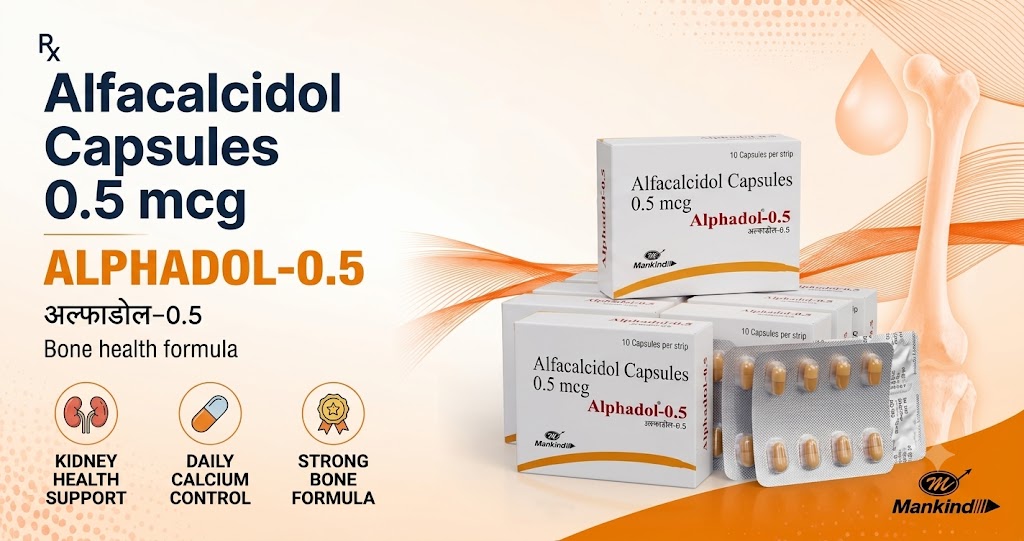
This guide explains Alphadol 0.5mcg Capsule uses, benefits, dosage considerations, side effects, drug interactions and important safety precautions. It also discusses why regular blood tests are necessary during treatment.
For medicine-specific information, visit the Alphadol 0.5mcg Capsule product page on 24x7Pharma.
What Is Alphadol 0.5mcg Capsule?
Alphadol 0.5mcg Capsule is an oral prescription medicine containing 0.5 micrograms of alfacalcidol. It belongs to a group of medicines known as vitamin D analogues.
Unlike ordinary nutritional vitamin D supplements, alfacalcidol requires activation in the liver rather than the kidneys. The resulting active vitamin D metabolite helps the body absorb calcium and phosphate and supports normal bone mineralisation.
Doctors may prescribe this medicine for selected patients with kidney-related bone disorders, hypoparathyroidism, osteomalacia and certain other disturbances of mineral metabolism.
Alphadol is not a general-purpose vitamin supplement. Patients should use it only after a doctor has evaluated their medical condition and relevant laboratory results.
Alphadol 0.5mcg Capsule Composition
| Product information | Details |
|---|---|
| Medicine | Alphadol 0.5mcg Capsule |
| Active ingredient | Alfacalcidol |
| Strength | 0.5 micrograms |
| Medicine class | Vitamin D analogue |
| Dosage form | Oral capsule |
| Prescription status | Prescription medicine |
| Clinical role | Management of selected calcium and phosphate metabolism disorders |
Alphadol 0.5mcg Capsule Uses
Alfacalcidol has several established clinical applications. However, the appropriate indication depends on the patient’s diagnosis, kidney function, calcium levels and response to treatment.
1. Renal osteodystrophy
Renal osteodystrophy refers to changes in bone structure associated with chronic kidney disease. As kidney function declines, the body may become less effective at converting vitamin D into its active form.
This can contribute to abnormal calcium and phosphate levels, changes in parathyroid hormone and problems with bone mineralisation.
In selected patients, doctors prescribe alfacalcidol to help manage these abnormalities. Treatment requires careful monitoring because excessive calcium or phosphate can cause additional complications.
2. Hypoparathyroidism
Hypoparathyroidism occurs when the parathyroid glands produce insufficient parathyroid hormone (PTH). This hormone normally helps regulate calcium and phosphate levels.
Low PTH can lead to hypocalcaemia, which may cause muscle cramps, tingling sensations or other symptoms.
Alfacalcidol helps increase intestinal calcium absorption and may form part of treatment for hypoparathyroidism. The doctor may also prescribe calcium supplementation when appropriate.
3. Osteomalacia
Osteomalacia is a condition in which adult bones become inadequately mineralised. It may develop because of disturbances in vitamin D metabolism or other underlying disorders.
Alfacalcidol may be useful in selected cases, particularly when impaired vitamin D activation contributes to the condition.
4. Certain forms of rickets
Rickets affects bone development in children. Some forms are associated with inherited or acquired problems involving vitamin D metabolism.
Specialists may prescribe alfacalcidol for specific forms of rickets. Treatment and dosage must be individually determined by a paediatric specialist.
5. Selected osteoporosis-related conditions
Alfacalcidol is sometimes used in selected osteoporosis treatment plans, depending on the patient’s clinical circumstances and local prescribing guidance.
It is not a replacement for standard osteoporosis treatments in every patient. Doctors must consider fracture risk, kidney function, calcium levels and other treatment options.
How Does Alphadol 0.5mcg Capsule Work?
Vitamin D plays an important role in maintaining calcium and phosphate balance. The body normally converts vitamin D into its active hormonal form through processes involving the liver and kidneys.
Alfacalcidol is a synthetic vitamin D analogue that undergoes conversion in the liver to form calcitriol, also known as 1,25-dihydroxyvitamin D.
This active metabolite increases calcium absorption in the intestine and participates in the regulation of phosphate metabolism and bone mineralisation.
Because alfacalcidol does not require the kidney’s usual final activation step, it may be useful for selected patients whose kidney function interferes with normal vitamin D activation.
However, increased calcium absorption also creates a risk of hypercalcaemia. Therefore, the prescribed dose must be adjusted according to laboratory results.
Alphadol 0.5mcg Capsule Benefits
Supports calcium absorption
Alfacalcidol helps increase intestinal calcium absorption through its conversion into active vitamin D. This can help correct calcium imbalance in patients with appropriate medical indications.
Helps regulate mineral metabolism
Calcium and phosphate must remain within suitable ranges for normal physiological function. Alfacalcidol helps regulate their absorption and utilisation, although treatment may also require dietary changes or other medicines.
Supports bone mineralisation
When impaired vitamin D metabolism contributes to poor bone mineralisation, appropriate treatment with alfacalcidol may help restore mineral balance and support bone health.
Useful in selected kidney-related disorders
Some patients with chronic kidney disease experience disturbances in vitamin D activation and parathyroid hormone regulation. Under specialist supervision, alfacalcidol may help manage certain kidney-related mineral and bone abnormalities.
Not every patient with kidney disease requires active vitamin D treatment. The decision depends on laboratory findings and the clinical situation.
Alphadol 0.5mcg Capsule Dosage
The correct alfacalcidol dose varies according to the patient’s age, diagnosis, calcium and phosphate levels, kidney function and response to treatment.
The 0.5mcg strength describes the amount of medicine in each capsule. It does not mean that every patient should take one capsule daily.
Doctors may adjust treatment according to laboratory measurements, including serum calcium, phosphate, creatinine, alkaline phosphatase and parathyroid hormone.
How to take Alphadol
- Take the medicine exactly as prescribed.
- Swallow the capsule whole with water.
- Follow the recommended treatment schedule.
- Do not increase the dose independently.
- Avoid additional vitamin D or calcium supplements unless your doctor approves them.
- Attend scheduled blood tests and follow-up appointments.
What if you miss a dose?
If you forget a dose, follow the instructions provided by your doctor or pharmacist. Do not take a double dose to compensate for a missed capsule.
What happens if you take too much?
Taking excessive alfacalcidol may increase calcium levels in the blood and lead to hypercalcaemia.
Possible symptoms include nausea, vomiting, constipation, unusual thirst, frequent urination, weakness and confusion.
Seek prompt medical advice if you suspect an overdose, even if symptoms have not yet appeared.
Alphadol 0.5mcg Capsule Side Effects
Side effects may occur during treatment, especially when calcium levels become elevated.
Possible side effects
- Abdominal discomfort
- Nausea or vomiting
- Constipation
- Skin rash or itching
- Increased thirst
- Frequent urination
- Headache
- Unusual weakness
Hypercalcaemia: an important safety concern
Hypercalcaemia means that calcium levels in the blood are higher than normal. It is one of the most important risks associated with alfacalcidol treatment.
Symptoms may include persistent nausea, constipation, excessive thirst, frequent urination, fatigue and confusion.
Severe or prolonged hypercalcaemia can affect kidney function and may contribute to kidney stones or abnormal calcium deposits in tissues.
Contact your healthcare professional promptly if you develop symptoms suggestive of high calcium levels.
Important Warnings and Precautions
Existing high calcium levels
Alfacalcidol should not be used in patients with hypercalcaemia unless a specialist has specifically evaluated and resolved the situation.
Kidney disease
Patients with kidney disease require careful monitoring of calcium, phosphate and kidney function. Excessive calcium levels can worsen kidney-related complications.
History of kidney stones
Tell your doctor if you have previously experienced kidney stones or other disorders associated with abnormal calcium levels.
Pregnancy and breastfeeding
Patients who are pregnant, planning pregnancy or breastfeeding should consult their doctor before using alfacalcidol. Treatment decisions require an individual assessment of potential benefits and risks.
Use in children and older adults
Children require specialist-directed dosing and monitoring. Older adults may need additional care because of existing kidney problems, cardiovascular conditions or other medicines.
Alphadol 0.5mcg Drug Interactions
Tell your doctor about every prescription medicine, over-the-counter product and supplement you take.
Important interactions and combinations requiring medical attention include:
- Calcium supplements: May increase the risk of excessive calcium levels.
- Other vitamin D products: Can increase the risk of vitamin D-related toxicity.
- Thiazide diuretics: May increase the likelihood of hypercalcaemia.
- Digoxin and other cardiac glycosides: High calcium levels may increase the risk of abnormal heart rhythms.
- Anticonvulsants: Certain medicines may alter the response to alfacalcidol.
- Magnesium-containing antacids: May require particular caution in patients with impaired kidney function.
Do not discontinue prescribed medicines independently. Your healthcare professional can assess potential interactions and recommend appropriate monitoring.
Blood Tests and Monitoring During Treatment
Regular monitoring is essential because the correct alfacalcidol dose depends on the body’s biochemical response.
Your healthcare professional may recommend the following investigations:
- Serum calcium
- Serum phosphate
- Serum creatinine and kidney function
- Parathyroid hormone
- Alkaline phosphatase
- Additional investigations according to the underlying condition
Monitoring is usually more frequent when treatment begins or the dose changes. Your doctor will determine the appropriate testing schedule.
Diet and Lifestyle During Alphadol Treatment
Follow your healthcare professional’s advice regarding calcium, phosphate, vitamin D and fluid intake.
Patients with kidney disease may require individual dietary restrictions. Therefore, general advice to increase calcium or vitamin D intake may not be appropriate for everyone.
Maintain suitable physical activity according to your medical condition, attend follow-up appointments and avoid starting new nutritional supplements without medical advice.
Alphadol 0.5mcg Capsule Storage
Keep the capsules in their original packaging and follow the storage instructions printed on the product label.
Protect the medicine from excessive heat and moisture. Keep it out of children’s reach, and do not use capsules after their expiry date.
Frequently Asked Questions
1. What is Alphadol 0.5mcg Capsule used for?
It contains alfacalcidol and is prescribed for selected disorders involving calcium, phosphate and vitamin D metabolism.
2. Is Alphadol a vitamin D supplement?
Alphadol contains a prescription vitamin D analogue. It is not interchangeable with ordinary nutritional vitamin D supplements.
3. Can Alphadol be used in kidney disease?
Doctors may prescribe it for selected kidney-related mineral and bone disorders. Patients require appropriate laboratory monitoring.
4. Does Alphadol increase calcium absorption?
Yes. Its active metabolite helps increase intestinal calcium absorption.
5. Can Alphadol cause high calcium levels?
Yes. Hypercalcaemia is an important treatment-related risk, particularly when doses are excessive or additional calcium or vitamin D products are used.
6. Is Alphadol suitable for osteoporosis?
It may have a role in selected patients, but suitability depends on the underlying condition and specialist assessment.
7. Can I take calcium tablets with Alphadol?
Only when your doctor recommends them. Additional calcium may increase the risk of hypercalcaemia.
8. Is Alphadol safe during pregnancy?
Pregnant patients should use alfacalcidol only after an individual medical assessment.
9. Does Alphadol require blood tests?
Yes. Calcium and phosphate monitoring is particularly important during treatment.
10. Where can I find Alphadol product details?
Visit the Alphadol 0.5mcg Capsule listing on 24x7Pharma for product information.
Conclusion
Alphadol 0.5mcg Capsule is a prescription alfacalcidol medicine used for selected disorders of calcium, phosphate and vitamin D metabolism. Its role in kidney-related bone disease, hypoparathyroidism and other conditions depends on individual clinical findings.
Because treatment can increase calcium levels, appropriate dosing and regular laboratory monitoring are essential. Patients should follow their doctor’s instructions and avoid changing the dose or adding supplements without professional advice.
Medical References
- Electronic Medicines Compendium: Alfacalcidol 0.5 Microgram Prescribing Information
- Electronic Medicines Compendium: AlfaD 0.5 Microgram Clinical Information
- NIDDK: Kidney Disease Information
Medical disclaimer: This article provides general educational information and does not replace professional medical advice. Alphadol is a prescription medicine. Consult your doctor before starting, stopping or changing treatment.