




Receiving an organ transplant can significantly change a patient’s life. However, the body’s immune system naturally recognises unfamiliar tissues and may respond against a transplanted organ. This reaction makes carefully managed immunosuppressive treatment essential.
Mycept 500 helps reduce this immune response. Nevertheless, treatment requires specialist supervision, regular blood tests and careful attention to potential side effects.
This guide covers Mycept 500 Tablet uses, benefits, how it works, administration, side effects, interactions and important safety precautions. You can also explore the Mycept 500 Tablet product listing for additional product information.
What Is Mycept 500 Tablet?
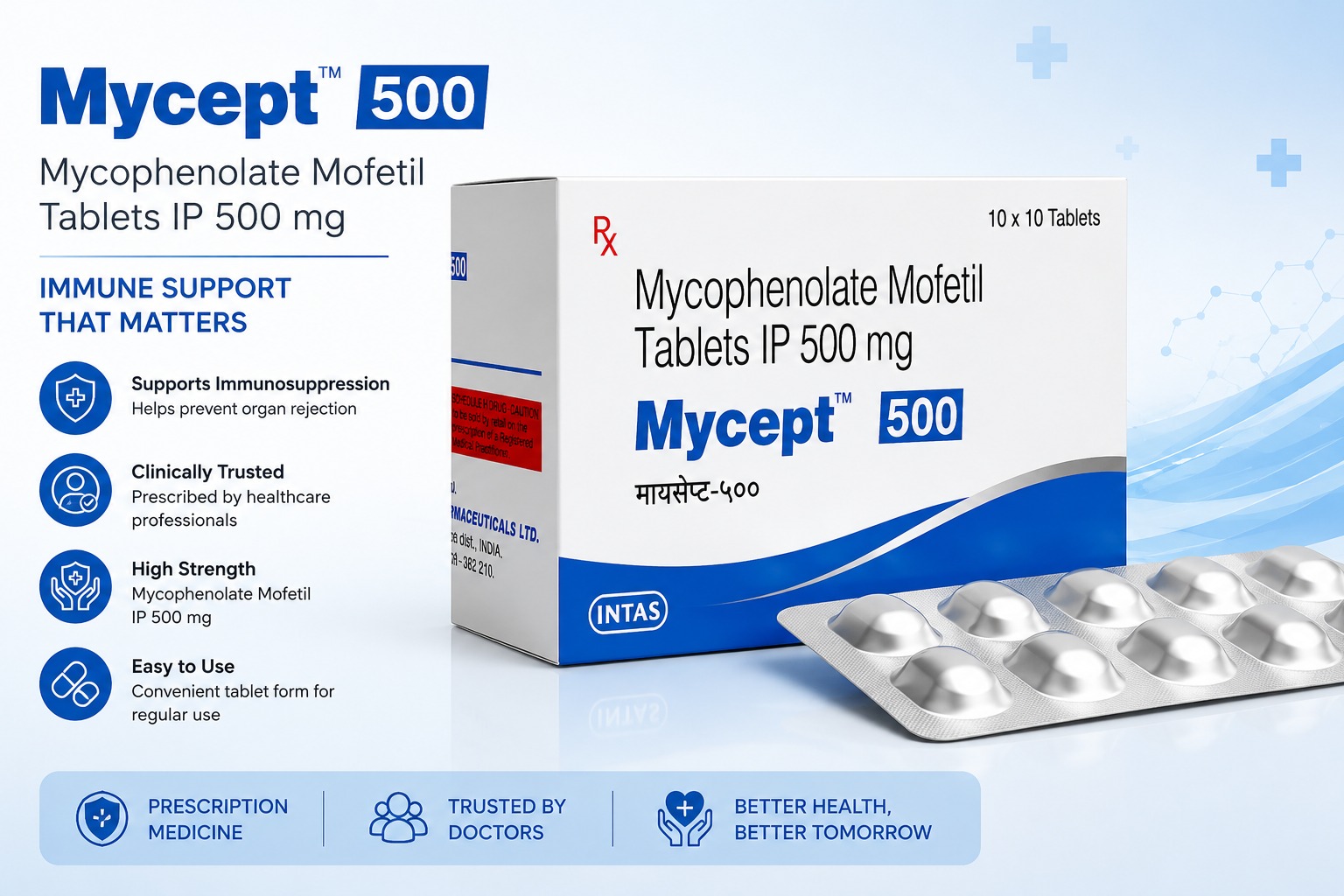
Mycept 500 is an oral immunosuppressant containing Mycophenolate Mofetil. Transplant specialists prescribe this medicine with other immunosuppressants to help prevent the body’s immune system from rejecting a transplanted organ.
Unlike medicines used to relieve symptoms temporarily, Mycept forms part of a continuing treatment plan. Patients often require long-term immunosuppression after transplantation, although the duration and combination of medicines depend on individual clinical circumstances.
Because Mycept reduces immune activity, it also increases susceptibility to infections. Its use requires a careful balance between preventing rejection and limiting treatment-related complications.
Mycept 500 Tablet Composition
- Brand: Mycept 500
- Active ingredient: Mycophenolate Mofetil
- Strength: 500mg
- Dosage form: Oral tablet
- Therapeutic class: Immunosuppressant
- Primary use: Prevention of organ transplant rejection
- Prescription: Required
Always check the original packaging for the manufacturer, batch number, expiry date and complete product information.
Mycept 500 Tablet Uses
The principal use of Mycept 500 is to prevent organ rejection following transplantation. Doctors generally prescribe it alongside other medicines that suppress different parts of the immune response.
1. Prevention of Kidney Transplant Rejection
After kidney transplantation, the recipient’s immune system may identify the donated kidney as foreign. Without adequate immunosuppression, immune cells can damage the transplanted organ.
Mycophenolate Mofetil helps suppress the proliferation of immune cells involved in rejection. Transplant specialists frequently combine it with other medicines, such as calcineurin inhibitors and corticosteroids, according to the patient’s treatment plan.
Regular kidney function tests, medication reviews and follow-up appointments help the transplant team assess treatment effectiveness.
2. Prevention of Heart Transplant Rejection
Heart transplant recipients require immunosuppressive treatment to reduce the risk of their immune system attacking the donated heart.
Mycept may form part of a combination regimen prescribed by a heart transplant specialist. Treatment decisions depend on the patient’s clinical condition, rejection risk, laboratory results and other medicines.
3. Prevention of Liver Transplant Rejection
Mycophenolate Mofetil may also be included in immunosuppressive regimens following liver transplantation.
Its role is to reduce immune-cell activity that could damage the transplanted liver. The transplant team determines the appropriate combination of medicines and monitors liver function and treatment tolerance.
4. Other Specialist-Prescribed Uses
Doctors sometimes prescribe mycophenolate for selected autoimmune or inflammatory conditions outside its approved transplant indications. Such treatment is condition-specific and requires specialist assessment.
Patients should never use Mycept for an unapproved condition without appropriate medical supervision.
How Does Mycept 500 Tablet Work?
Mycept contains Mycophenolate Mofetil, which the body converts into its active form, mycophenolic acid.
Mycophenolic acid inhibits an enzyme called inosine monophosphate dehydrogenase (IMPDH). This enzyme plays an important role in producing guanosine nucleotides, which cells need to make DNA and multiply.
Activated T lymphocytes and B lymphocytes rely heavily on this pathway. By inhibiting IMPDH, mycophenolic acid reduces the proliferation of these immune cells.
Consequently, Mycept helps suppress the immune response responsible for attacking transplanted tissues.
However, reduced immune activity also weakens the body’s ability to fight certain infections. Patients must therefore follow their prescribed treatment and monitoring schedule.
Benefits of Mycept 500 Tablet
Helps Prevent Organ Rejection
Mycept reduces immune-cell proliferation and helps lower the risk of transplant rejection when used as part of an appropriate combination regimen.
Supports Kidney Transplant Treatment
For suitable kidney transplant recipients, Mycept provides an established method of maintaining immunosuppression alongside other prescribed medicines.
Supports Heart and Liver Transplant Care
Transplant specialists may use Mycophenolate Mofetil to help protect transplanted heart and liver tissue against immune-mediated injury.
Works With Other Immunosuppressants
Different immunosuppressants act through different biological pathways. Combining appropriate medicines allows transplant specialists to design treatment according to the patient’s rejection risk and tolerance.
Provides Ongoing Immune Control
Consistent treatment helps maintain the immune suppression required after transplantation. Patients should not interpret the absence of symptoms as evidence that they no longer need medication.
Mycept 500 Tablet Dosage
The correct Mycept dosage depends on the transplanted organ, the patient’s age, other immunosuppressive medicines, laboratory findings and individual treatment response.
Transplant specialists establish and adjust the dosage. Patients should never copy another person’s prescription or change the number of tablets themselves.
For complete clinical prescribing information, consult the FDA prescribing information for mycophenolate mofetil. This reference describes the active ingredient; patients must follow their own product label and specialist’s instructions.
How to Take Mycept 500 Tablet
- Take the medicine exactly as your transplant specialist prescribes.
- Follow the prescribed schedule consistently.
- Swallow the tablet whole with water.
- Do not crush, split or chew the tablet.
- Follow the food-related instructions provided with your prescription.
- Inform your transplant team if vomiting or persistent diarrhoea affects your treatment.
- Never discontinue Mycept without medical advice.
Patients should avoid handling broken tablets or inhaling powder from damaged tablets. Mycophenolate can harm an unborn baby, so pregnant individuals should avoid direct exposure to broken tablets.
What Happens If You Miss a Dose?
Follow the missed-dose instructions provided by your transplant team or the leaflet supplied with your medicine.
If you are unsure what to do, contact your transplant specialist or pharmacist. Never double a dose to compensate for a missed tablet.
Repeated missed doses can compromise transplant protection. Discuss adherence difficulties with your transplant team rather than changing the treatment yourself.
Mycept 500 Tablet Side Effects
Mycept may cause digestive symptoms, changes in blood-cell counts and increased susceptibility to infections. The likelihood and severity of adverse effects vary between patients.
Common Side Effects
- Diarrhoea
- Nausea and vomiting
- Abdominal discomfort
- Headache
- Changes in white blood cell counts
- Increased susceptibility to infections
Report persistent or troublesome symptoms to your transplant team. Do not independently reduce your dose because of side effects.
Serious Side Effects
Mycophenolate can cause serious infections, significant reductions in blood-cell counts and gastrointestinal complications.
Contact your healthcare team urgently if you develop persistent fever, severe sore throat, unusual bruising, unexplained bleeding, severe abdominal pain or other concerning symptoms.
Seek emergency care for severe breathing difficulties, serious allergic reactions or other potentially life-threatening symptoms.
Important Mycept 500 Warnings and Precautions
Risk of Serious Infections
Mycept suppresses the immune system and increases vulnerability to bacterial, viral, fungal and opportunistic infections.
Some infections may become severe or require hospital treatment. Contact your transplant team promptly if you develop fever, persistent cough, painful urination or other signs of infection.
Pregnancy and Birth Defects
Mycophenolate carries a serious pregnancy warning. Exposure during pregnancy can cause miscarriage and severe congenital malformations.
Patients who can become pregnant require specialist counselling about pregnancy testing, effective contraception and pregnancy planning. Male patients should also discuss contraception and reproductive precautions with their healthcare professional.
If pregnancy occurs or is suspected during treatment, contact the prescribing specialist immediately. Do not stop transplant medication independently, because uncontrolled rejection can also be dangerous.
Cancer Risk
Immunosuppressive treatment can increase the risk of lymphoma and other malignancies, particularly skin cancer.
Follow your transplant team’s recommendations for cancer screening, sun protection and assessment of unusual skin changes.
Blood-Cell Abnormalities
Mycept may reduce white blood cells, red blood cells or platelets. Regular complete blood counts help doctors identify important changes and determine whether treatment adjustments are necessary.
Vaccination Precautions
Consult your transplant specialist before receiving vaccinations. Live vaccines are generally avoided during significant immunosuppression, and responses to other vaccines may be reduced.
Mycept 500 Drug Interactions
Several medicines can affect mycophenolate exposure or complicate transplant treatment.
Examples include certain antacids, phosphate binders, antibiotics, antiviral medicines and other immunosuppressants. Some interactions require dose separation, additional monitoring or a change in treatment.
Tell your transplant team about every prescription medicine, supplement and over-the-counter product you use.
Monitoring During Mycept Treatment
Regular monitoring is an essential part of transplant care. Depending on the patient’s clinical circumstances, the transplant team may request:
- Complete blood counts
- Kidney function tests
- Liver function tests
- Assessment for infections
- Monitoring of transplant function
- Pregnancy testing when applicable
- Review of other immunosuppressant medicines
Patients should attend scheduled appointments even when they feel well. Some treatment complications and early signs of organ rejection may not produce obvious symptoms.
How to Store Mycept 500 Tablet
Keep Mycept in its original packaging and follow the temperature and storage instructions printed on the carton.
Protect tablets from excessive heat and moisture. Keep the medicine away from children and do not use tablets after their expiry date.
Frequently Asked Questions About Mycept 500
1. What is Mycept 500 Tablet used for?
Mycept is used with other immunosuppressants to help prevent organ rejection after kidney, heart or liver transplantation.
2. What is the composition of Mycept 500?
Each tablet contains Mycophenolate Mofetil 500mg.
3. Is Mycept 500 an immunosuppressant?
Yes. It reduces the proliferation of immune cells involved in transplant rejection.
4. Can Mycept prevent kidney transplant rejection?
Mycept helps reduce the risk of kidney transplant rejection when used as part of an appropriate specialist-prescribed treatment regimen.
5. Can Mycept cause infections?
Yes. By suppressing immune activity, Mycept increases susceptibility to infections, including potentially serious infections.
6. Can I stop Mycept when I feel better?
No. Never stop prescribed transplant medication without consulting your transplant specialist.
7. Is Mycept safe during pregnancy?
Mycophenolate can cause miscarriage and serious birth defects. Patients who are pregnant or planning pregnancy require urgent specialist advice about suitable treatment.
8. Does Mycept require regular blood tests?
Yes. Regular laboratory monitoring helps identify blood-cell abnormalities and other treatment-related complications.
9. Can Mycept be taken with other medicines?
Mycept is commonly prescribed with other immunosuppressants. However, certain medicines interact with it, so the transplant team must review all concurrent treatments.
10. Where can I find Mycept 500 product information?
Visit the Mycept 500 Tablet page on 24x7Pharma for product details and prescription-related information.
Medical References
Final Thoughts
Mycept 500 Tablet is an important prescription immunosuppressant used to help prevent organ rejection after transplantation. Its benefits depend on appropriate combination therapy, consistent treatment and ongoing specialist monitoring.
Patients should understand the medicine’s infection risks, pregnancy precautions, potential adverse effects and need for regular follow-up. Never adjust or discontinue Mycept without consulting your transplant team.
Medical disclaimer: This article is intended for general educational purposes only. It does not replace advice from a qualified healthcare professional. Mycept is a prescription medicine that requires specialist supervision. Treatment decisions must be based on individual medical assessment.