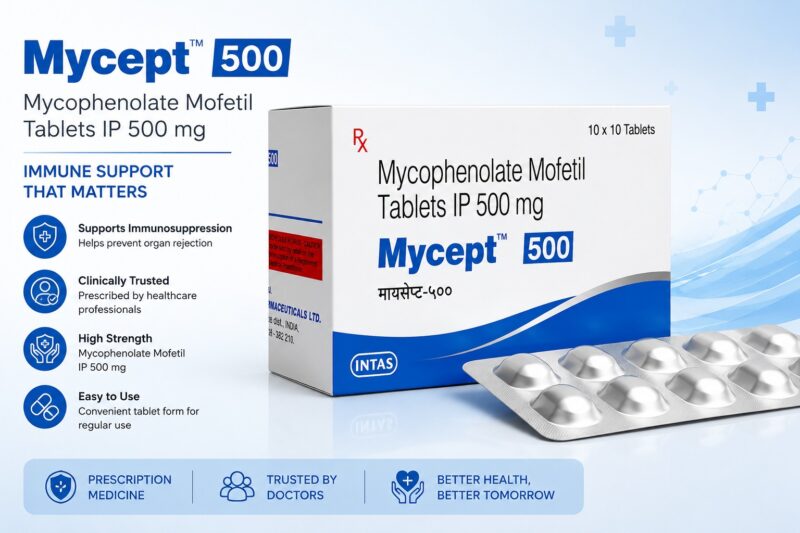





Organ transplantation can significantly improve a patient’s quality of life, but long-term medical care is essential to help protect the transplanted organ. After a transplant, the body’s immune system may recognise the new organ as foreign and attempt to attack it. This immune response, known as organ rejection, is one of the major concerns in transplant medicine. Immunosuppressant medicines are prescribed to reduce this risk and support long-term transplant management.
Mycept S 360 Tablet contains Mycophenolate Sodium 360mg, an enteric-coated immunosuppressive medicine used under specialist supervision as part of transplant treatment. It helps reduce excessive immune activity and is commonly used in combination with other prescribed immunosuppressants to help prevent rejection of transplanted organs.
Understanding Mycept S 360 Tablet uses, composition, benefits, how it works, dosage instructions, side effects, precautions, and monitoring requirements is important for patients and caregivers involved in long-term transplant care. This guide provides general educational information and does not replace the treatment plan prescribed by a transplant specialist.
What Is Mycept S 360 Tablet?
Mycept S 360 Tablet is a prescription immunosuppressant containing Mycophenolate Sodium 360mg. It belongs to a group of medicines known as immunosuppressive agents, which reduce certain immune-system activities that may otherwise damage a transplanted organ.
The medicine is formulated as an enteric-coated tablet. This coating is designed to help the medicine pass through the stomach before releasing its active component in the intestine. Because of its formulation, the tablet should be swallowed whole according to the instructions provided by the treating doctor.
Mycept S 360 is generally prescribed as part of a combination treatment regimen. Transplant patients may receive it along with other immunosuppressants, corticosteroids, or additional medicines depending on their transplant type, medical history, kidney function, and individual treatment requirements.
Patients should not start, stop, reduce, or increase this medicine without consulting their transplant specialist. Consistent treatment adherence is particularly important because missed doses may increase the risk of transplant complications.
You can view the product details for Mycept S 360 Tablet on 24x7Pharma.
Mycept S 360 Tablet Composition
The active ingredient in Mycept S 360 Tablet is:
- Mycophenolate Sodium 360mg
Mycophenolate Sodium is an immunosuppressive medicine used to reduce immune-system activity in patients who have undergone organ transplantation. The 360mg strength is prescribed according to the patient’s overall treatment regimen and should only be taken in the dose recommended by the transplant specialist.
What Is Mycophenolate Sodium?
Mycophenolate Sodium is a derivative of mycophenolic acid, an immunosuppressive agent that affects the production of certain immune cells. It is used in transplant medicine because it helps reduce the activity of immune cells involved in the rejection of transplanted organs.
It is important to understand that Mycophenolate Sodium is not a general-purpose medicine for routine inflammation or ordinary infections. Its use requires medical supervision because reducing immune activity can increase susceptibility to infections and may require regular laboratory monitoring.
Mycept S 360 Tablet Uses
The primary Mycept S 360 Tablet uses relate to organ-transplant immunosuppression. It is prescribed to help prevent the immune system from attacking a transplanted organ.
1. Prevention of Organ Transplant Rejection
One of the main uses of Mycept S 360 Tablet is to help prevent rejection following an organ transplant. The immune system naturally identifies foreign substances and attempts to eliminate them. Since a transplanted organ comes from another person, the immune system may recognise it as foreign.
Mycophenolate Sodium helps reduce specific immune responses involved in this process. It is usually used alongside other medicines because transplant rejection prevention often requires a carefully balanced combination of immunosuppressive treatments.
2. Support in Kidney Transplant Care
Mycophenolate-based medicines are commonly included in treatment regimens for kidney transplant recipients. They help reduce the likelihood of immune-mediated damage to the transplanted kidney when used consistently as prescribed.
Kidney transplant patients may require regular monitoring of kidney function, blood counts, and medicine levels or treatment response depending on their complete regimen. The medicine should always be used under the supervision of the transplant team.
3. Support in Other Solid-Organ Transplant Regimens
Mycophenolate Sodium may also be used in immunosuppressive protocols involving other solid-organ transplants, depending on specialist recommendations and approved treatment practices. The exact regimen varies according to the type of transplant, patient condition, other medicines, and institutional transplant protocols.
4. Long-Term Maintenance Immunosuppression
After the initial transplant period, many patients require long-term maintenance immunosuppression. Mycept S 360 may form part of this ongoing treatment plan to help maintain adequate suppression of the immune response and reduce the risk of rejection.
Long-term treatment requires regular follow-up because the balance between preventing rejection and avoiding excessive immune suppression is different for every patient.
How Does Mycept S 360 Tablet Work?
Mycept S 360 Tablet works by reducing the production and activity of certain immune cells involved in the body’s immune response. Its active ingredient, Mycophenolate Sodium, is converted to mycophenolic acid, which inhibits an enzyme involved in purine synthesis.
Purines are important building blocks required by cells for DNA and RNA production. Certain immune cells, particularly activated B and T lymphocytes, depend heavily on this pathway when they multiply during an immune response.
By interfering with this process, Mycophenolate Sodium reduces the proliferation of specific lymphocytes. This helps suppress the immune response that may otherwise attack a transplanted organ.
The medicine does not completely switch off the immune system. Instead, it reduces particular immune activities as part of a carefully managed immunosuppressive treatment plan. This is why patients taking it require medical monitoring for infections, blood-count changes, and other possible complications.
For general educational information about mycophenolate medicines, patients may refer to reliable mycophenolate medication information.
Benefits of Mycept S 360 Tablet
The benefits of Mycept S 360 Tablet are related to its role in prescribed transplant immunosuppression. It is not intended to provide immediate symptom relief like a painkiller or antibiotic. Its value comes from helping maintain a controlled immune response over the course of transplant care.
- Helps reduce the risk of immune-mediated transplant rejection.
- Supports long-term maintenance immunosuppressive therapy.
- Reduces the multiplication of certain immune cells involved in rejection.
- May be used as part of combination therapy after organ transplantation.
- Supports the long-term protection of a transplanted organ when taken consistently.
- Provides a targeted immunosuppressive mechanism through inhibition of lymphocyte proliferation.
Supports Consistent Transplant Management
Transplant care requires a structured treatment plan involving medicines, blood tests, lifestyle precautions, and regular specialist visits. Mycept S 360 may help support this plan when taken exactly as prescribed.
Helps Control Excessive Immune Activity
The medicine reduces the activity of selected immune cells rather than treating infection or inflammation directly. This mechanism is particularly relevant in preventing the immune system from damaging a transplanted organ.
Part of Combination Immunosuppression
Transplant recipients frequently require more than one immunosuppressant because different medicines act through different mechanisms. Mycept S 360 may be combined with other medicines selected by the transplant team.
How to Take Mycept S 360 Tablet
Take Mycept S 360 Tablet exactly as prescribed by your transplant specialist. The dose and timing are determined by several factors, including the type of transplant, time since transplantation, other immunosuppressive medicines, kidney function, blood-test results, and individual treatment response.
- Take the medicine at the same time each day as instructed.
- Swallow the tablet whole with water.
- Do not crush, chew, split, or break the enteric-coated tablet unless specifically instructed by your doctor.
- Follow the exact schedule provided by your transplant team.
- Do not change the dose based on how you feel.
- Do not stop treatment suddenly without medical advice.
Consistency is extremely important in transplant medicine. Even if you feel completely well, the medicine may still be necessary to reduce the risk of rejection.
Mycept S 360 Tablet Dosage
The dosage of Mycept S 360 Tablet must be individualised by the treating transplant specialist. There is no universally suitable dose for every patient because immunosuppressive treatment depends on the transplant type, treatment stage, other medicines, organ function, and laboratory findings.
Patients should never self-adjust the dose or take additional tablets to compensate for a missed dose. Any dosage changes should be made only by the transplant team after reviewing the patient’s medical condition and test results.
Why Dose Monitoring Is Important
Too little immunosuppression may increase the risk of organ rejection, while excessive immunosuppression may increase the risk of infections and other adverse effects. Regular follow-up helps doctors maintain an appropriate balance.
Common Side Effects of Mycept S 360 Tablet
Like other prescription immunosuppressants, Mycept S 360 Tablet may cause side effects. Not everyone experiences them, and their severity can vary depending on the treatment regimen and individual health condition.
Possible side effects may include:
- Diarrhoea
- Nausea
- Vomiting
- Abdominal discomfort
- Headache
- Fatigue
- Changes in blood-cell counts
- Increased susceptibility to infections
Digestive symptoms are among the commonly reported effects associated with mycophenolate medicines. Patients should inform their doctor if diarrhoea or vomiting is persistent, severe, or affects their ability to take medicines properly.
Serious Side Effects and Warning Signs
Because Mycept S 360 suppresses immune activity, some adverse effects may require urgent medical attention. Patients should contact their transplant team promptly if they experience unusual or severe symptoms.
- Fever or persistent chills
- Severe sore throat
- Unusual bruising or bleeding
- Persistent weakness or extreme fatigue
- Severe abdominal pain
- Persistent vomiting or diarrhoea
- Shortness of breath
- Unexplained weight loss
- New skin lesions or unusual growths
Patients receiving immunosuppressive therapy may have an increased risk of certain infections and other complications. Prompt reporting of symptoms allows the medical team to investigate and manage problems early.
Infection Risk While Taking Mycept S 360
Mycept S 360 reduces immune-system activity, which can make it harder for the body to fight certain infections. This does not mean every patient will develop an infection, but additional precautions are important.
Patients should avoid close contact with individuals who have contagious infections when possible and follow the preventive advice provided by their transplant team. Fever, persistent cough, painful urination, unexplained diarrhoea, or other signs of infection should be reported promptly.
Do not take antibiotics, antifungal medicines, antiviral medicines, or herbal products without discussing them with your doctor, as some may interact with immunosuppressive treatment.
Further information about immunosuppressant precautions is available through FDA safety information relating to mycophenolate medicines.
Blood Tests and Monitoring
Regular laboratory monitoring is an important part of treatment with Mycept S 360 Tablet. Doctors may recommend blood tests to assess blood-cell counts, kidney function, liver function, and other relevant parameters.
Monitoring helps identify possible complications such as low white blood cell counts, anaemia, or changes in organ function. Patients should attend all scheduled appointments even when they feel well.
Never skip a scheduled transplant follow-up because immunosuppressive medicines require ongoing assessment over time.
Drug Interactions
Mycept S 360 Tablet may interact with certain medicines, supplements, and products that affect absorption or immune function. Always provide your doctor with a complete list of prescription medicines, over-the-counter products, vitamins, and herbal supplements.
Medicines that may require special consideration include:
- Antacids containing magnesium or aluminium
- Iron supplements
- Certain antibiotics
- Antiviral medicines
- Other immunosuppressants
- Vaccines
- Herbal or traditional medicines
Do not start or stop any medicine without discussing it with your transplant specialist. The timing of some products may need to be adjusted to avoid affecting mycophenolate absorption.
Food and Lifestyle Precautions
Follow the food and medicine instructions provided by your healthcare professional. Some products may affect the absorption of mycophenolate medicines, so consistency in how the medicine is taken is important.
Patients should also maintain good hygiene, follow food-safety practices, and avoid activities that increase exposure to infections unless cleared by their medical team.
Mycept S 360 Tablet and Pregnancy
Mycophenolate medicines are associated with significant pregnancy-related risks and require strict medical supervision in individuals who may become pregnant. Mycophenolate exposure during pregnancy may increase the risk of miscarriage and serious birth defects.
Patients who are pregnant, planning pregnancy, or capable of becoming pregnant must discuss contraception and pregnancy planning with their transplant specialist before taking this medicine.
Do not discontinue immunosuppressive treatment independently because stopping treatment may place the transplanted organ at risk. Contact the treating specialist immediately for guidance.
Breastfeeding Precautions
Patients who are breastfeeding should discuss the risks and benefits of Mycept S 360 Tablet with their doctor. Mycophenolate treatment may not be suitable during breastfeeding, depending on the clinical situation and specialist recommendations.
Kidney and Liver Function Considerations
Patients with kidney or liver-related medical concerns may require closer monitoring while receiving immunosuppressive therapy. The transplant team will assess organ function and determine whether any treatment adjustments are necessary.
Never change the prescribed dose based on home symptoms or assumptions about kidney or liver health.
Missed Dose of Mycept S 360 Tablet
If you miss a dose, contact your transplant team or follow the specific missed-dose instructions provided by your doctor. Do not take a double dose unless explicitly instructed by a healthcare professional.
Because consistent immunosuppression is important after transplantation, repeated missed doses should be discussed with the transplant team immediately.
Overdose of Mycept S 360 Tablet
Do not take more than the prescribed amount. If you accidentally take an excessive dose, contact your doctor, transplant centre, or emergency medical service for guidance, even if you do not experience immediate symptoms.
Storage Instructions
Store Mycept S 360 Tablet according to the instructions on the packaging. Keep it in a dry place away from excessive heat and moisture.
- Keep the medicine out of reach of children.
- Do not use tablets after the expiry date.
- Keep the tablets in their original packaging unless instructed otherwise.
- Do not share prescription immunosuppressants with another person.
Why Treatment Adherence Matters in Transplant Patients
Transplant medicines are often required for a long period, sometimes lifelong, depending on the type of transplant and the patient’s clinical condition. Missing doses, changing the schedule, or stopping treatment without medical guidance may increase the risk of rejection.
Patients can improve adherence by using reminders, maintaining a consistent daily routine, keeping an updated medicine list, and informing their transplant team about any difficulty obtaining or taking the medicine.
Frequently Asked Questions
What is Mycept S 360 Tablet used for?
Mycept S 360 Tablet is used as part of prescribed immunosuppressive therapy to help prevent rejection of transplanted organs.
What is the active ingredient in Mycept S 360?
It contains Mycophenolate Sodium 360mg.
Is Mycept S 360 an antibiotic?
No. It is an immunosuppressant and does not treat bacterial infections.
How does Mycept S 360 work?
It reduces the multiplication of certain immune cells involved in the immune response against transplanted organs.
Can I stop Mycept S 360 if I feel well?
No. Feeling well does not mean immunosuppressive treatment is no longer required. Never stop it without your transplant specialist’s advice.
Can I crush or chew Mycept S 360 Tablet?
It is an enteric-coated tablet and should generally be swallowed whole as directed by your doctor.
What are the common side effects?
Possible side effects include diarrhoea, nausea, vomiting, headache, fatigue, and changes in blood-cell counts.
Does Mycept S 360 increase infection risk?
Yes. Because it suppresses immune activity, it may increase susceptibility to infections.
Can I take vaccines while using Mycept S 360?
Discuss all vaccinations with your transplant specialist because some vaccines may not be suitable during immunosuppressive treatment.
Can pregnant women take Mycept S 360?
Mycophenolate medicines carry serious pregnancy-related risks. Pregnancy planning and contraception must be discussed with the treating specialist.
What should I do if I miss a dose?
Follow the missed-dose instructions given by your transplant team and do not double the next dose unless specifically instructed.
Can I take herbal supplements with Mycept S 360?
Do not take herbal or traditional supplements without consulting your doctor because interactions may occur.
Why are blood tests needed during treatment?
Blood tests help monitor blood-cell counts, organ function, and possible treatment-related complications.
Can I buy Mycept S 360 Tablet online?
Availability depends on prescription and applicable medicine-dispensing requirements. Product information can be reviewed through the Mycept S 360 Tablet listing on 24x7Pharma.
Is Mycept S 360 a lifelong medicine?
Some transplant patients require long-term or lifelong immunosuppression, but the duration depends on the transplant type and the treating specialist’s plan.
Why Choose 24x7Pharma for Prescription Medicines?
When purchasing prescription medicines, it is important to verify the product name, strength, formulation, manufacturer details, packaging, and applicable prescription requirements. 24x7Pharma provides an online platform where customers can review medicine-related product information and check product availability.
Patients taking transplant medicines should always follow their specialist’s prescription and should not substitute brands, strengths, or formulations without medical approval.
Medical Disclaimer
This article is provided for general educational purposes only and does not replace professional medical advice, diagnosis, or treatment. Mycept S 360 Tablet is a prescription immunosuppressant and should be used only under the supervision of a qualified transplant specialist. Do not change the dose, stop treatment, or combine medicines without consulting your healthcare provider.