



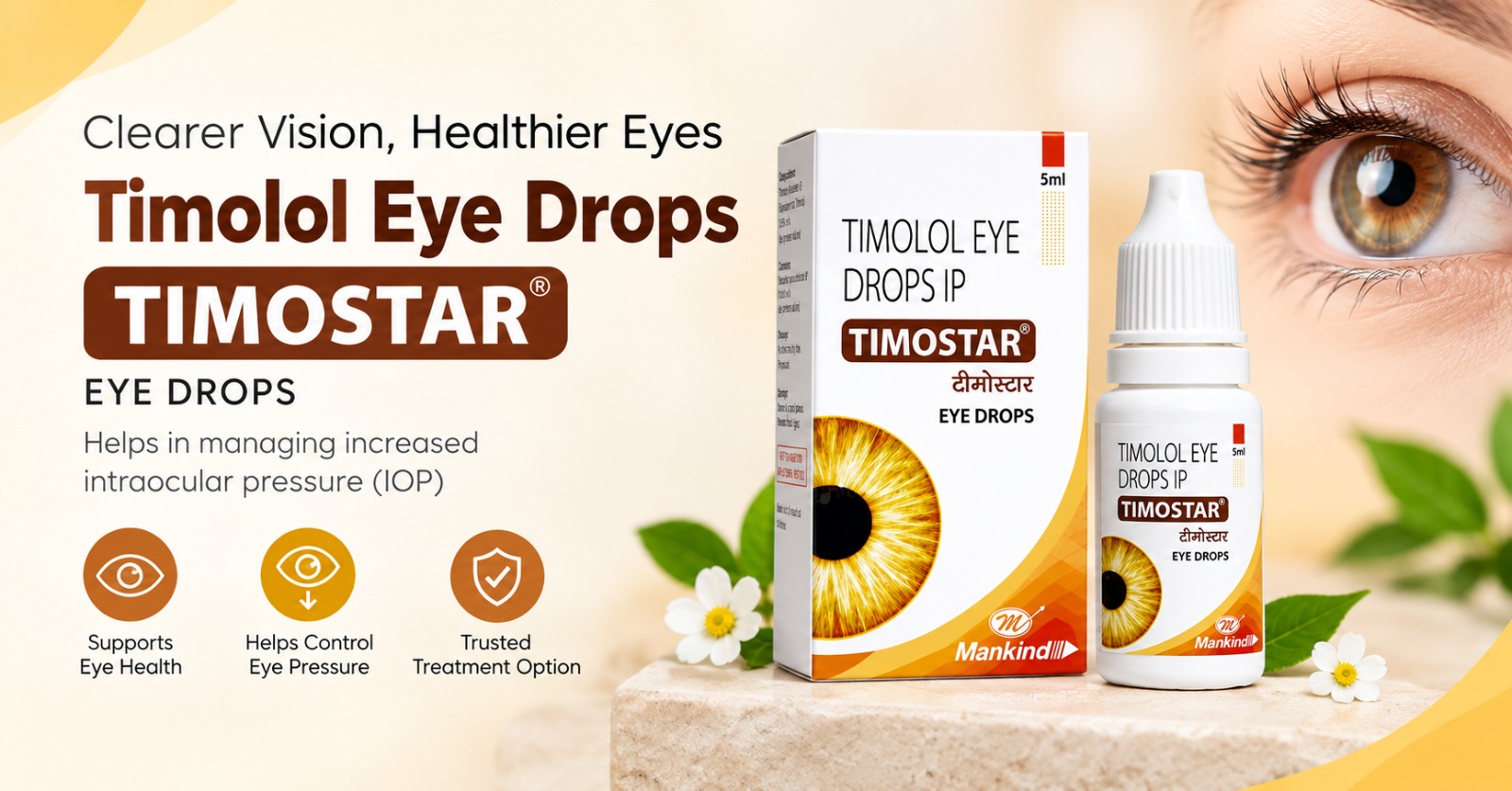
Timostar Eye Drops 5ML is a prescription ophthalmic medicine containing Timolol Maleate 0.5%. Eye specialists prescribe it to lower elevated intraocular pressure (IOP) in people with open-angle glaucoma or ocular hypertension. Managing eye pressure is an important part of protecting the optic nerve and reducing the risk of further vision loss.
Glaucoma can develop gradually without noticeable symptoms. Consequently, patients may not realise their eyesight is at risk until significant damage has occurred. Regular eye examinations, prescribed treatment and consistent follow-up are essential for long-term eye health.
This guide explains Timostar Eye Drops uses, benefits, dosage, application techniques, potential side effects and safety precautions. You can also review the Timostar Eye Drops 5ML product details at 24x7Pharma.
What Are Timostar Eye Drops?
Timostar Eye Drops contain Timolol Maleate, a non-selective beta-blocker that reduces the production of aqueous humour inside the eye. This action helps lower intraocular pressure in patients who require medical treatment for elevated eye pressure.
The medicine comes in a 5ML ophthalmic bottle and is intended for use according to an ophthalmologist’s prescription. It is not an antibiotic, an artificial tear or a general treatment for eye redness.
Timostar Eye Drops Composition
- Brand: Timostar
- Active ingredient: Timolol Maleate
- Listed strength: Timolol 0.5% (5 mg/ml)
- Dosage form: Ophthalmic solution
- Pack size: 5ML
- Manufacturer/Marketer: Mankind Pharma Ltd
- Therapeutic class: Ophthalmic beta-blocker
- Prescription status: Prescription medicine
Always confirm the strength, complete composition and expiry date on the original packaging before using the medicine.
Timostar Eye Drops Uses
Ophthalmologists prescribe Timostar primarily to control elevated pressure inside the eye. The treatment may form part of a long-term management plan for the following conditions.
1. Open-Angle Glaucoma
Open-angle glaucoma is a chronic eye condition in which progressive optic nerve damage can lead to irreversible vision loss. Elevated intraocular pressure is an important modifiable risk factor, although glaucoma can also occur when eye pressure is within the usual range.
Timostar helps lower eye pressure by reducing the production of fluid inside the eye. However, it cannot restore vision that has already been lost through glaucoma.
Patients should continue their prescribed treatment even when their eyes feel normal. They should also attend regular examinations to monitor eye pressure, optic nerve health and visual-field changes.
2. Ocular Hypertension
Ocular hypertension occurs when the pressure inside the eye is higher than expected without detectable glaucomatous optic nerve damage. Not every patient with ocular hypertension needs medication. An ophthalmologist evaluates the pressure level, corneal thickness, optic nerve appearance and other risk factors before recommending treatment.
For suitable patients, Timostar may help reduce elevated eye pressure and support a treatment plan intended to lower the risk of future optic nerve damage.
3. Long-Term Eye Pressure Management
Some patients require ongoing pressure-lowering treatment because glaucoma is a chronic condition. Timostar may be prescribed alone or alongside other glaucoma medicines when an ophthalmologist considers combination therapy appropriate.
Explore the eye-care medicine category for information about other ophthalmic products. Different eye medicines have different indications and should not be substituted without medical advice.
How Do Timostar Eye Drops Work?
The eye continuously produces a clear fluid called aqueous humour. This fluid supplies nutrients to important eye structures and helps maintain the eye’s normal shape. It normally drains through specialised channels.
When fluid production and drainage become imbalanced, intraocular pressure may increase. Persistent pressure can contribute to optic nerve damage in susceptible patients.
Timolol blocks beta-adrenergic receptors in the ciliary body, reducing aqueous humour production. As a result, less fluid enters the eye’s internal chambers and intraocular pressure decreases.
Lowering eye pressure is an established strategy for slowing glaucoma progression. Nevertheless, the treatment response varies between patients, and regular monitoring remains necessary.
For additional clinical information, consult the American Academy of Ophthalmology’s review of glaucoma medications.
Benefits of Timostar Eye Drops
Helps Control Elevated Intraocular Pressure
The principal benefit of Timostar is its ability to reduce elevated pressure inside the eye. Effective pressure control is an important treatment objective for patients with glaucoma or ocular hypertension.
Supports Glaucoma Management
Timostar provides an established pharmacological approach to managing open-angle glaucoma. An ophthalmologist may prescribe it when its expected benefits and the patient’s medical history make beta-blocker treatment appropriate.
May Reduce the Risk of Further Optic Nerve Damage
Reducing intraocular pressure can help lower the risk of additional glaucoma-related damage. However, the medicine does not reverse existing optic nerve injury or guarantee that glaucoma will not progress.
Can Be Used in Selected Combination Treatment Plans
When a single medicine does not adequately control eye pressure, an ophthalmologist may prescribe additional pressure-lowering treatment. The choice depends on the patient’s target pressure, treatment response and potential adverse effects.
Timostar Eye Drops Dosage
The appropriate dosage depends on the patient’s condition, eye pressure, treatment response and other medicines. Always follow the schedule prescribed by your ophthalmologist.
Many conventional timolol 0.5% ophthalmic solutions are prescribed as one drop in the affected eye or eyes twice daily. However, individual prescriptions and formulation-specific instructions may differ.
Do not increase the frequency or number of drops without medical advice. Additional doses may increase systemic exposure without providing additional benefit.
How to Use Timostar Eye Drops Correctly
- Wash your hands thoroughly with soap and water.
- Check the bottle, expiry date and prescribed strength.
- Remove the cap without touching the dropper tip.
- Tilt your head back and gently pull down your lower eyelid.
- Look upward and place the prescribed drop into the space between your eye and lower eyelid.
- Avoid touching the dropper tip against your eye, eyelashes or skin.
- Close your eye gently without squeezing your eyelids.
- Apply gentle pressure to the inner corner of your eye, near the nose, for approximately two minutes.
- Wipe away excess liquid and replace the cap securely.
- Wash your hands after application.
Pressing the inner corner of the eye helps limit drainage into the nose and may reduce systemic absorption.
If your ophthalmologist prescribes more than one eye medicine, follow the recommended interval between applications. Different eye drops are commonly separated by at least five minutes, although your specific instructions may require a longer interval.
For further application guidance, see MedlinePlus: Timolol Ophthalmic.
Timostar Eye Drops Side Effects
Like other prescription medicines, Timostar may cause unwanted effects. Some are limited to the eye, while others can affect the body because a proportion of the medicine may enter the bloodstream.
Possible Eye-Related Side Effects
- Temporary burning or stinging
- Eye irritation or discomfort
- Temporary blurred vision
- Eye dryness
- Redness or watering
Contact your ophthalmologist if these effects persist, worsen or interfere with everyday activities.
Serious Side Effects
Timolol can sometimes affect heart rate, blood pressure and breathing. Seek urgent medical attention if you experience severe breathing difficulty, wheezing, fainting, chest pain, an unusually slow heartbeat or symptoms of a serious allergic reaction.
Important Warnings and Precautions
Asthma and Respiratory Conditions
Timolol is a non-selective beta-blocker. It can cause bronchospasm and may be unsuitable for patients with asthma or certain serious respiratory conditions. Tell your ophthalmologist about any history of asthma, COPD or breathing problems before treatment.
Heart Conditions
Timolol can slow the heart rate and affect cardiac function. Certain heart conditions, including sinus bradycardia, significant heart block and overt cardiac failure, are contraindications for timolol ophthalmic treatment.
Inform your doctor about your complete cardiac history and all medicines you take.
Diabetes and Thyroid Disorders
Beta-blockers may mask some warning signs of low blood sugar, particularly a rapid heartbeat. They can also conceal certain symptoms of hyperthyroidism. Patients with these conditions should discuss appropriate monitoring with their healthcare professional.
Pregnancy and Breastfeeding
Patients who are pregnant, planning pregnancy or breastfeeding should consult their doctor before using Timostar. Treatment decisions require an individual assessment of potential benefits and risks.
Contact Lenses
Some ophthalmic solutions contain preservatives that may affect soft contact lenses. Check the specific Timostar package leaflet for lens removal and reinsertion instructions.
Timostar Eye Drops Drug Interactions
Tell your ophthalmologist about all prescription medicines, non-prescription products and other eye drops you use.
Medicines that may require additional consideration include oral beta-blockers, certain calcium channel blockers, cardiac rhythm medicines and other medicines that reduce heart rate or blood pressure.
Some medicines, including selected antidepressants and antiarrhythmic agents, can also affect timolol exposure or its cardiovascular effects.
Never combine glaucoma medicines or change your prescribed treatment without consulting your ophthalmologist.
What Happens If You Miss a Dose?
Apply the missed dose when you remember unless it is almost time for your next scheduled dose. If the next dose is approaching, skip the missed dose and continue with your regular schedule.
Do not use extra drops to compensate for a missed application. Ask your pharmacist or ophthalmologist for advice if you frequently miss doses.
How Should You Store Timostar Eye Drops?
Follow the storage conditions printed on the original product carton and leaflet. Keep the bottle securely closed, protect it from inappropriate heat and keep it out of children’s reach.
Do not use the medicine after its expiry date. Follow the manufacturer’s instructions for how long the bottle can be used after opening.
For broader guidance, read our article on medicine storage at home if this article is published at that URL.
Frequently Asked Questions About Timostar Eye Drops
1. What are Timostar Eye Drops used for?
Timostar is prescribed to reduce elevated intraocular pressure in patients with open-angle glaucoma or ocular hypertension.
2. What is the active ingredient in Timostar?
Timostar contains Timolol Maleate. The listed 0.5% formulation provides timolol equivalent to 5 mg/ml.
3. Can Timostar permanently cure glaucoma?
No. Timostar helps control eye pressure but cannot reverse existing optic nerve damage or permanently cure glaucoma.
4. Can Timostar be used for dry eyes?
No. Timostar is a pressure-lowering medicine, not an artificial tear. Dry-eye treatment requires a separate clinical assessment.
5. Is Timostar an antibiotic?
No. Timolol belongs to the beta-blocker class of medicines and does not treat bacterial eye infections.
6. Can Timostar affect heart rate?
Yes. Some timolol may enter the bloodstream and slow the heart rate. Patients with relevant heart conditions need medical assessment before use.
7. Can patients with asthma use Timostar?
Timolol may cause serious breathing problems in susceptible patients and is contraindicated in patients with bronchial asthma or a history of bronchial asthma. An ophthalmologist should assess suitable alternatives.
8. Can I stop Timostar when my eyes feel normal?
No. Glaucoma and ocular hypertension may not cause noticeable symptoms. Continue treatment as prescribed and discuss any changes with your ophthalmologist.
9. Can I use Timostar with other glaucoma medicines?
Your ophthalmologist may prescribe combination therapy when necessary. Follow the recommended application schedule and do not add other medicines yourself.
10. Where can I find Timostar Eye Drops 5ML?
Review the Timostar Eye Drops 5ML listing at 24x7Pharma for product information and availability, subject to applicable prescription requirements.
Final Thoughts
Timostar Eye Drops 5ML contains Timolol Maleate 0.5%, an established pressure-lowering medicine used in the management of open-angle glaucoma and ocular hypertension.
Consistent use, proper application and regular ophthalmic examinations are important for effective treatment. Because timolol can also affect breathing and cardiovascular function, patients should discuss their medical history and other medicines with their ophthalmologist before starting treatment.
Medical disclaimer: This article provides general educational information and does not replace professional medical advice, diagnosis or treatment. Use Timostar only according to a qualified ophthalmologist’s prescription. Never start, stop or modify treatment based solely on online information.