



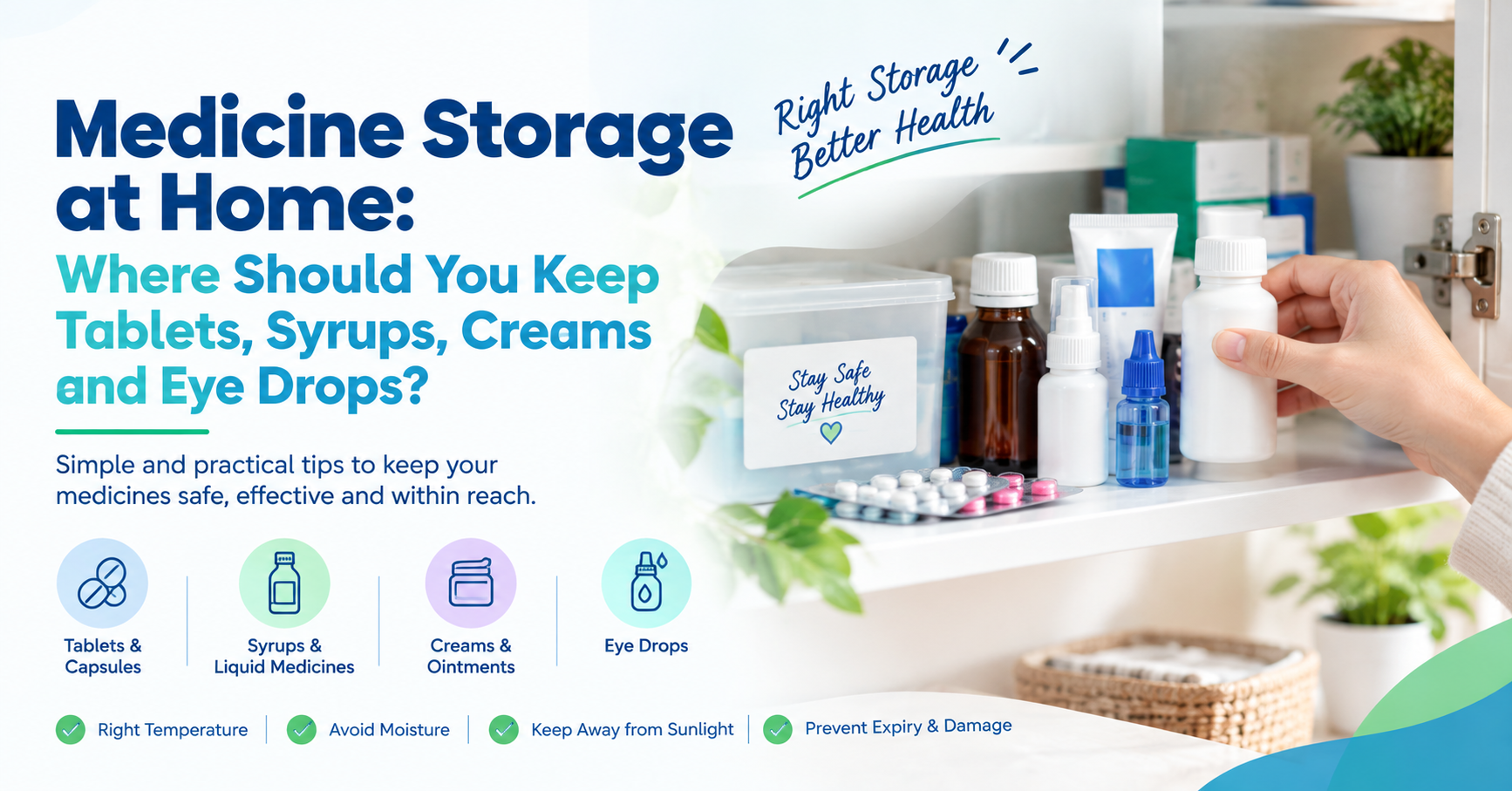
Many people keep medicines in convenient places such as bathroom cabinets, kitchen shelves, handbags or cars. However, these locations may expose medicines to conditions that are not suitable for long-term storage. A better approach is to check the storage instructions on the medicine label or package insert and keep the product in an appropriate, dry and secure location.
This guide explains medicine storage at home, including where to keep tablets, capsules, syrups, creams, ointments and eye drops. It also covers refrigerator storage, expiry dates, damaged medicines, travel, child safety and common storage mistakes.
Quick answer: Most medicines that do not have special storage instructions should be kept in their original container in a cool, dry place away from direct sunlight, heat and moisture. However, some medicines require refrigeration or other specific conditions. Always follow the product label, package insert or advice from your pharmacist or healthcare professional.
What Does Proper Medicine Storage Mean?
Proper medicine storage means keeping a medicine under the conditions recommended by its manufacturer and healthcare professional. The correct conditions can vary depending on the active ingredients, dosage form, packaging and stability of the product.
For many medicines, excessive heat and moisture can affect product quality. Light can also matter for certain medicines. This is why a convenient location is not always a suitable location.
MedlinePlus recommends storing medicines in a cool, dry place and keeping them away from heat, air, light and moisture when those factors can damage the medicine. It also recommends keeping medicines in their original containers and asking a pharmacist about specific storage requirements.
For more information about medicines available for different health needs, you can explore our General Medicines collection.
Where Should You Store Medicines at Home?
A suitable medicine storage area should be dry, reasonably cool, protected from direct sunlight and inaccessible to children and pets. It should also be easy for the person taking the medicine to access safely.
A bedroom cupboard, dresser drawer or suitable closed cabinet can work for many room-temperature medicines, provided the location meets the storage instructions on the product label.
The best storage location is not necessarily the same for every medicine. Some products may need refrigeration, protection from light or a specific temperature range. Therefore, avoid moving medicines into another container or storage location simply because it seems more convenient.
Look for These Conditions
- Keep medicines away from direct sunlight.
- Avoid areas exposed to excessive heat.
- Protect medicines from moisture and humidity.
- Keep medicines in their original packaging whenever possible.
- Close bottles, tubes and containers properly after use.
- Keep medicines away from children and pets.
- Follow any temperature instructions printed on the label.
- Check whether the product requires refrigeration or light protection.
Current medication-safety guidance from the FDA also recommends keeping most medicines in a cool, dry place and avoiding extreme temperatures. Some medicines, however, require refrigeration, so the label or healthcare professional’s instructions should always take priority.
Can You Store Medicines in the Bathroom?
The bathroom may look like a convenient place for a medicine cabinet, but it is not always suitable for storing medicines.
Showers, baths and sinks can increase humidity. Repeated exposure to heat and moisture may affect medicines that are sensitive to these conditions. MedlinePlus specifically advises avoiding bathroom storage because heat and moisture from showers, baths and sinks may damage medicines.
If your medicine cabinet is currently in the bathroom, check the storage instructions for every product. When possible, move medicines to a cool, dry location away from sources of humidity.
Why Is Bathroom Storage a Problem?
- Steam can increase humidity around the medicine.
- Repeated temperature changes can occur during showers and baths.
- Water exposure may damage packaging or labels.
- Some tablets and capsules are particularly sensitive to moisture.
- Children may also be able to access bathroom cabinets.
Instead of choosing a medicine storage location based only on convenience, choose one that matches the product’s storage requirements.
How Should Tablets and Capsules Be Stored?
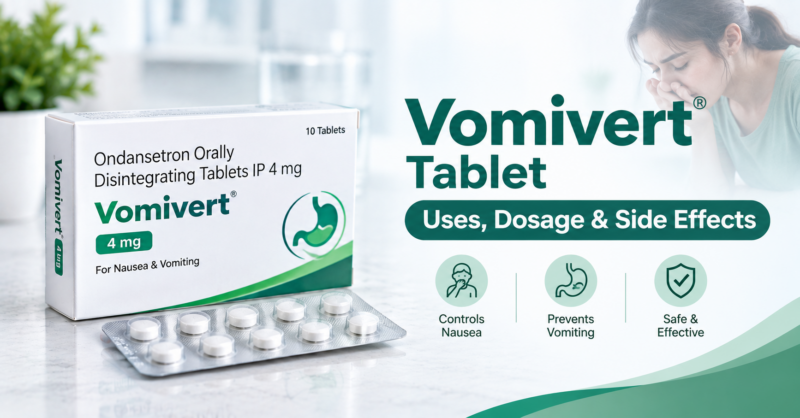
Tablets and capsules are among the most common medicines stored at home. Although many are designed for room-temperature storage, their exact requirements can differ.
Keep tablets and capsules in their original blister pack, strip, bottle or container unless the product instructions specifically allow another method. Avoid transferring different medicines into one unlabelled container.
Moisture can be particularly problematic for some solid medicines. This is another reason to avoid storing tablets and capsules near sinks, showers or other humid areas.
Tablet and Capsule Storage Checklist
- Keep the medicine in its original packaging.
- Store it according to the temperature stated on the label.
- Keep it away from direct sunlight.
- Keep it away from excessive moisture.
- Close the original container tightly after use.
- Check the expiry date before taking it.
- Do not use tablets that appear unusually discoloured, damaged or changed in texture.
- Keep medicines away from children and pets.
MedlinePlus notes that medicines can be damaged by heat and moisture and recommends keeping them in their original containers.
If you are looking for information about different types of medicines, you can also browse our Prescription Medicines collection.
How Should Syrups and Other Liquid Medicines Be Stored?
Liquid medicines require extra attention because their storage requirements can vary significantly between products. Some syrups and oral liquids can be stored at room temperature, while certain medicines may have specific temperature or after-opening instructions.
Never assume that every liquid medicine belongs in the refrigerator. Refrigeration should only be used when the product label, package insert or healthcare professional specifically recommends it.
Safe Storage Tips for Syrups
- Keep the bottle tightly closed when it is not being used.
- Store it at the temperature stated on the label.
- Use the measuring device supplied with the medicine when applicable.
- Do not store it beside a hot stove or other heat source.
- Keep it away from direct sunlight.
- Check the expiry date and any after-opening instructions.
- Do not use a liquid medicine if its appearance, smell or texture has changed unexpectedly.
Some liquid medicines may have a limited period of use after opening or after preparation. That period can differ between products. Therefore, do not apply a general number of days to every syrup or liquid medicine.
If the label says to refrigerate a particular product, follow that instruction. If the label does not require refrigeration, do not automatically place the product in the refrigerator.
How Should Creams, Ointments and Gels Be Stored?
Creams, ointments and gels may be used for skin conditions, pain, inflammation or other health concerns. Their storage requirements depend on the individual formulation.
Most topical products should be kept according to the temperature and handling instructions printed on their packaging. Some products may need protection from heat or direct sunlight, while certain formulations may have specific storage conditions.
After using a cream or ointment, close the tube or container properly. Leaving the container open can expose the product to air, moisture or contamination.
Topical Medicine Storage Tips
- Keep the tube, jar or container tightly closed.
- Store it at the temperature stated on the label.
- Avoid direct sunlight and excessive heat.
- Do not leave topical medicines inside a hot car.
- Do not share prescription creams or ointments with another person.
- Check the product’s expiry date.
- Do not use a product that has changed significantly in colour, smell or texture.
If you use medicines or skincare products for different concerns, keep them organised and clearly labelled. You can explore our Skin Care collection for products in this category.
How Should Eye Drops Be Stored?
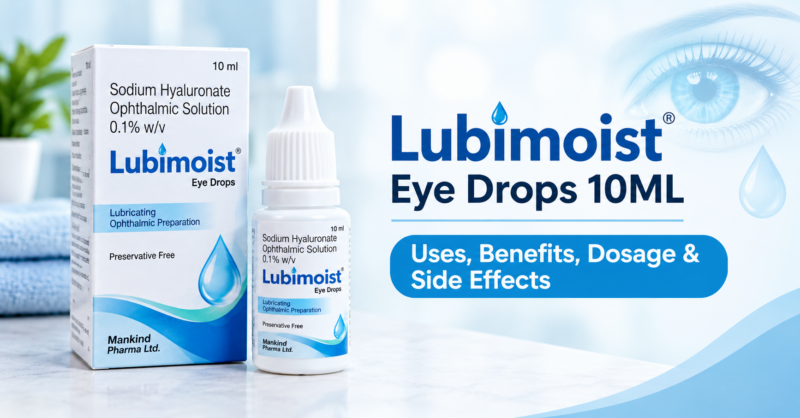
Eye drops require careful handling because products applied to the eye need to remain suitable for ophthalmic use. Storage requirements differ between formulations, so the instructions on the specific eye-drop bottle or package insert should always be followed.
Some eye drops can be stored at room temperature, while others may require refrigeration or protection from light. Never refrigerate an eye drop simply because it is an eye medicine unless the product instructions recommend it.
Important Eye-Drop Storage Tips
- Keep the bottle closed when it is not being used.
- Store it exactly as directed on the packaging.
- Do not leave the bottle in direct sunlight or excessive heat.
- Do not allow the dropper tip to touch the eye, eyelashes or other surfaces.
- Do not share eye drops with another person.
- Check the expiry date.
- Check the manufacturer’s instructions for how long the product can be used after opening.
The in-use shelf life of eye drops can vary by product. NHS Specialist Pharmacy Service guidance states that the manufacturer’s recommendations should be followed for the in-use shelf life of eye preparations.
For people looking for products related to eye health, you can explore our Eye Care collection.
Should Medicines Be Stored in the Refrigerator?
This is one of the most common questions about medicine storage. The answer is: only when the product requires refrigeration.
Some medicines need controlled refrigerated conditions to maintain their stability. Other medicines are intended to remain at room temperature. Putting a medicine in the refrigerator when refrigeration is not recommended can be unnecessary and may create problems for products that have specific storage requirements.
Always check:
- The medicine label.
- The package insert or patient information leaflet.
- The storage instructions provided by the manufacturer.
- Instructions from your pharmacist or healthcare professional.
Some medicines that require refrigeration may have a specified temperature range. Do not guess the correct range based on the type of medicine. Follow the exact instructions for that product.
What If a Medicine Was Accidentally Left Outside the Refrigerator?
Do not automatically discard or use the medicine without checking its specific storage requirements.
Temperature excursions can affect different medicines differently. The amount of time outside the recommended temperature, the actual temperature reached and the formulation can all matter.
If a refrigerated medicine has been left at room temperature for longer than recommended, contact a pharmacist or healthcare professional and provide the product name, strength, storage requirement and approximate time it was outside the refrigerator.
Why Heat, Moisture and Direct Sunlight Matter
Medicine stability can be affected by environmental conditions. Heat, moisture and light may damage certain medicines or packaging. Extreme temperatures can also affect some products.
Heat
High temperatures can affect medicines that are sensitive to heat. Avoid storing medicines near radiators, ovens, hot appliances, windows with intense sunlight or inside vehicles.
Moisture
Moisture is one reason bathrooms are often unsuitable for medicine storage. Sinks, showers and humid environments can expose medicines to unnecessary moisture.
Direct Sunlight
Some medicines require protection from light. If the original packaging provides light protection, keep the medicine in that packaging unless the product instructions say otherwise.
Temperature Changes
Frequent changes between hot and cold environments can also be inappropriate for certain products. Avoid moving medicines repeatedly between rooms, cars, refrigerators and outdoor environments unless necessary.
Should You Keep Medicines in Their Original Packaging?
In most situations, keeping medicines in their original packaging is a safer approach because the packaging contains important information about the medicine.
The original container or blister pack may identify:
- Medicine name.
- Strength.
- Batch or lot information.
- Expiry date.
- Storage instructions.
- Manufacturer information.
- Usage and safety instructions.
Original packaging also reduces the risk of confusing one medicine with another. MedlinePlus recommends keeping medicines in their original containers.
Do not combine different medicines in one unlabelled bottle or container.
How Should You Store Medicines Safely Around Children?
Medicine storage is also a household safety issue. Children may mistake tablets, capsules, gummies, liquids or other medicines for ordinary products. Even medicines intended for adults can be dangerous when taken accidentally.
Keep medicines out of sight and reach of children. For households with young children, a locked storage area can provide an additional layer of protection.
Child-Safe Medicine Storage Checklist
- Keep medicines high and out of sight.
- Use a locked cabinet when appropriate.
- Do not leave medicines on bedside tables.
- Do not leave medicines in handbags that children can access.
- Close child-resistant containers properly after use.
- Do not describe medicines as sweets or treats.
- Keep medicines away from pets as well as children.
After taking a medicine, return it to its proper storage location rather than leaving it beside the bed, on a kitchen counter or in a bathroom.
Where Should You Store Medicines During Summer?
Hot weather can create additional medicine-storage challenges. A room that is normally suitable may become much hotter during summer, particularly near windows, kitchens or poorly ventilated areas.
During hot weather:
- Keep medicines away from direct sunlight.
- Do not leave medicines inside a parked car.
- Avoid storing medicines next to ovens or other heat-producing appliances.
- Check the product label for temperature limits.
- Pay extra attention to medicines that require refrigeration.
Do not move every medicine into the refrigerator simply because the weather is hot. Follow the storage conditions specified for each medicine.
Can You Store Medicines in a Car?
A car is generally not an appropriate long-term medicine storage location. Temperatures inside parked vehicles can become very high or very low compared with the surrounding environment.
MedlinePlus advises against keeping medicines in a vehicle’s glove compartment because medicines can become too hot, cold or wet.
If you need to travel with medicines, keep them protected and follow any product-specific travel storage instructions. Prescription medicines should remain properly labelled and in their original packaging whenever practical.
How to Store Medicines When Travelling
Travel can make medicine storage more complicated because medicines may be exposed to temperature changes, sunlight and humidity.
Before travelling, check whether any of your medicines have special storage requirements.
Travel Checklist
- Carry medicines in their original labelled packaging.
- Keep important medicines accessible rather than leaving them in unsuitable storage.
- Protect medicines from direct sunlight and excessive heat.
- Check whether refrigeration is required.
- Carry enough medicine for the planned trip according to your healthcare professional’s instructions.
- Keep a list of your medicines when travelling if you take multiple products.
- Ask your pharmacist about special storage requirements before a long trip.
If you are travelling with a medicine that requires temperature-controlled storage, ask your pharmacist or healthcare professional how to maintain the required conditions during travel.
How to Check Medicine Expiry Dates
Checking the expiry date should be part of your regular medicine-storage routine. The expiry date is usually printed on the label, carton, blister pack, bottle or other packaging.
Do not assume that a medicine is safe simply because it looks normal after its expiry date. FDA guidance advises consumers to check expiration dates and avoid using expired medicines.
Check These Items Regularly
- Expiry date.
- Medicine name and strength.
- Packaging condition.
- Appearance of the medicine.
- Storage instructions.
- After-opening instructions where applicable.
Some products may have an additional period of use after opening or preparation. This is not necessarily the same as the printed expiry date. Follow the manufacturer’s instructions for the individual product.
What If a Medicine Looks Different?
Do not automatically use a medicine if its appearance has changed unexpectedly.
Warning signs can include:
- Unexpected colour change.
- Unusual smell.
- Change in texture.
- Tablets becoming unusually soft or hard.
- Tablets sticking together.
- Cracked or damaged tablets.
- Damaged packaging.
- Leaking bottles or tubes.
- Unexpected changes in a liquid medicine.
MedlinePlus advises not using medicines that have changed colour, texture or smell, or tablets that are cracked, chipped or otherwise abnormal.
If you are unsure whether a medicine is still suitable, ask a pharmacist or healthcare professional before using it.
What Should You Do With Expired or Unused Medicines?
Expired and unused medicines should not simply remain in a medicine cabinet indefinitely. Keeping unnecessary medicines at home can increase the risk of accidental ingestion, confusion or inappropriate use.
The correct disposal method depends on the medicine and local disposal options. Do not assume that every medicine should be flushed down the toilet or poured into a sink.
FDA guidance recommends using a medicine take-back option for most unused or expired medicines when available. For medicines without an available take-back option, the appropriate disposal method depends on the medicine and its specific instructions.
For detailed guidance, see the FDA information on safe disposal of unused medicines.
Common Medicine Storage Mistakes to Avoid
1. Keeping Medicines in the Bathroom
Bathroom humidity can be unsuitable for medicines that are sensitive to moisture.
2. Putting Every Medicine in the Refrigerator
Not every medicine requires refrigeration. Always follow the specific product instructions.
3. Leaving Medicines in a Car
Vehicles can become very hot or cold, making them unsuitable for many medicines.
4. Removing Medicines From Their Original Packaging
This can make it harder to identify the product, strength, expiry date and storage instructions.
5. Ignoring After-Opening Instructions
Some medicines have specific instructions about how long they can be used after opening. Check the product information.
6. Keeping Expired Medicines for Future Use
Expired medicines should be reviewed and disposed of appropriately instead of being kept indefinitely.
7. Storing Medicines Where Children Can Reach Them
Even short periods of unsupervised access can create a serious safety risk.
8. Mixing Different Medicines in One Unlabelled Container
This increases the possibility of taking the wrong medicine or dose.
A Simple Medicine Storage System for Your Home
A simple organisation system can make medicine storage safer and easier.
Step 1: Choose One Suitable Storage Area
Select a cool, dry location that follows the storage requirements of the medicines you use most often.
Step 2: Separate Medicines by Household Use
Keep medicines organised without removing them from their original packaging. You can separate commonly used medicines from less frequently used products while keeping each product clearly identifiable.
Step 3: Check Expiry Dates
Review expiry dates periodically. Remove products that are expired or no longer needed and follow appropriate disposal guidance.
Step 4: Identify Special Storage Products
Look for medicines that require refrigeration, light protection or another special condition. Store them according to the label.
Step 5: Protect Children and Pets
Use a secure, inaccessible storage location and close all containers properly after use.
Medicine Storage Checklist
- Medicines are stored according to their labels.
- Medicines are protected from excessive heat.
- Medicines are protected from unnecessary moisture.
- Medicines are not exposed to direct sunlight.
- Medicines remain in their original packaging where appropriate.
- Refrigerated medicines are stored as specifically instructed.
- Expiry dates are checked regularly.
- Opened products are used according to after-opening instructions.
- Damaged or visibly changed medicines are not used without professional advice.
- Medicines are kept away from children and pets.
- Unused medicines are reviewed for safe disposal.
- Medicines are not routinely stored in hot cars.
Frequently Asked Questions
1. What is the best place to store medicines at home?
For many medicines, a cool, dry and secure location away from direct sunlight, heat and moisture is suitable. However, always follow the storage instructions on the specific medicine label or package insert.
2. Can medicines be stored in the bathroom?
Bathroom cabinets are not ideal for many medicines because heat and moisture from showers, baths and sinks can affect certain products. A cool, dry location outside the bathroom is generally preferable when the product instructions allow it.
3. Should all medicines be kept in the refrigerator?
No. Only refrigerate medicines when the product label, package insert or healthcare professional specifically recommends refrigeration.
4. How should tablets be stored?
Keep tablets in their original packaging and store them at the temperature specified on the label. Protect them from excessive heat, moisture and direct sunlight.
5. How should syrups be stored?
Store syrups according to their individual product instructions. Keep the bottle tightly closed and check whether the product has special instructions for storage after opening.
6. How should creams and ointments be stored?
Keep creams and ointments in their original tubes or containers and follow the storage temperature printed on the packaging. Protect them from excessive heat and direct sunlight unless the manufacturer provides different instructions.
7. How should eye drops be stored?
Eye drops should be stored according to the manufacturer’s instructions. Some may be stored at room temperature, while others may require refrigeration or protection from light. Always follow the specific product instructions.
8. Can I keep medicines in my car?
Long-term car storage is generally unsuitable because vehicles can become very hot or cold. If you need to travel with medicines, protect them according to their specific storage requirements.
9. Can I use a medicine after its expiry date?
Do not use expired medicines unless a qualified healthcare professional specifically advises you otherwise. Check the expiry date regularly and dispose of expired medicines using an appropriate method.
10. What if my medicine changes colour or texture?
Do not use a medicine that has unexpectedly changed colour, smell or texture until you have checked with a pharmacist or healthcare professional.
11. Should I remove medicines from their original strips or bottles?
Keeping medicines in their original packaging is generally preferable because it helps preserve identification, expiry information and storage instructions.
12. How can I keep medicines safe from children?
Keep medicines out of sight and reach of children. Use a secure or locked storage area when appropriate and close containers properly after every use.
13. Can heat damage medicines even before the expiry date?
Yes. Medicines can be affected by unsuitable storage conditions even when the printed expiry date has not passed. This is why storage instructions are important.
14. What should I do if a refrigerated medicine was left outside?
Do not guess whether it is still suitable. Contact a pharmacist or healthcare professional and provide the medicine name, storage requirement and approximate time and temperature exposure.
15. Should I store medicines with food?
Medicine storage should follow the product instructions. Avoid placing medicines in locations where heat, moisture or contamination could affect them. Keep medicines clearly separated and labelled.
16. How often should I check my medicine cabinet?
There is no single schedule that applies to every household, but periodic checks can help identify expired, damaged or unnecessary medicines. Check expiry dates and storage conditions regularly.
17. Can I store different medicines in one container?
Do not mix different medicines in one unlabelled container. Keep each medicine identifiable in its original packaging whenever possible.
18. Is a kitchen cabinet a good place for medicines?
It can be suitable only if the cabinet remains cool and dry and is away from the stove, sink, dishwasher and other heat or moisture sources. Check the product’s storage instructions.
19. What should I do with unused medicines?
Review the product-specific disposal instructions and ask your pharmacist about local disposal options. Many medicines should not simply be flushed or poured down the drain.
20. Where can I get advice about storing a specific medicine?
Check the product label and package insert first. If the instructions are unclear, contact a pharmacist or qualified healthcare professional with the exact medicine name and strength.
Key Takeaways
Good medicine storage is a simple but important part of medicine safety. The right storage location depends on the individual product, but many medicines should be protected from excessive heat, moisture, direct sunlight and extreme temperatures.
Keep tablets, capsules, syrups, creams and eye drops in their original packaging when appropriate, and follow the storage instructions supplied with each product. Do not assume that every medicine should be refrigerated. Some medicines require refrigeration, while others are intended for room-temperature storage.
Bathrooms, hot kitchens, cars and areas exposed to direct sunlight may be unsuitable for many medicines. Children and pets should not have access to medicines, and expired or unused products should be disposed of according to appropriate guidance.
If you are unsure about the storage conditions for a specific medicine, ask a pharmacist or healthcare professional rather than guessing.
Medical Disclaimer
Disclaimer: This article is provided for general educational and health-information purposes only. It is not a substitute for professional medical advice, diagnosis or treatment. Medicine storage requirements can vary between products, strengths, formulations and manufacturers. Always read the current product label and package insert and follow the instructions provided by your doctor, pharmacist or other qualified healthcare professional. Do not change the storage conditions, dosage or treatment of a medicine without appropriate professional advice.