



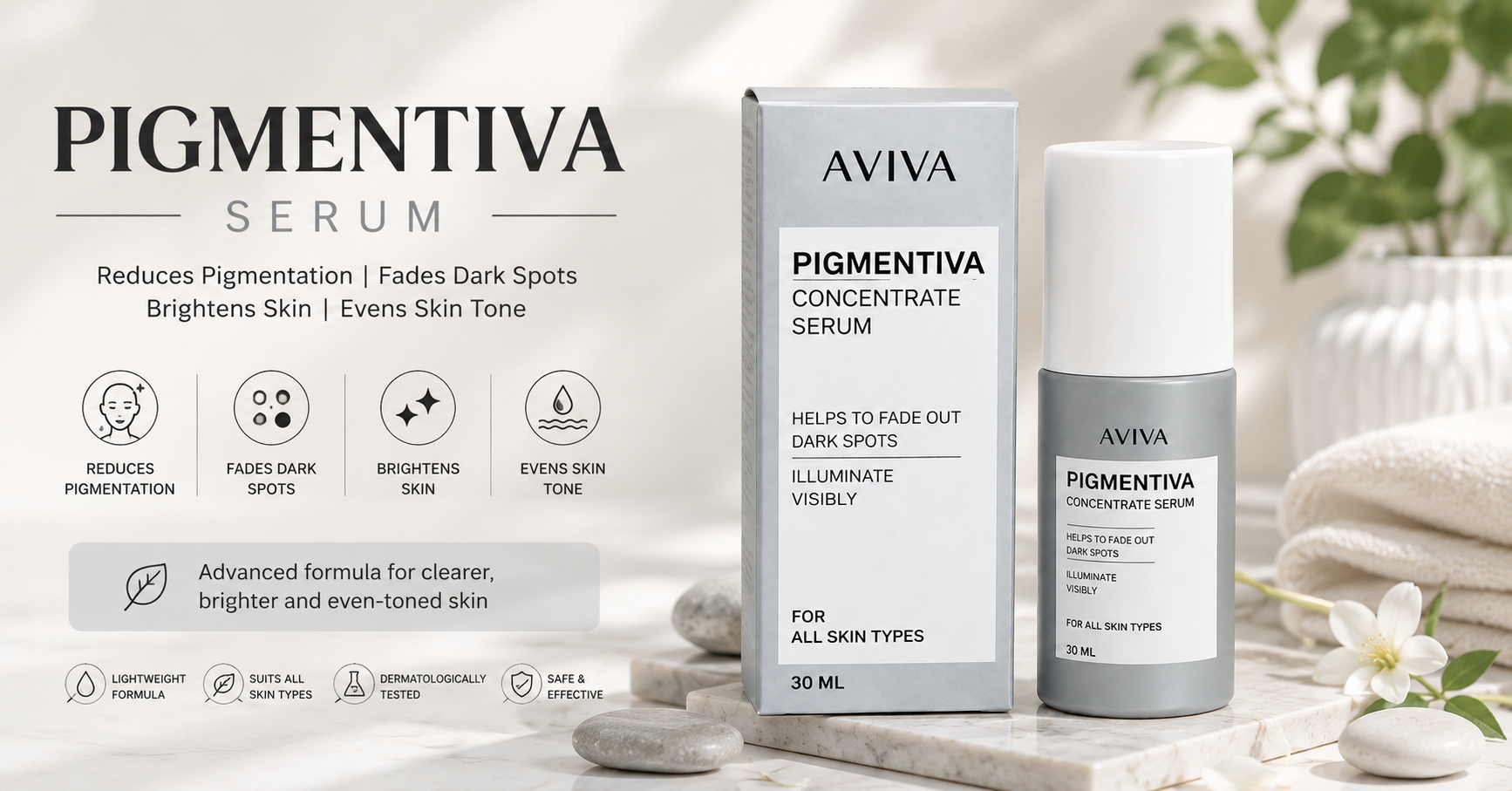
Pigmentiva Serum is a topical skincare serum used as part of a routine for concerns such as uneven skin tone, visible pigmentation and dark spots. Pigmentation can develop for several reasons, including sun exposure, acne or skin inflammation, hormonal changes and irritation. Because the cause of pigmentation differs from person to person, a consistent skincare routine and proper sun protection are important when trying to improve the appearance of dark patches.
For people looking for a skin pigmentation treatment, Pigmentiva Serum can be considered as part of a broader skincare routine. It should not, however, be viewed as a quick solution for every type of pigmentation. Persistent, rapidly changing or difficult-to-treat pigmentation may require assessment by a dermatologist.
What Is Pigmentiva Serum?
Pigmentiva Serum is a topical serum marketed by Aviva Pharmatech Pvt Ltd for pigmentation-related skincare concerns. The product is listed in Aviva Pharmatech’s product portfolio as Pigmentiva Concentrate Serum. Pharmacy listings also identify the product as a topical 30 mL preparation.
The main purpose of using a Pigmentiva Serum for pigmentation is to support a skincare routine aimed at improving the appearance of uneven pigmentation, dark patches and an uneven-looking complexion.
It is important to check the actual product packaging or manufacturer’s current label for the complete ingredient list before use. Formulations can change, and the exact composition should not be assumed from general information about pigmentation serums.
Pigmentiva Serum Uses
The most common reason people look for Pigmentiva Serum uses is to manage the appearance of unwanted pigmentation. Depending on the underlying cause, pigmentation may appear as small dark marks, larger patches or an overall uneven skin tone.
Pigmentiva Serum may be used as part of a skincare routine for:
- Visible dark spots
- Uneven skin tone
- Skin pigmentation concerns
- Post-acne marks and discoloration
- Sun-related pigmentation
- Uneven-looking complexion
Not every dark mark has the same cause. For example, a mark left after acne may behave differently from melasma or pigmentation caused by prolonged sun exposure. Identifying the cause is therefore an important part of choosing an appropriate treatment.
Pigmentiva Serum for Dark Spots
Pigmentiva Serum for dark spots is generally considered in skincare routines where the goal is to make areas of excess pigmentation appear less noticeable over time.
Dark spots can develop when the skin produces excess melanin after inflammation, injury, acne, hormonal changes or sun exposure. In darker skin tones, post-inflammatory hyperpigmentation can be particularly noticeable after acne or irritation.
The American Academy of Dermatology notes that treating the cause of dark spots and protecting the skin from sunlight are important parts of managing hyperpigmentation.
This is why a pigmentation-focused serum should generally be used together with a sensible daily skincare routine rather than as the only step.
Benefits
The potential Pigmentiva Serum benefits are mainly related to its role in a pigmentation-focused skincare routine. With consistent use and appropriate sun protection, a suitable topical product may help improve the appearance of unevenly pigmented areas.
- Helps target the appearance of dark spots: A pigmentation-focused serum can be incorporated into a routine intended to reduce the visibility of unwanted discoloration.
- Supports a more even-looking skin tone: Regular skincare can help improve the overall appearance of uneven pigmentation.
- Useful for pigmentation-prone skin: It may be included in a routine for people concerned about recurring dark patches or marks.
- Can complement sun protection: Managing pigmentation requires more than a serum. Daily sunscreen is an important part of the routine.
- Can complement acne-mark care: Once active acne is controlled, a suitable pigmentation routine may help address the marks left behind.
Results are not necessarily immediate. Pigmentation often takes time to improve, particularly when it has been present for a long period or is repeatedly exposed to sunlight.
How Does Pigmentation Develop?
Understanding pigmentation makes it easier to understand why skincare needs consistency.
Melanin is the natural pigment responsible for skin colour. When pigment production increases in particular areas, the skin can develop darker spots or patches. This may happen following inflammation, acne, skin injury, hormonal changes or exposure to ultraviolet and visible light.
For example, when a pimple heals, inflammation can stimulate increased pigment production. The original acne may disappear, but a brown or dark mark can remain for months. This is commonly referred to as post-inflammatory hyperpigmentation.
Sun exposure can also make existing pigmentation more noticeable and contribute to new pigmentation. The American Academy of Dermatology recommends sunscreen as a key part of managing dark spots.
How to Use Pigmentiva Serum
If you are wondering how to use Pigmentiva Serum, follow the directions printed on the product packaging or those provided by your healthcare professional. If the label does not provide a specific schedule, it is better to avoid assuming a frequency because the appropriate application can depend on the formulation and your skin’s tolerance.
A practical skincare routine generally follows these steps:
- Clean your face gently with a suitable cleanser.
- Pat the skin dry without rubbing it aggressively.
- Apply the recommended amount of Pigmentiva Serum to the affected or intended areas.
- Allow the serum to absorb before applying other skincare products.
- Use a suitable moisturizer if your skin requires one.
- During the daytime, finish with a broad-spectrum sunscreen.
Do not apply more serum than recommended in the belief that a larger amount will produce faster results. Overuse of active skincare products can increase irritation, dryness or sensitivity.
Why Sunscreen Matters When Treating Pigmentation
One of the most important steps in a routine for pigmentation is daily sun protection. Applying a pigmentation serum while leaving the skin unprotected from sunlight can work against your skincare goals.
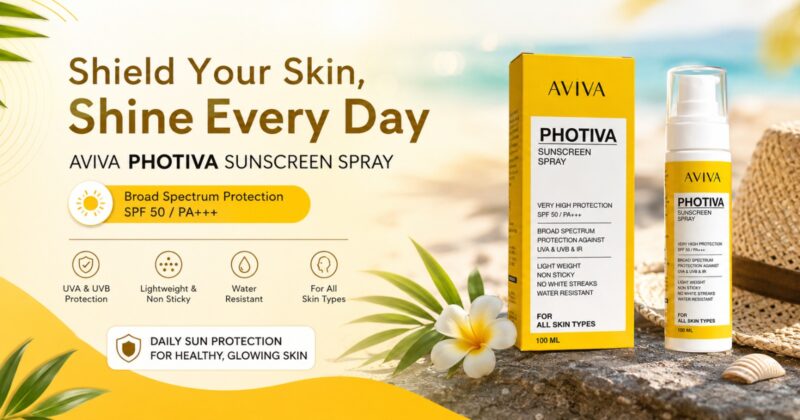
Dermatologists recommend broad-spectrum sunscreen with SPF 30 or higher. For people concerned about melasma or dark spots, tinted sunscreens containing iron oxide can provide additional protection against visible light, which may worsen hyperpigmentation.
When outdoors, sunscreen generally needs to be reapplied according to the product directions, particularly after swimming, sweating or prolonged outdoor exposure.
You can also support sun protection by wearing protective clothing, using shade and avoiding unnecessary prolonged exposure during strong sunlight.
Side Effects
The exact side effects that may occur depend on the product’s formulation and the individual’s skin sensitivity. As with many topical skincare products, some people may experience temporary irritation, dryness, redness, itching, burning or stinging.
If significant irritation develops after application, stop using the product and allow the skin to recover. If the reaction is severe, persistent or associated with swelling, blistering or significant discomfort, seek medical advice.
People with sensitive or easily irritated skin should introduce pigmentation-focused skincare cautiously rather than combining several strong active products at the same time.
Precautions
Before adding Pigmentiva Serum to your routine, keep the following precautions in mind:
- Read the ingredient list and directions on the current product packaging.
- Perform a patch test if you are prone to sensitivity or have not used the product before.
- Avoid applying it to broken, injured or severely irritated skin.
- Keep the product away from the eyes and mucous membranes.
- Do not immediately combine several potentially irritating exfoliating or depigmenting products unless advised by a dermatologist.
- Use sunscreen consistently during the day.
- Stop using the product if you develop significant irritation.
- Consult a dermatologist if pigmentation is persistent, worsening or difficult to identify.
Can Pigmentiva Serum Remove Pigmentation Completely?
It would be misleading to promise that any pigmentation serum can permanently remove every type of pigmentation. The outcome depends heavily on the cause, depth and duration of the pigmentation, skin type, sun exposure and consistency of the skincare routine.
Some pigmentation gradually becomes lighter when the trigger is controlled, while conditions such as melasma can be chronic and may return with sun exposure. DermNet notes that melasma can be slow to respond to treatment and may relapse, making long-term sun protection important.
A realistic goal is therefore to improve the appearance of pigmentation while reducing factors that can cause it to return.
Who Should Be Careful With Pigmentation Serums?
Extra care is appropriate for people with very sensitive skin, eczema-prone skin, a damaged skin barrier or a history of reactions to skincare products.
People who are pregnant or breastfeeding should check the complete ingredient list and discuss unfamiliar active skincare ingredients with their healthcare professional before starting a new treatment. The product’s exact formulation should be verified rather than relying on assumptions about what a serum may contain.
If pigmentation develops suddenly, changes rapidly, bleeds, becomes painful or looks significantly different from surrounding marks, it should not simply be treated as a cosmetic pigmentation problem. A dermatologist can determine the underlying cause.
How to Build a Simple Pigmentation Skincare Routine
A complicated routine is not always better. For pigmentation concerns, consistency is often more useful than repeatedly adding new products.
Morning Routine
- Gentle cleanser
- Pigmentation serum if recommended for daytime use
- Moisturizer when required
- Broad-spectrum sunscreen SPF 30 or higher
Night Routine
- Gentle cleanser
- Pigmentiva Serum according to product directions
- Moisturizer
If you already use exfoliating acids, retinoids or other active treatments, avoid automatically applying everything together. Too many irritating products can damage the skin barrier and may make pigmentation look worse.
Frequently Asked Questions
What is Pigmentiva Serum used for?
Pigmentiva Serum is a topical skincare serum marketed for pigmentation-related concerns such as dark spots and uneven-looking skin tone. The exact product formulation should be checked on the current packaging.
Can Pigmentiva Serum be used for dark spots?
It may be used as part of a skincare routine aimed at improving the appearance of dark spots. The cause of the pigmentation should also be addressed, and daily sunscreen is important.
How often should Pigmentiva Serum be used?
Use it according to the manufacturer’s directions or advice from your dermatologist. Do not increase the frequency simply to try to obtain faster results.
Can I use sunscreen with Pigmentiva Serum?
Yes. Sunscreen is an important part of a pigmentation-focused routine. Dermatologists recommend broad-spectrum SPF 30 or higher, with tinted sunscreen containing iron oxide being particularly useful for people concerned about pigmentation and visible light.
How long does it take to see results?
There is no single timeline that applies to everyone. Pigmentation can take weeks to months to improve, depending on its cause, depth, sun exposure and individual skin response.
Final Takeaway
Pigmentiva Serum can be considered as part of a targeted skincare routine for people concerned about pigmentation, dark spots and uneven skin tone. The key is to use the product according to its current label directions, avoid unnecessary overuse and protect the skin from sunlight every day.
For persistent or recurrent pigmentation, identifying the underlying cause is more important than simply changing from one serum to another. A dermatologist can help determine whether the pigmentation is related to acne, melasma, sun exposure, medication, hormonal factors or another skin condition. For additional information about managing dark spots and hyperpigmentation, you can refer to the
American Academy of Dermatology’s guidance on dark spots
.
Medical Disclaimer: This article is intended for general educational and skincare information. It is not a substitute for diagnosis or treatment from a qualified dermatologist or other healthcare professional. Product formulations and directions may change, so always check the current product label before use.