



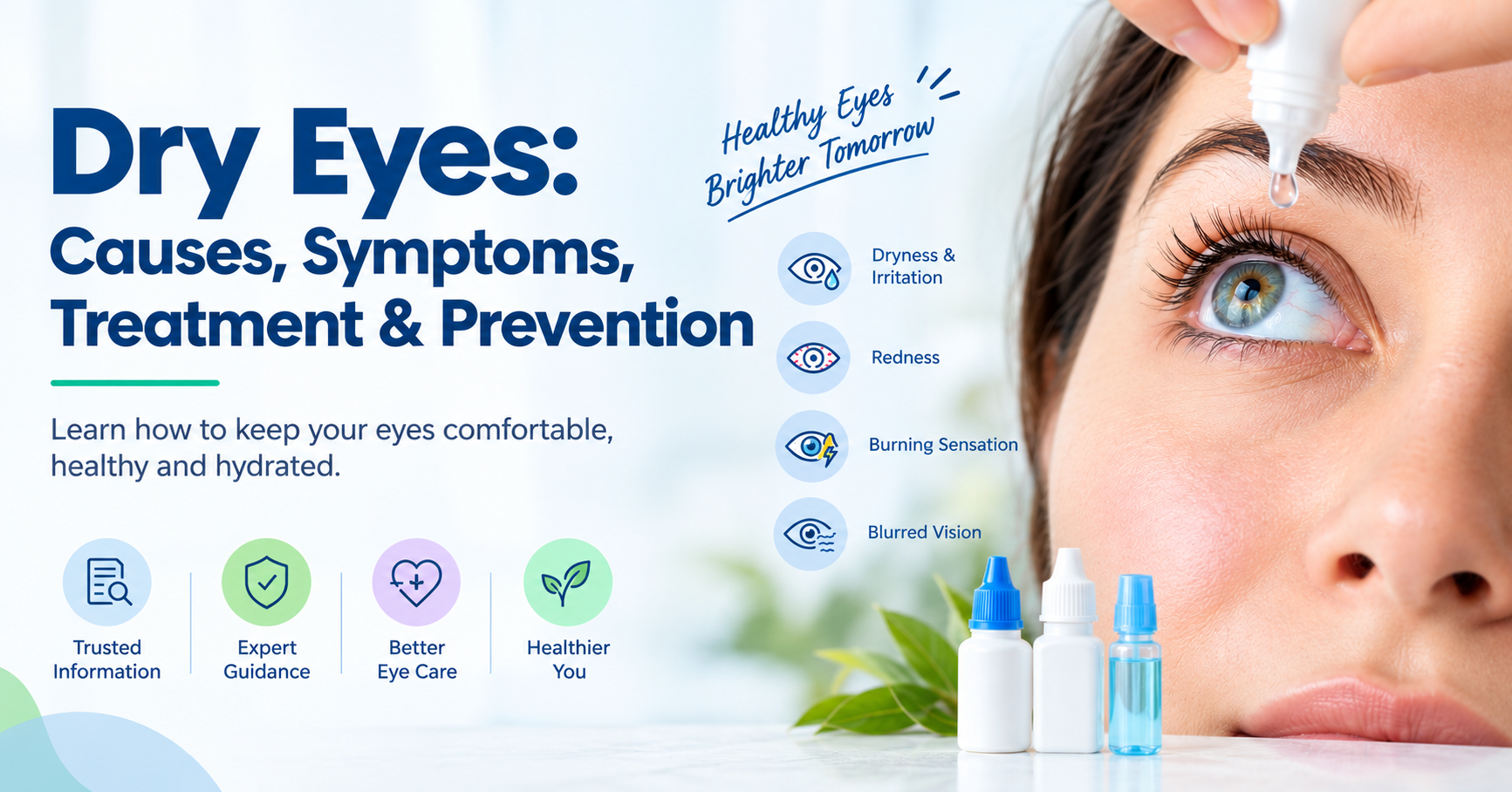
Dry eyes are a common eye problem that can cause dryness, burning, irritation, redness, a gritty sensation, watery eyes and sometimes blurred vision. The condition can develop when the eyes do not produce enough tears or when tears do not remain on the eye surface properly. Long periods of screen use, contact lens wear, ageing, certain medicines, environmental conditions and some medical conditions can also contribute to dry eye symptoms.
Occasional eye dryness may improve with simple changes such as taking regular screen breaks, avoiding direct airflow and keeping the eyes properly lubricated. However, persistent or severe symptoms may require an eye examination to identify the underlying cause.
In this guide, we explain what dry eyes are, common dry eye causes, symptoms, diagnosis, treatment options, artificial tears, prevention tips, lifestyle measures and when you should consult an eye-care professional.
For medically reviewed background information, you can also read the National Eye Institute information on dry eye.
What Are Dry Eyes?
Dry eye is a condition that occurs when the eyes do not make enough tears or when the tears do not work properly to keep the surface of the eye comfortable and protected. Tears form a thin tear film over the eye. This film helps keep the eye surface smooth, supports clear vision and protects the eye from environmental irritants.
The tear film is important for normal eye comfort and vision. According to the National Eye Institute’s explanation of how tears work, tears spread across the cornea every time you blink and help keep the eye surface wet and smooth.
When the tear film becomes unstable, the surface of the eye may become uncomfortable. Some people notice dryness or a scratchy feeling, while others may experience burning, redness, sensitivity to light, fluctuating vision or excessive watering.
Dry eye does not always mean that the eyes produce no tears. In some cases, the eyes may produce excess watery tears in response to irritation. These reflex tears may not provide the same lasting lubrication as a stable tear film.
What Causes Dry Eyes?
There is no single cause of dry eyes. The condition can develop because of reduced tear production, faster tear evaporation, an unstable tear film, eyelid problems, environmental exposure, medicines or certain health conditions.
The National Eye Institute’s guide to dry eye causes also identifies factors such as ageing, certain medicines, health conditions, windy or smoky environments and prolonged screen use.
1. Reduced Tear Production
The glands around the eyes produce tears that help maintain moisture on the eye surface. Tear production can decrease with age or because of certain medical conditions. Some people may also experience changes in tear production after certain eye procedures.
2. Excessive Tear Evaporation
Tears can evaporate too quickly when the tear film does not remain stable. Wind, smoke, dry air, air conditioning and prolonged screen use may increase discomfort by affecting moisture on the eye surface.
3. Prolonged Screen Time
People often blink less frequently when concentrating on computers, smartphones, tablets or other digital screens. Reduced blinking can contribute to tear-film instability and make the eyes feel dry or tired.
If you spend several hours working on digital devices, regular visual breaks and conscious blinking may help reduce screen-related eye discomfort.
4. Contact Lens Use
Some contact lens wearers experience dryness or discomfort, particularly when lenses are worn for long periods. Lens material, fit, wearing schedule, cleaning practices and the condition of the eye surface can all influence comfort.
5. Age-Related Changes
Dry-eye symptoms become more common with increasing age. Changes in tear production and tear-film quality can contribute to eye dryness.
6. Medicines
Some medicines used for conditions such as allergies, colds, depression and high blood pressure may contribute to dry-eye symptoms in some people. If you think a medicine is causing dryness, do not stop it on your own. Discuss the issue with your healthcare professional.
7. Medical Conditions
Certain health conditions can be associated with dry eyes. These include some autoimmune disorders, diabetes and thyroid-related problems. Identifying an underlying condition may be important when symptoms are persistent or difficult to control.
8. Environmental Factors
Smoke, dust, wind, low humidity and direct airflow from fans or air conditioners can increase eye discomfort. People who spend long periods in such environments may notice more frequent dry eye symptoms.
Common Symptoms of Dry Eyes
Dry eye symptoms can vary from person to person. Some people have mild, occasional discomfort, while others experience symptoms that interfere with reading, computer work, driving or other everyday activities.
- Dry or scratchy feeling in the eyes
- Burning or stinging sensation
- Redness
- Eye irritation
- Gritty or sandy sensation
- Sensitivity to light
- Blurred or fluctuating vision
- Eye fatigue
- Excessive watering
- Discomfort during prolonged screen use
Watery eyes can sometimes occur with dry eyes because irritation may trigger reflex tearing. Therefore, having watery eyes does not necessarily mean that the eyes are adequately lubricated.
Who Is More Likely to Experience Dry Eyes?
Anyone can develop dry-eye symptoms, but certain factors can increase the likelihood. These include older age, contact lens use, prolonged screen exposure, exposure to dry or windy environments, certain medicines and some medical conditions.
People who spend several hours working on computers or mobile devices may also notice dryness because prolonged visual concentration can reduce normal blinking.
How Are Dry Eyes Diagnosed?
An eye-care professional can evaluate dry-eye symptoms during an eye examination. The assessment may include examination of the eyelids and eye surface and tests that evaluate tear production or tear-film stability.
Depending on the symptoms, an eye specialist may assess how much moisture the eyes produce and how quickly the tear film breaks up after blinking. A slit-lamp examination may also be used to examine the eye surface and eyelids.
The National Eye Institute guide to dry-eye testing describes tests such as slit-lamp examination, Schirmer testing and tear break-up time testing.
If dry-eye symptoms are persistent, recurrent or affecting vision, professional assessment can help determine whether dryness is the main problem or whether another eye condition is contributing to the symptoms.
How Are Dry Eyes Treated?
Dry eye treatment depends on the cause and severity of symptoms. Mild symptoms may improve with lubricating eye drops and lifestyle changes, while persistent or more severe dry eye may require treatment recommended by an ophthalmologist.
Artificial Tears and Lubricating Eye Drops
Artificial tears are commonly used to provide temporary relief from mild dry-eye symptoms. These products add lubrication to the eye surface and can reduce discomfort associated with dryness.
Different lubricating eye drops for dry eyes contain different ingredients and formulations. The most appropriate option can depend on how often the drops are needed, the cause of dryness, sensitivity to preservatives and advice from an eye-care professional.
For readers looking for product-specific information, Lubimoist Ultra Drop 10ML is an ophthalmic lubricating product containing Polyethylene Glycol 400 and Propylene Glycol. Its product information states that it is intended to provide temporary relief from symptoms associated with dry eyes and should be used according to professional advice.
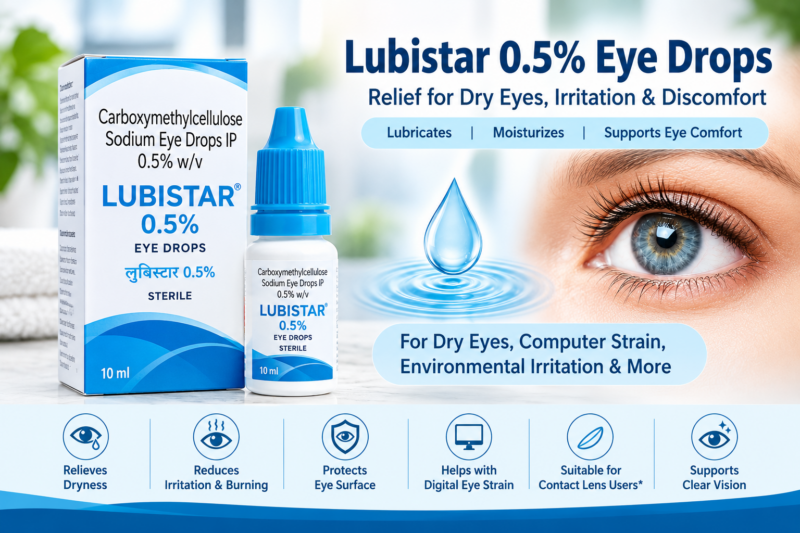
Another relevant option is Lubistar 0.5% Eye Drops, which contains Carboxymethylcellulose Sodium 0.5% w/v and is described as an ocular lubricant/artificial tear for dry-eye symptoms.
These product pages provide formulation-specific information. However, the choice of an eye lubricant should depend on the individual’s symptoms, product instructions and advice from a qualified healthcare professional.
Preservative-Free Artificial Tears
People who need lubricating drops frequently may be advised to consider preservative-free formulations. The American Academy of Ophthalmology notes that frequent use of preserved artificial tears may cause irritation in some people.
Read the American Academy of Ophthalmology guide to eye drops for additional information about artificial tears and preservative-free formulations.
The choice between preserved and preservative-free products should depend on individual needs and professional advice, especially when symptoms are frequent or persistent.
Prescription Treatment
Some people with more persistent dry eye may need prescription treatment. Depending on the underlying cause, an ophthalmologist may recommend medicines that address inflammation or support tear production.
Prescription treatment should be used only according to professional medical advice. Not every eye drop is appropriate for every type of eye problem.
Other Treatment Options
When dry eye is related to problems such as rapid tear drainage, eyelid disorders or other ocular-surface conditions, an eye specialist may recommend additional treatment. Options vary according to the underlying cause.
How to Relieve Dry Eyes at Home
Simple daily habits can help reduce eye discomfort, particularly when environmental exposure or prolonged screen use contributes to symptoms.
Take Regular Screen Breaks
When using a computer, tablet or smartphone for extended periods, take regular breaks and consciously blink. Looking away from the screen at regular intervals can also reduce prolonged visual strain.
Avoid Direct Airflow
Fans and air conditioners should not blow directly toward the eyes. Direct airflow can increase tear evaporation and may make dryness more noticeable.
Protect the Eyes Outdoors
Wraparound sunglasses or other suitable eye protection can help reduce exposure to wind, dust and environmental irritants.
Maintain Comfortable Indoor Humidity
Dry indoor air can contribute to eye discomfort. Maintaining comfortable humidity may help some people who experience dryness in air-conditioned or heated environments.
Follow Your Eye-Care Routine
If an eye specialist has recommended lubricating drops or another treatment, follow the prescribed instructions. Avoid changing medicines or stopping prescribed treatment without professional advice.
Dry Eyes and Screen Time
Long periods of digital-device use are commonly associated with eye discomfort. One reason is that people may blink less while concentrating on a screen. This can affect the tear film and increase dryness or irritation.
If you work on a computer for many hours, consider taking regular visual breaks, blinking fully and frequently, adjusting the screen to a comfortable position and avoiding direct airflow toward the face.
If screen-related symptoms continue despite these measures, an eye examination may help identify other factors contributing to the problem.
Artificial Tears for Dry Eyes: What Should You Know?
Artificial tears are lubricating eye drops designed to supplement moisture on the surface of the eye. They can provide temporary relief from symptoms such as dryness, burning and irritation.
However, artificial tears do not automatically treat every cause of dry eyes. Persistent symptoms may be related to medication effects, eyelid problems, inflammation, contact lens issues or an underlying medical condition.
When choosing an eye lubricant, consider the product formulation, how often you need it, any sensitivity to ingredients or preservatives and the advice of your healthcare professional.
Related guide: Artificial Tears for Dry Eyes: Types, Uses & How to Choose
How to Use Eye Drops Safely
Correct eye-drop technique is important because the tip of the bottle can become contaminated if it touches the eye, eyelids, fingers or another surface.
- Wash your hands before handling the bottle.
- Check the product label and expiry information.
- Remove contact lenses when required by the product instructions or your eye-care professional.
- Tilt your head back and gently pull down the lower eyelid.
- Instil the recommended number of drops.
- Do not allow the bottle tip to touch the eye or eyelashes.
- Close the bottle securely after use.
- Follow the storage instructions printed on the product packaging.
The FDA guidance on eye-drop safety recommends washing your hands before use and avoiding contact between the dropper tip and the eye, hands, clothing or other surfaces to reduce contamination risks.
Related guide: How to Use Eye Drops Correctly: Step-by-Step Guide
When Should You See an Eye Doctor?
Occasional mild dryness may not indicate a serious eye problem. However, persistent, recurrent or severe symptoms deserve professional assessment.
Seek prompt medical attention if you experience:
- Severe eye pain
- Sudden changes in vision
- Significant or persistent redness
- Marked swelling
- Eye discharge
- Severe light sensitivity
- Symptoms after an eye injury
- Persistent symptoms despite lubricating drops
- Symptoms that interfere with normal daily activities
Do not assume that every red, painful or irritated eye is caused by dry eyes. Some eye conditions require specific diagnosis and treatment.
Can Dry Eyes Cause Blurred Vision?
Yes, dry eyes can sometimes cause temporary or fluctuating blurred vision. An unstable tear film can affect the smooth optical surface of the eye, which may make vision seem less clear.
However, sudden or significant vision changes should not automatically be attributed to dry eyes. If vision changes are sudden, severe or persistent, seek medical evaluation promptly.
Can Dry Eyes Cause Watery Eyes?
Yes. It may seem unusual, but dry eyes can sometimes cause excessive watering. Irritation of the eye surface can trigger reflex tears.
These reflex tears may not provide the same stable lubrication as the normal tear film. Therefore, watery eyes can occur alongside other dry-eye symptoms.
Can Dry Eyes Be Prevented?
Not every case of dry eye can be prevented, particularly when symptoms are associated with age, medical conditions or medicines. However, several habits may help reduce symptoms or prevent environmental triggers from making them worse.
- Take regular breaks during prolonged screen use.
- Blink regularly while working on digital devices.
- Avoid smoke and dusty environments when possible.
- Reduce direct exposure to fans and air conditioners.
- Protect the eyes from strong wind and dust outdoors.
- Use lubricating eye drops only as directed.
- Maintain good eye and contact-lens hygiene.
- Have persistent symptoms evaluated by an eye-care professional.
Frequently Asked Questions
What are dry eyes?
Dry eyes occur when the eyes do not produce enough tears or when the tears do not work properly to keep the eye surface adequately lubricated.
What are the common symptoms of dry eyes?
Common symptoms include dryness, burning, stinging, redness, gritty sensation, irritation, light sensitivity, fluctuating vision and sometimes excessive watering.
What causes dry eyes?
Dry eyes can result from reduced tear production, rapid tear evaporation, prolonged screen use, contact lens wear, ageing, environmental conditions, certain medicines and some medical conditions.
Can screen time cause dry eyes?
Prolonged screen use can contribute to dry-eye symptoms because people may blink less frequently while concentrating on digital devices.
Are artificial tears good for dry eyes?
Artificial tears can provide temporary relief from many mild dry-eye symptoms by lubricating the eye surface. The appropriate product depends on individual needs and the underlying cause of dryness.
Can dry eyes cause blurry vision?
Dry eyes can sometimes cause temporary or fluctuating blurred vision because an unstable tear film can affect the optical surface of the eye. Sudden or persistent vision changes require professional evaluation.
Can dry eyes cause watery eyes?
Yes. Irritation caused by dry eyes can trigger reflex tearing, so some people experience watery eyes along with dryness.
How can I relieve dry eyes naturally?
Taking regular screen breaks, blinking frequently, avoiding direct airflow, reducing exposure to smoke and dust and maintaining a comfortable environment may help reduce symptoms. Persistent symptoms should be assessed by an eye-care professional.
How often can artificial tears be used?
The appropriate frequency depends on the specific product and your individual condition. Follow the product instructions or your healthcare professional’s advice. People who need frequent use may be advised to consider preservative-free formulations.
When should I see an eye doctor for dry eyes?
Consult an eye-care professional if symptoms are persistent, recurrent, severe, affect daily activities or occur with pain, significant redness, discharge or changes in vision.
Final Takeaway
Dry eyes can result from problems with tear production, tear evaporation or tear-film stability. Screen exposure, contact lens use, ageing, environmental conditions, certain medicines and some health conditions can contribute to symptoms.
For mild symptoms, lifestyle changes and appropriate lubricating eye drops may provide temporary relief. However, persistent or severe symptoms should not be self-treated indefinitely. An eye-care professional can identify the underlying cause and recommend appropriate treatment.
When using eye drops, always follow the product instructions, maintain good hygiene and avoid touching the bottle tip to the eye or other surfaces. Choosing the right product should depend on the individual’s symptoms, formulation and professional advice.
Medical Disclaimer
This article is provided for general educational and informational purposes only. It does not replace professional medical advice, diagnosis or treatment. Do not start, stop or change any medicine or eye treatment without consulting a qualified healthcare professional. If you experience severe eye pain, sudden vision changes, significant redness, discharge, injury or other concerning symptoms, seek prompt medical attention.