



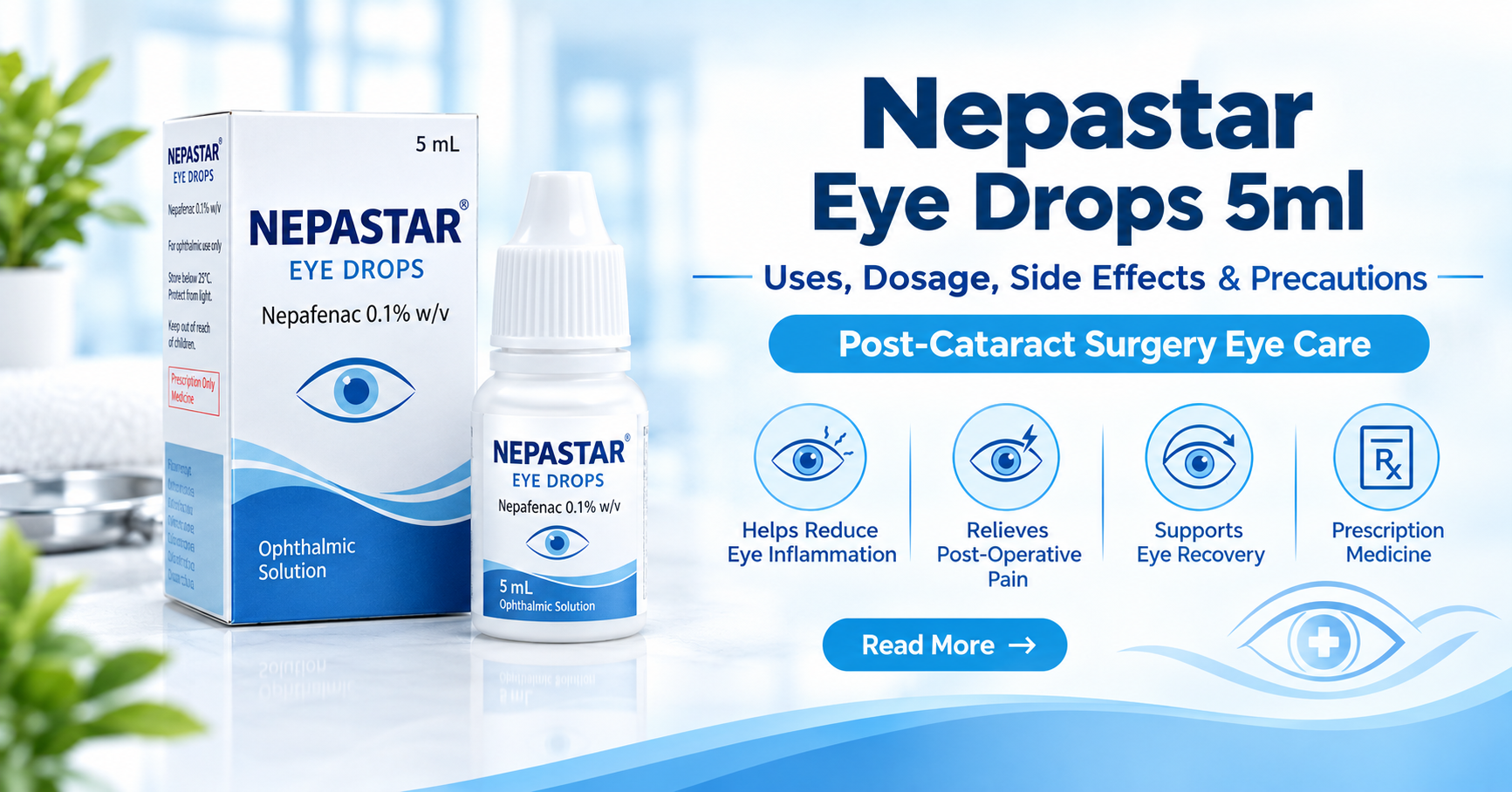
Nepastar Eye Drops contain Nepafenac 0.1% w/v, a prescription ophthalmic non-steroidal anti-inflammatory drug (NSAID). Ophthalmologists prescribe this medicine to manage eye pain and inflammation associated with cataract surgery. Understanding how it works, how to administer it correctly and which precautions to follow can help patients use it safely during postoperative recovery.
Cataract surgery is a commonly performed eye procedure. Although modern surgical techniques are designed to minimize tissue damage, the eye may develop a temporary inflammatory response afterward. Eye specialists often prescribe a combination of medicines to manage inflammation and reduce the risk of complications.
In this guide, we explain the uses, benefits, mechanism of action, possible side effects and important safety information associated with Nepastar. You can also review the composition and packaging details on the Nepastar Eye Drops 5ML product page.
What Are Nepastar Eye Drops?
Nepastar is an ophthalmic suspension containing Nepafenac 0.1% w/v. Mankind Pharma markets this prescription medicine in a 5ML bottle.
Nepafenac belongs to a group of medicines called ophthalmic NSAIDs. Unlike lubricating eye drops, which primarily supplement the tear film, Nepafenac targets inflammatory pathways involved in postoperative pain and swelling.
Eye specialists may include Nepastar in a treatment plan before and after cataract surgery. However, patients should follow their individual prescription rather than starting the medicine independently.
Nepastar Eye Drops Composition
| Product detail | Information |
|---|---|
| Product name | Nepastar Eye Drops 5ML |
| Active ingredient | Nepafenac |
| Strength | 0.1% w/v |
| Formulation | Ophthalmic suspension |
| Drug class | Non-steroidal anti-inflammatory drug |
| Manufacturer/marketer | Mankind Pharma |
| Pack size | 5ML |
| Prescription status | Prescription required |
Nepastar Eye Drops Uses
The primary use of Nepastar Eye Drops is managing pain and inflammation associated with cataract surgery. During the procedure, the eye’s tissues can release inflammatory substances that contribute to discomfort and swelling. Nepafenac helps reduce the production of these substances.
1. Managing Pain After Cataract Surgery
Some patients experience temporary discomfort following cataract surgery. Nepafenac may help control pain caused by the postoperative inflammatory response. However, severe or increasing pain requires prompt assessment by the treating ophthalmologist.
2. Reducing Postoperative Eye Inflammation
Inflammation is part of the body’s natural response to surgery. Nevertheless, excessive or persistent inflammation can interfere with recovery. Ophthalmic NSAIDs help control this response when prescribed as part of a postoperative treatment plan.
3. Supporting Doctor-Directed Recovery
Nepastar may be prescribed alongside other postoperative medicines. These can include antibiotic or corticosteroid eye drops, depending on the patient’s clinical requirements.
Each medicine serves a different purpose. Nepastar is not an antibiotic and cannot treat an eye infection. Patients should not replace other prescribed medicines with Nepastar unless their ophthalmologist advises them to do so.
4. Macular Edema Considerations
Macular edema refers to swelling in the central part of the retina. Certain patients, including people with diabetes, may have an increased risk of postoperative macular edema.
Nepafenac formulations are sometimes used in specific postoperative treatment plans to reduce this risk. However, indications differ between products and countries. Patients should not assume that every Nepafenac product is approved for this purpose. Their ophthalmologist must determine whether additional treatment or monitoring is appropriate.
How Do Nepastar Eye Drops Work?
Nepafenac is a prodrug. After application to the eye, ocular tissues convert it into its active metabolite, amfenac.
Amfenac inhibits cyclooxygenase enzymes involved in producing prostaglandins. These chemical messengers contribute to pain and inflammation. Reducing their production helps control the inflammatory response associated with cataract surgery.
Unlike an antibiotic, Nepafenac does not kill bacteria. It also does not replace artificial tears for ordinary dry-eye symptoms.
For readers experiencing dryness unrelated to surgery, our separate guide on dry eyes, their causes, symptoms and treatment explains the importance of identifying the underlying condition.
Benefits of Nepastar Eye Drops
When prescribed appropriately, Nepastar can provide several therapeutic benefits during postoperative eye care.
Targeted Anti-inflammatory Action
Nepastar delivers an anti-inflammatory medicine directly to the eye. This localized route allows ophthalmologists to address ocular inflammation without relying solely on oral pain medicines.
Relief From Surgery-Related Discomfort
By reducing prostaglandin production, Nepafenac helps manage pain associated with postoperative inflammation. Its effectiveness depends on the patient’s condition and the prescribed treatment schedule.
Integration With Postoperative Treatment
Eye specialists can prescribe Nepafenac alongside selected ophthalmic medicines when clinically appropriate. Patients must follow the recommended sequence and maintain the prescribed interval between different drops.
These benefits do not mean that Nepastar accelerates healing in every patient. In fact, ophthalmic NSAIDs may delay healing or cause corneal complications in susceptible individuals. Appropriate medical supervision remains essential.
How to Use Nepastar Eye Drops Correctly
Correct administration helps deliver the prescribed dose while reducing the risk of contaminating the bottle.
- Wash your hands thoroughly with soap and water.
- Check the medicine’s name, expiry date and prescribed dose.
- Shake the ophthalmic suspension well according to its label.
- Remove the bottle cap without touching the dropper tip.
- Tilt your head backward and gently pull down your lower eyelid.
- Instil the prescribed drop into the space between your lower eyelid and eye.
- Close your eye gently. Avoid squeezing or rubbing it.
- If your clinician has recommended punctal occlusion, gently press the inner corner of the eye.
- Replace the cap immediately after administration.
Do not allow the dropper tip to touch your fingers, eyelashes or eye. A contaminated bottle can introduce microorganisms into the eye.
Nepastar Eye Drops Dosage
Your ophthalmologist will determine the appropriate dose, starting date and duration of treatment.
For reference, the official US prescribing information for a Nepafenac 0.1% ophthalmic suspension describes one drop in the affected eye three times daily, starting one day before cataract surgery, continuing on the day of surgery and through the first two postoperative weeks.
This is information about the referenced formulation, not an individualized Nepastar prescription. Follow the instructions on your own prescription and product packaging.
Do not increase the frequency or extend the duration of treatment without medical advice.
What Happens If You Miss a Dose?
Use the missed dose when you remember unless your next scheduled dose is almost due. If the next dose is near, skip the missed dose and resume your normal schedule. Do not double the dose.
Can You Use Other Eye Drops With Nepastar?
Some patients require several ophthalmic medicines after cataract surgery. When more than one topical eye medicine is prescribed, a gap of at least five minutes is generally recommended between applications, unless the treating clinician provides different instructions.
Do not independently combine medicines or change their prescribed order.
Nepastar Eye Drops Side Effects
Like other prescription medicines, Nepastar may cause adverse reactions. The type and severity of these reactions vary between individuals.
Possible Eye-Related Side Effects
- Temporary eye discomfort or irritation
- Eye itching
- Foreign-body sensation
- Temporary blurred vision
- Sticky sensation in the eye
- Eye redness or watering
Not all symptoms following cataract surgery are caused by the medicine. Contact your ophthalmologist if discomfort persists or becomes worse.
Serious Adverse Reactions
Topical ophthalmic NSAIDs can occasionally cause serious corneal complications. These may include keratitis, corneal epithelial breakdown, ulceration and, rarely, corneal perforation.
Stop using the medicine and seek urgent ophthalmic advice if you develop severe eye pain, worsening redness, sudden changes in vision or significant sensitivity to light.
Important Precautions Before Using Nepastar
Tell your ophthalmologist about your medical history, allergies and current medicines before starting treatment.
NSAID Allergy
Patients with a known allergy to Nepafenac or other NSAIDs must inform their doctor. A history of aspirin-sensitive asthma or allergic reactions to related medicines is particularly important.
Corneal Disease and Dry Eyes
Existing corneal problems, ocular surface disease and severe dry-eye symptoms may increase the risk of complications from topical NSAIDs. Patients with these conditions may need additional monitoring.
Diabetes and Previous Eye Surgery
Diabetes, complicated ocular surgery and repeated eye procedures can affect postoperative management. Your eye specialist should assess these factors before determining the appropriate treatment.
Bleeding Disorders
Ophthalmic NSAIDs may increase bleeding time. Tell your doctor if you have a bleeding disorder or take medicines that affect blood clotting.
Pregnancy and Breastfeeding
If you are pregnant, planning pregnancy or breastfeeding, ask your ophthalmologist whether Nepastar is appropriate. Available safety information and treatment considerations differ according to the stage of pregnancy and individual clinical circumstances.
Contact Lenses
Avoid wearing contact lenses during postoperative treatment unless your ophthalmologist specifically permits them. Ask when you can safely resume contact lens use.
How to Store Nepastar Eye Drops
Follow the storage conditions printed on the product packaging. Keep the bottle tightly closed, protect it from contamination and store it away from children.
Do not use the medicine after its expiry date. Follow the manufacturer’s instructions for the permitted period of use after opening.
If the suspension changes appearance unexpectedly, the bottle becomes damaged or the dropper touches a contaminated surface, consult your pharmacist before further use.
Nepastar Eye Drops vs Lubricating Eye Drops
| Feature | Nepastar | Lubricating Eye Drops |
|---|---|---|
| Main purpose | Manage prescribed postoperative pain and inflammation | Relieve dryness and support tear-film lubrication |
| Medicine type | Ophthalmic NSAID | Artificial tears or ocular lubricants |
| Active ingredient | Nepafenac 0.1% | Varies by product |
| Typical use | Cataract surgery-related inflammation | Dry-eye symptom management |
| Prescription | Required | Depends on the product |
These products are not interchangeable. Some patients may require both anti-inflammatory treatment and lubrication, but their ophthalmologist should decide whether combining them is appropriate.
When Should You Contact Your Eye Doctor?
Contact your ophthalmologist promptly if your symptoms worsen rather than improve after surgery. Sudden vision loss, severe eye pain or marked redness requires urgent assessment.
Attend all scheduled postoperative examinations even if your eye feels comfortable. Your doctor may need to assess inflammation, eye pressure, the cornea and the retina during recovery.
Where to Find Nepastar Eye Drops 5ML
Patients who have received a valid prescription can review the Nepastar Eye Drops 5ML listing at 24x7Pharma for product composition, packaging information and available purchasing details.
Before ordering, confirm that the product strength and formulation match your ophthalmologist’s prescription. Availability and delivery eligibility may vary by location.
Frequently Asked Questions
1. What are Nepastar Eye Drops used for?
Nepastar is prescribed to manage pain and inflammation associated with cataract surgery.
2. What is the active ingredient in Nepastar?
Nepastar contains Nepafenac 0.1% w/v.
3. Is Nepastar an antibiotic?
No. Nepastar is an ophthalmic NSAID, not an antibiotic.
4. Can Nepastar treat dry eyes?
It is not a general treatment for dry-eye symptoms. Consult an eye specialist for appropriate dry-eye management.
5. Can I use Nepastar without a prescription?
No. Use it only under the supervision of a qualified ophthalmologist.
6. Does Nepastar cause blurred vision?
Temporary blurred vision can occur. Persistent or worsening visual changes require medical attention.
7. Should I shake Nepastar before use?
Follow the bottle label. Nepafenac ophthalmic suspensions generally require shaking before administration.
8. Can I use Nepastar after cataract surgery?
Yes, when prescribed by your ophthalmologist for postoperative pain and inflammation.
9. Can I use Nepastar with other eye drops?
Your doctor may prescribe other eye medicines alongside Nepastar. Follow the recommended timing and sequence.
10. How long should I use Nepastar?
The treatment duration depends on your prescription and postoperative condition. Do not extend treatment independently.
11. Can Nepastar cause eye irritation?
Some patients experience temporary discomfort or irritation. Seek medical advice if symptoms persist or worsen.
12. Is Nepastar a steroid?
No. It is a non-steroidal anti-inflammatory medicine.
13. Can diabetic patients use Nepastar?
An ophthalmologist may prescribe it to patients with diabetes, but individual risk factors and corneal health require consideration.
14. Can I wear contact lenses during treatment?
Avoid contact lenses unless your ophthalmologist confirms that they are safe during your recovery.
15. What should I do if I miss a dose?
Use it when remembered unless the next dose is nearly due. Never double the dose.
16. Can children use Nepastar?
Use in children requires specialist assessment. Do not administer it without a pediatric ophthalmologist’s advice.
17. Can I stop Nepastar when my eye feels better?
Follow your prescribed treatment schedule. Ask your ophthalmologist before stopping early.
18. What happens if I accidentally use too many drops?
Contact your doctor or pharmacist if excessive use causes persistent discomfort, redness or visual symptoms.
19. How should I store Nepastar?
Follow the package label, close the bottle after use and keep it away from children and contamination.
20. Is Nepastar suitable for every type of eye inflammation?
No. Different eye conditions require different treatments. An ophthalmologist must identify the cause before prescribing medication.
Medical References
- DailyMed: Nepafenac 0.1% ophthalmic suspension prescribing information
- Tata 1mg: Nepastar Eye Drop product information
Medical disclaimer: This article provides general educational information and does not replace professional medical advice. Nepastar is a prescription medicine. Always follow your ophthalmologist’s instructions regarding its use, dosage and duration. Seek urgent medical attention for sudden vision changes, severe pain or worsening postoperative symptoms.