



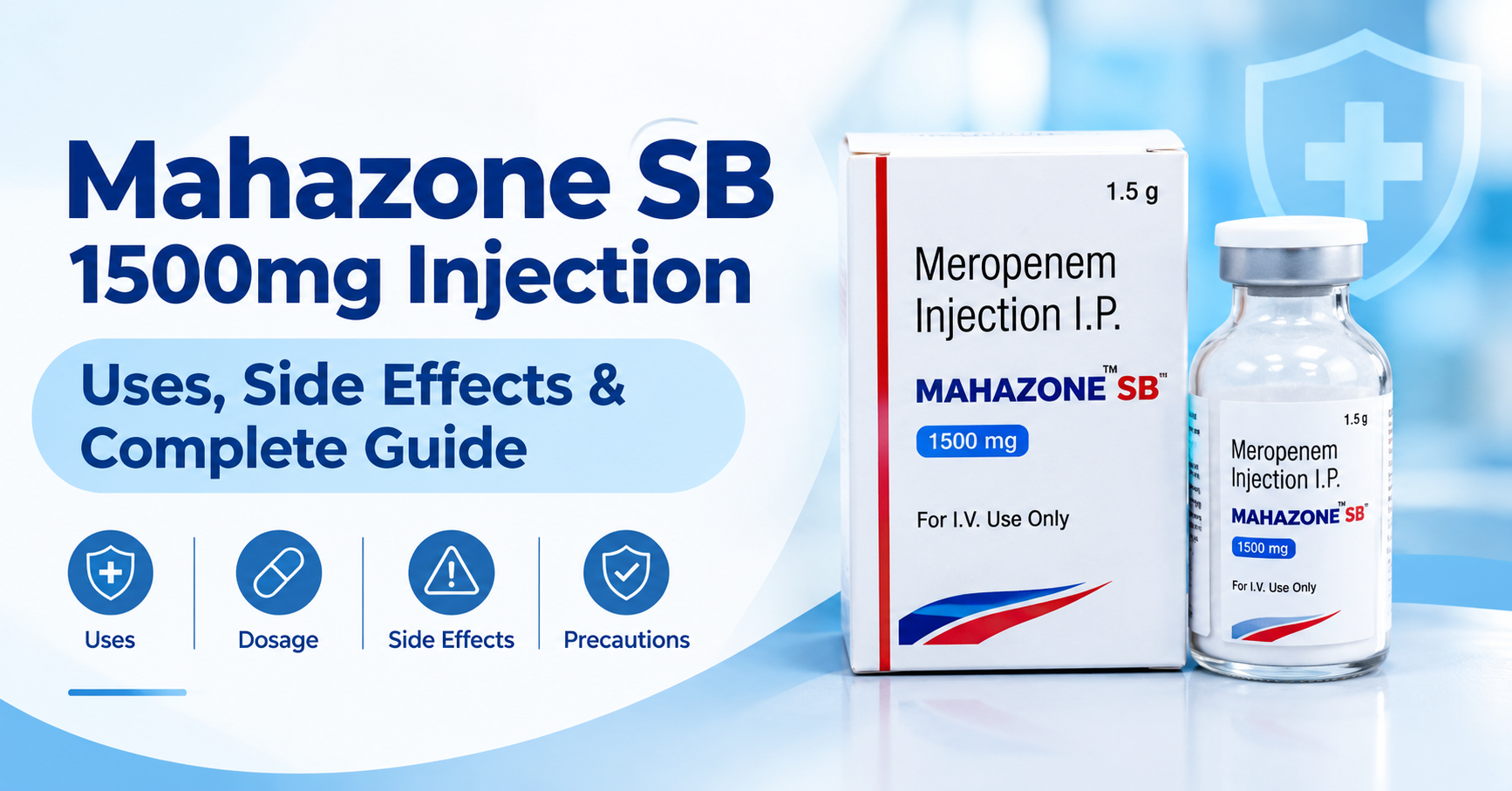
What Is Mahazone SB 1500mg Injection?
Mahazone SB 1500mg Injection should be identified using its original vial label and prescribing information. The product name and strength alone are not sufficient to establish its complete composition or approved medical indications.
Injectable antibiotics are generally prescribed when a healthcare professional determines that an infection requires this route of treatment. The selection of an antibiotic depends on the suspected or identified bacteria, infection severity, patient history and local antimicrobial resistance patterns.
Patients can explore general medicine information through 24x7Pharma. However, prescription antibiotics should only be used following appropriate medical assessment.
Mahazone SB 1500mg Injection Composition
The exact active ingredients and their individual strengths must be confirmed from the manufacturer’s packaging or official product literature.
Some 1.5g antibiotic combinations contain ceftriaxone 1000mg and sulbactam 500mg. This does not establish that Mahazone SB 1500mg has the same formulation.
Understanding Ceftriaxone
Ceftriaxone belongs to the third-generation cephalosporin class of antibiotics. It interferes with bacterial cell-wall synthesis, which is essential for the survival of susceptible bacteria.
Understanding Sulbactam
Sulbactam is a beta-lactamase inhibitor. It helps protect certain beta-lactam antibiotics against enzymes produced by some bacteria. However, combining an antibiotic with sulbactam does not make it effective against every resistant bacterial strain.
Mahazone SB 1500mg Injection Uses
The exact approved uses of Mahazone SB 1500mg Injection depend on its verified formulation and prescribing information. Doctors may consider injectable antibiotics for certain bacterial infections when the suspected organisms and clinical circumstances justify their use.
Respiratory Tract Infections
Some bacterial respiratory infections, including certain cases of pneumonia, may require injectable antibiotic treatment. The decision depends on the patient’s condition, diagnostic findings and the likely causative organism.
Urinary Tract Infections
Complicated urinary tract infections may require hospital-based treatment. A clinician may request urine cultures and other tests to select an appropriate antibiotic.
Skin and Soft Tissue Infections
Severe bacterial skin and soft tissue infections sometimes require injectable antibiotics. In certain cases, additional treatment, such as drainage of an abscess, may also be necessary.
Other Serious Bacterial Infections
Some injectable antibiotic formulations are prescribed for intra-abdominal infections, bloodstream infections and other serious bacterial conditions. These are examples of clinical situations, not confirmed indications for Mahazone SB 1500mg Injection.
How Do Injectable Antibiotics Work?
Different antibiotic classes target different bacterial structures or processes. Beta-lactam antibiotics such as ceftriaxone interfere with bacterial cell-wall formation. Without a functional cell wall, susceptible bacteria cannot survive normally.
Some bacteria produce beta-lactamase enzymes that can break down certain antibiotics. A beta-lactamase inhibitor such as sulbactam can block some of these enzymes, although its activity varies between bacterial species and resistance mechanisms.
Antibiotic treatment should follow the patient’s clinical assessment and, when appropriate, bacterial culture and susceptibility results.
How Is Mahazone SB 1500mg Injection Administered?
Patients should receive this medicine only through the route specified in its verified prescribing information and under the supervision of a qualified healthcare professional.
The clinician determines the appropriate dose, treatment interval, preparation method and duration. These decisions depend on the medicine’s exact ingredients, the infection being treated and individual patient factors.
Never attempt to prepare or administer an antibiotic injection yourself without appropriate professional training and medical authorization.
Possible Side Effects and Warning Signs
The adverse-effect profile of Mahazone SB 1500mg Injection must be confirmed from its official product information. Depending on the ingredients, injectable antibiotics can cause injection-site reactions, digestive symptoms or allergic reactions.
Symptoms to Discuss With Your Doctor
- Pain, tenderness or swelling around the injection site.
- Nausea, vomiting or diarrhoea.
- Skin irritation or a new rash.
- Any unusual symptom that appears during treatment.
When to Seek Urgent Medical Attention
Seek immediate medical help if you experience difficulty breathing, swelling of the face or throat, fainting, a severe blistering rash or other signs of a serious allergic reaction.
Severe or persistent diarrhoea during or after antibiotic treatment also requires prompt medical assessment.
Important Precautions Before Treatment
Antibiotic Allergies
Tell your healthcare provider about previous allergic reactions to antibiotics, particularly penicillins, cephalosporins or other beta-lactam medicines.
Kidney and Liver Conditions
Inform your doctor about existing kidney or liver disease. Some antibiotic regimens require additional monitoring or dose adjustments in patients with impaired organ function.
Pregnancy and Breastfeeding
Pregnant or breastfeeding patients should discuss the expected benefits and possible risks of the specific prescribed formulation with their healthcare professional.
Other Medicines
Provide your doctor with a complete list of prescription medicines, over-the-counter products and supplements. Potential interactions depend on the exact antibiotic formulation.
Antibiotic Resistance and Responsible Use
Antibiotics treat susceptible bacterial infections, not viral illnesses such as the common cold or influenza. Unnecessary antibiotic exposure can contribute to antimicrobial resistance.
Take antibiotics only when prescribed and follow the treatment schedule established by your healthcare provider. Do not share prescription medicines or reuse leftover antibiotics for a different illness.
For additional information, read the World Health Organization’s guidance on antimicrobial resistance.
Storage and Handling
Follow the storage instructions printed on the original Mahazone SB 1500mg Injection packaging. Temperature requirements, protection from light and the stability of the prepared solution depend on the specific formulation.
Healthcare professionals should follow the manufacturer’s instructions for reconstitution, compatible diluents and administration. Do not use a product with damaged packaging or an expired label.
Frequently Asked Questions
1. What is Mahazone SB 1500mg Injection used for?
Its specific approved uses must be checked against the verified composition and official prescribing information. A doctor can explain why it has been prescribed for your condition.
2. Is Mahazone SB 1500mg an antibiotic?
Confirm its active ingredients on the vial or manufacturer’s leaflet. Do not rely on the product name alone to identify the medicine.
3. Can I administer this injection at home?
Do not self-administer it. Follow the treatment and administration arrangements made by your healthcare provider.
4. Does an antibiotic injection treat viral infections?
No. Antibiotics do not treat viruses responsible for illnesses such as influenza or the common cold.
5. Can antibiotic injections cause allergies?
Yes. Some antibiotic injections can cause serious allergic reactions. Tell your doctor about previous antibiotic allergies before treatment.
6. What happens if I miss an injection appointment?
Contact your healthcare provider for instructions. Do not attempt to compensate by taking an additional dose.
7. Can I stop treatment when I feel better?
Do not change or discontinue your prescribed treatment without consulting your clinician.
8. Is this injection safe during pregnancy?
The answer depends on its verified ingredients and your clinical circumstances. Your doctor should assess the benefits and risks.
Medical References
Medical disclaimer: This article provides general educational information and is not a substitute for medical advice, diagnosis or treatment. Brand-specific details must be checked against the original product label and prescribing information. Never use a prescription injection without professional medical supervision.